


Back in 2012, Aaron Sorkin created a TV show called The Newsroom. Set behind the scenes at a fictional cable news network, the HBO drama followed a band of producers and correspondents led by blowhard anchor Will McAvoy (Jeff Daniels) as they covered real-life news events from the recent past, like the death of Osama bin Laden and the Deepwater Horizon spill. He used actual news, “because it was just going to take us too far away from reality,” Sorkin said in 2012.
The show was divisive, and journalists mostly hated it. Many of The Newsroom’s detractors felt that Sorkin, with the convenient benefit of hindsight, was lecturing actual reporters on how they should have done their job. It was canceled in 2015, before Sorkin got to offer his take on Trump’s rise to power (or the media’s role in it).
Nearly a decade and a half later, another ambitious TV drama is attempting to tackle the news in something close to real time — but doing so in a way that’s both more dramatically compelling and politically astute.
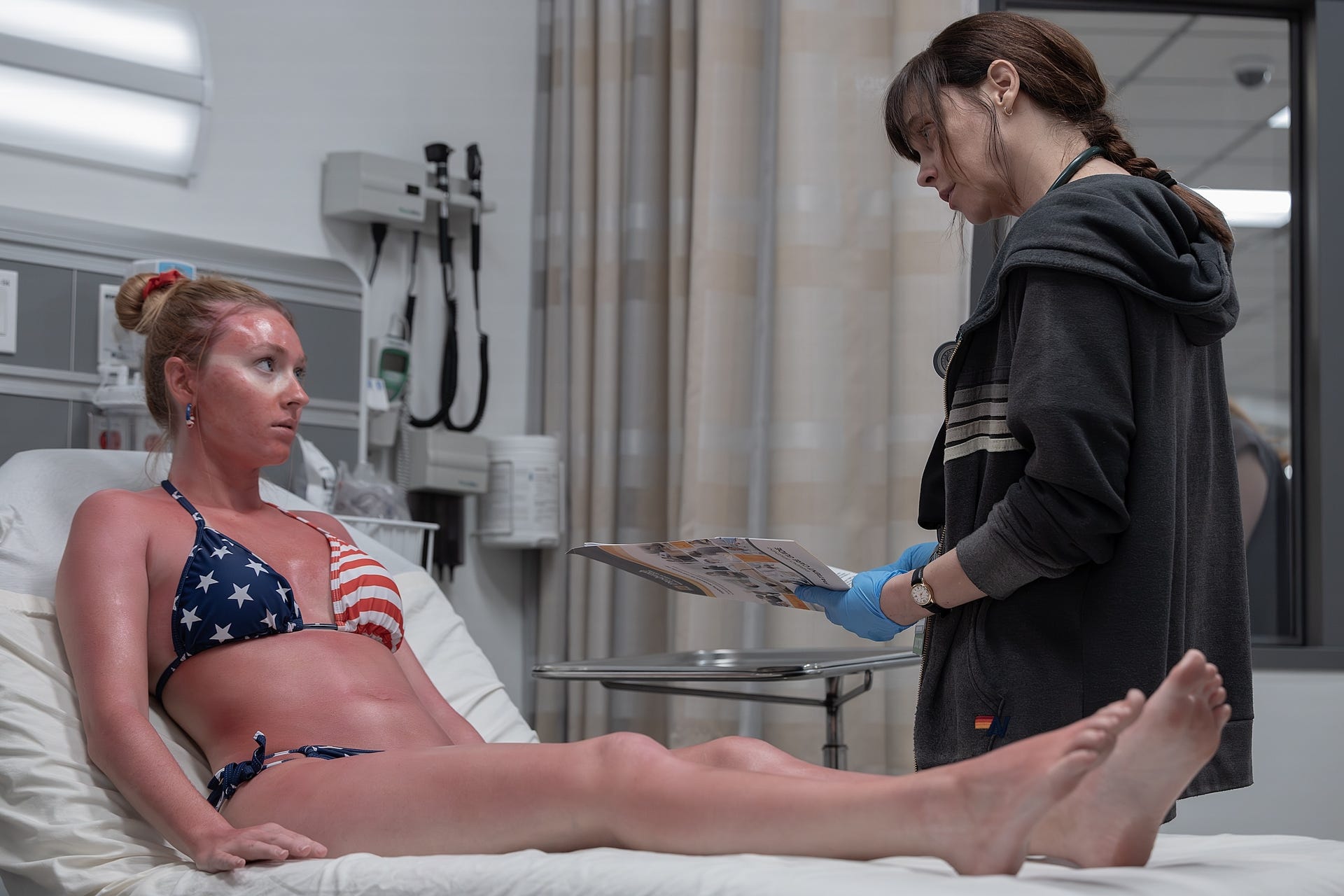
The Pitt, which wrapped its second season on HBO Max Thursday, is set in the perpetually overcrowded emergency department at the fictional Pittsburgh Trauma Medical Center, a teaching hospital with a fitting nickname: “The Pitt.” Attending physician Dr. Michael “Robby” Robinavitch, a grizzled veteran played by Noah Wyle, oversees a band of sharp-tongued residents and medical students.
Created by R. Scott Gemmill, the series is a clever hybrid of E.R. (on which Wyle starred for over a decade) and 24: each season follows the staff and patients at the Pitt over a single 12-hour shift (that inevitably runs into overtime), with each episode dramatizing a single hour in the life of the emergency room. The show’s real-time structure drives home the relentless, grueling nature of emergency medicine. Patients come and go constantly, and are not always heard from again. Often, they die.
The show blends an old-fashioned broadcast format (i.e., longer seasons with less downtime) and the edgier sensibility of a streaming series (including lots of bloody viscera, coarse language, and the occasional closeup of an engorged penis). This unique mix has enabled it to become that rarest of things in the fractured cultural landscape of 2026 — an Emmy-winning critical darling that is also a broad-based hit.
But what is perhaps most remarkable about The Pitt is how viscerally it captures what’s ailing the country right now — both literally (measles, addiction) and figuratively (racism, income inequality). The series uses an underfunded emergency room as a microcosm for American society writ large, exploring how vast cultural and political forces affect the wellbeing of ordinary people and the medical professionals who care for them. It’s no accident that The Pitt is set not in Chicago, LA, or New York, but in a famously scrappy post-industrial city in a pivotal swing state.
Season 1 dramatized issues like vaccine hesitancy, abortion restrictions, and post-COVID burnout in the medical profession. Season 2 has leaned even further into the topical commentary, with seemingly ripped-from-the-headlines stories about ICE, sexual assault, Medicaid, and more.
For The Pitt’s creative team, the goal has always been authenticity, not didacticism. “The fastest way to get people to turn the channel is if they feel like we’re preaching to them or we’re being dogmatic,” Wyle said last year. (The actor is also a writer and executive producer on the series.) “What we wanted was accuracy and realism. We wanted to just be presentational with what emergency rooms look like.”
The Pitt was originally envisioned as a spinoff of E.R., following an older, possibly wiser version of John Carter, the character Wyle played in the beloved NBC drama. When that idea hit a legal snag, Wyle and company overhauled the premise, imagining a timely series that would grapple with the enormous strain on medical professionals in the wake of COVID.
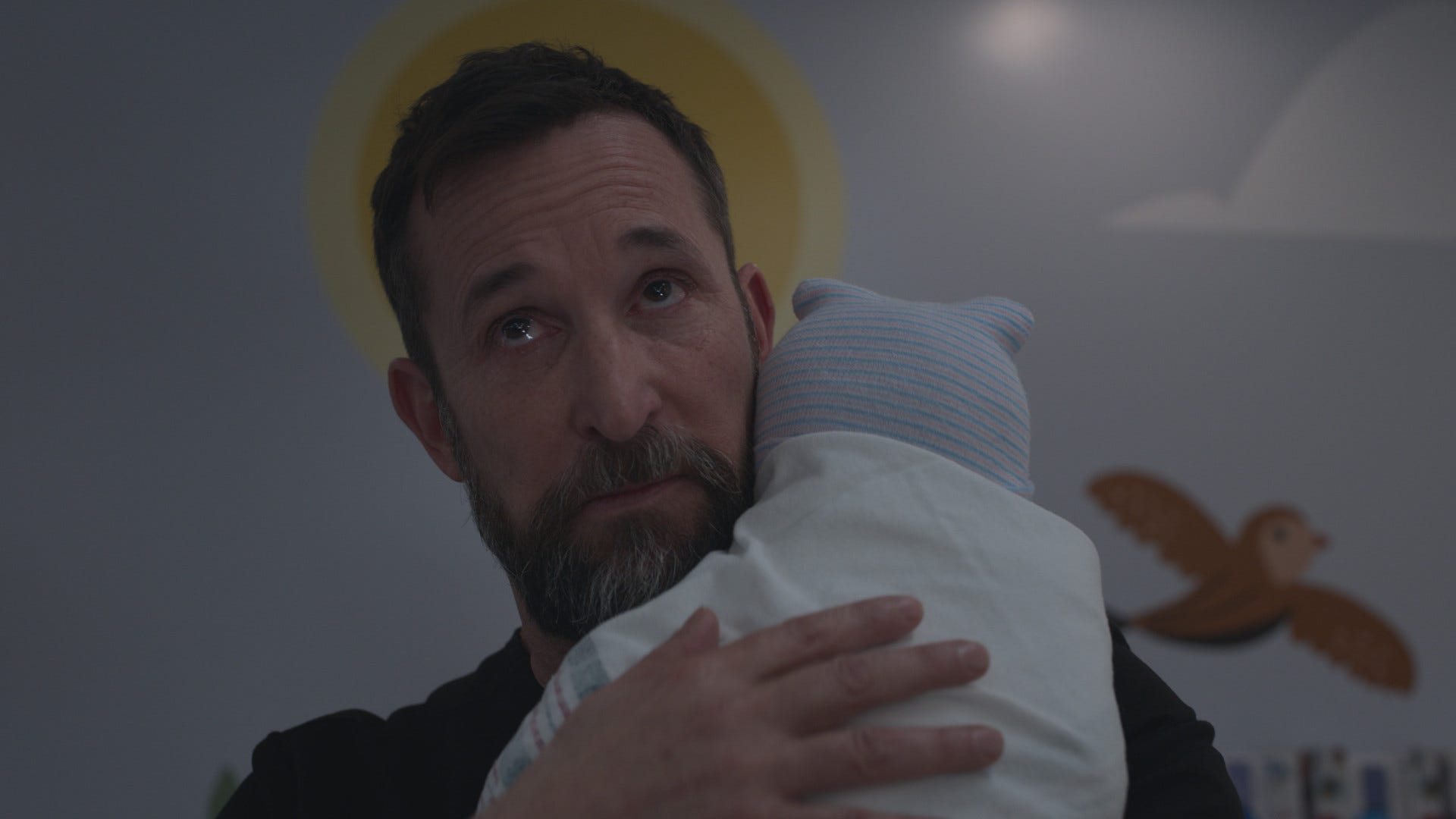
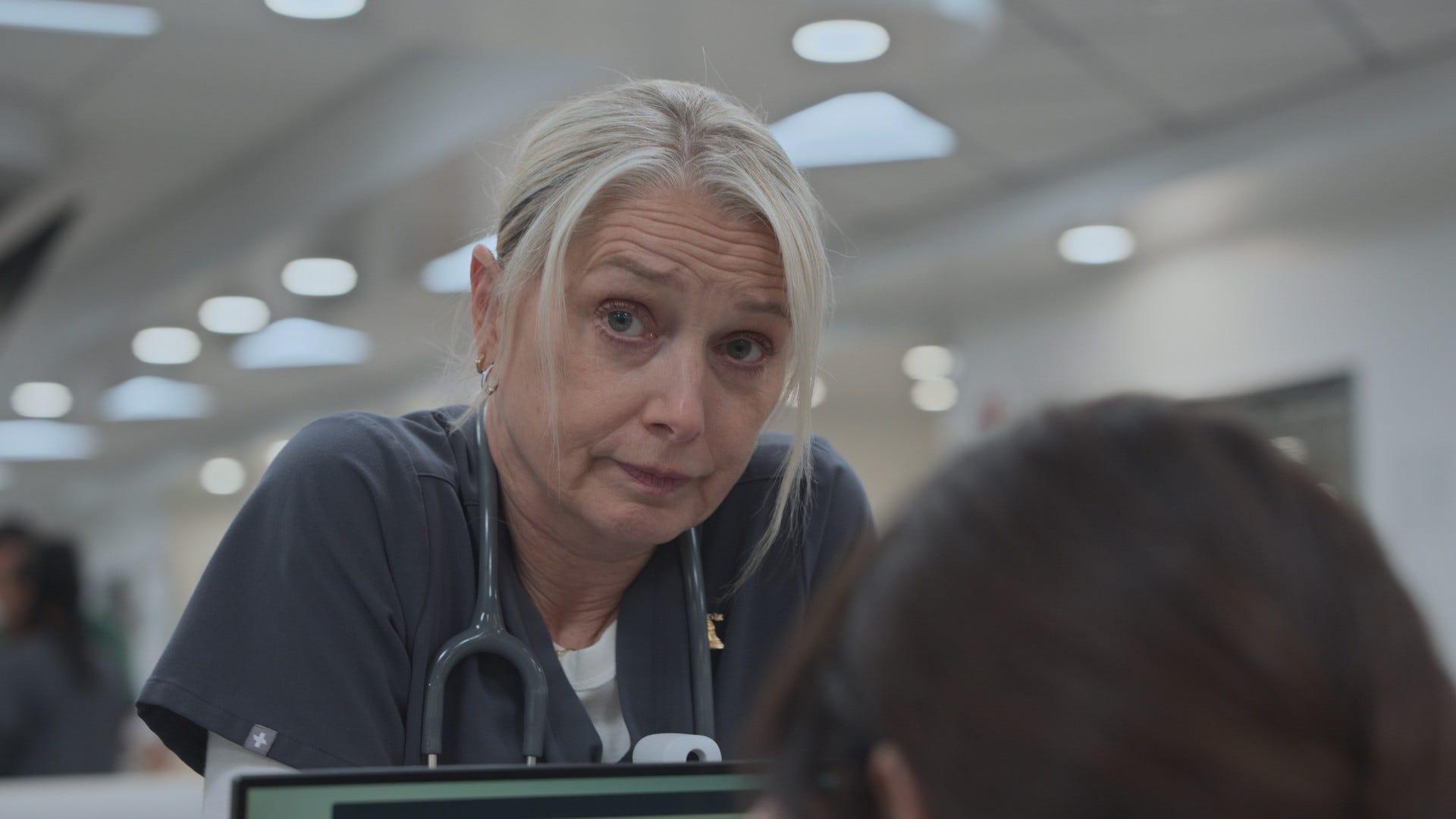
Dr. Robby offers the starkest example of this psychological trauma. In Season 1, which takes place five years to the day after he made the agonizing decision to remove his COVID-afflicted mentor from life support, Robby experiences a panic attack. Over the course of Season 2, his mental health deteriorates even further. In the finale, a nearly suicidal Robby breaks down in tears while swaddling an abandoned infant. But Robby is not alone in his despair: Dana Evans (Katherine LaNasa), The Pitt’s straight-talking charge nurse, briefly leaves the job after getting brutally assaulted by an angry patient.
This season is set in the near future on July 4, 2026 — an ideal backdrop for contemplating our national malaise. Numerous patients show up at the hospital in star-spangled attire or Revolutionary garb, lending to the overall impression/reality that America and its people are not well. While no one utters the president’s name, they don’t have to. This season paints a vivid portrait of the destruction and chaos wrought by the Trump administration and the MAHA movement.
One of the most discussed storylines involves ICE agents who show up at PTMC with an injured detainee, causing staff and patients to flee in panic, and a nurse is taken into custody. Robby eventually confronts the masked agents. “Patients come in here for help because they’re either sick or injured,” he says. “Documented or undocumented, they have a right to emergency care.” (Another immigration-related subplot concerns a young woman forced to drop out of college to care for her little brother because their parents have been deported to Haiti.)
The prescient ICE storyline was filmed shortly before the killings of Alex Pretti and Renee Good in Minneapolis. “We had been asking ourselves a lot of questions about how realistic this is, or not. And then, by the time we shot it, we’re like, ‘Oh, my God, yeah, okay.’ So we were pretty mild,” executive producer John Wells recently told Deadline.
HBO executives were reportedly concerned about the storyline and whether it was “balanced” and edits were made. Even though Wyle said “the negotiation was being driven by political reasons,” he was ultimately happy with the “more restrained” version of the story viewers saw.
ICE is hardly the only malevolent force in the world of The Pitt. Another pivotal arc this season followed an uninsured diabetic man who has been rationing his insulin. He falls into the “coverage gap,” making too much to qualify for Medicaid but unable to afford private health insurance. Panicked about incurring a massive amount of medical debt, he flees the hospital before completing his treatment — only to turn up at the hospital again, in much worse shape, a few hours later.
Another prevalent theme is the widespread mistrust of the medical establishment. Already exhausted and demoralized, the doctors and nurses of The Pitt often have to care for people who are openly hostile to their profession. There are strident anti-vaxxers suing the very doctors who saved their child’s life. There’s a self-proclaimed health nut with liver failure caused by an overdose of turmeric supplements. And there’s even a pregnant woman with life-threatening preeclampsia who is determined to have a wild birth.
Worst of all, no one with political power is doing anything to bolster the public’s faith in the medical profession; quite the opposite. While discussing the turmeric case with a colleague, second-year resident Trinity Santos (Isa Briones) says the woman should have checked with her doctor about a safe dosage, or consulted a reputable source, like the CDC website.
“Oh wait, I forgot,” she says sarcastically. “It’s now a medical toxic waste site.”
If only she were wrong.
Meredith Blake is the culture columnist for The Contrarian
Thanks! LOVE this show.
Love the doctors, nurses and staff. Hate that our backward country still doesn't have universal health care and has let insurance companies and corporate investors turn a right into a profit.
I love this show because it shows the truth. I may not have worked in the emergency department, but I worked close to 12 years in community health. I was a member of the behavioral health staff at a medical clinic, but had to leave because of burn out and I was just one of many. The shows how we love our work, but how our work is killing us.