


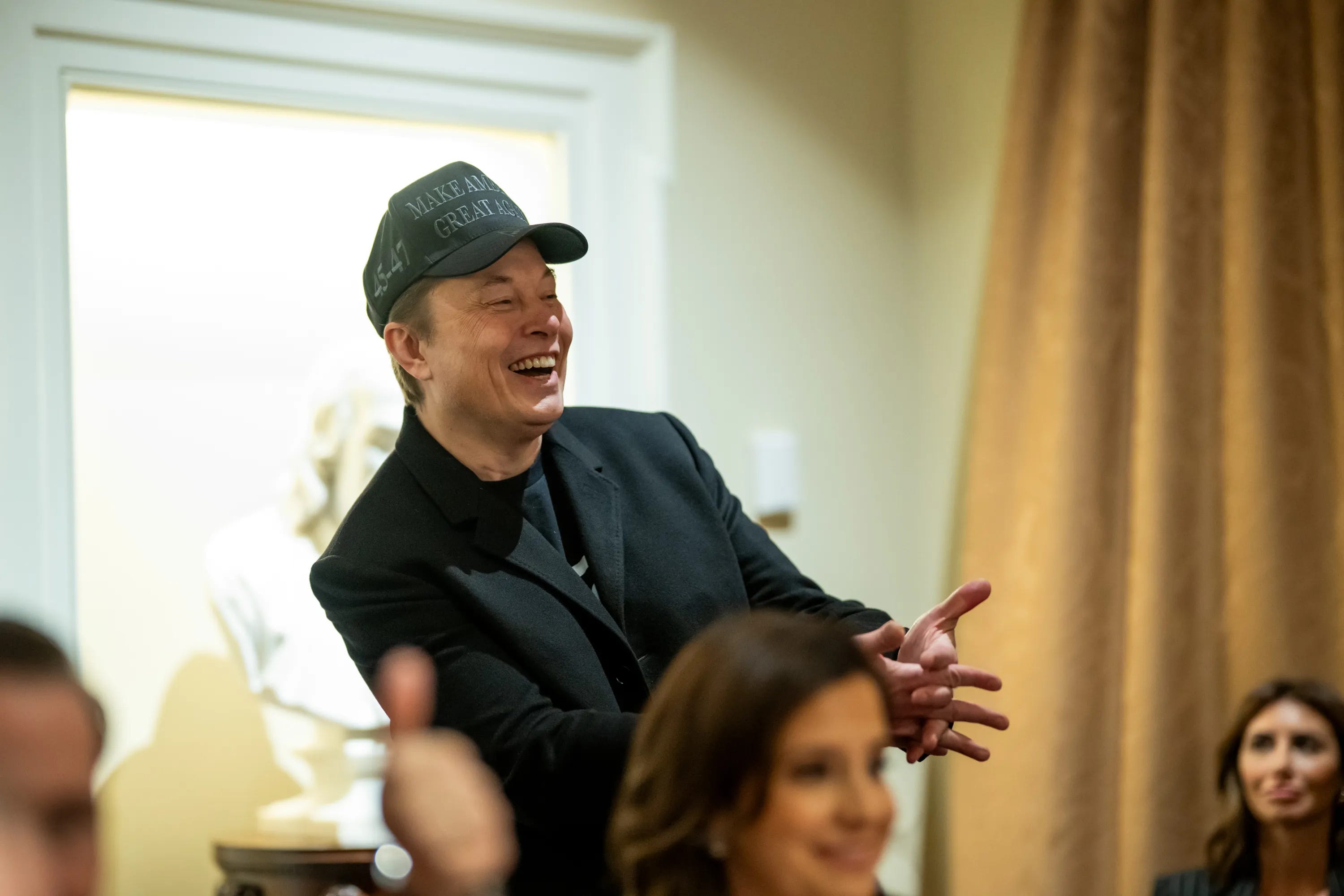
A few weeks ago, I cross-posted a piece with The Contrarian, asking readers to donate to the Wisconsin Democratic Party ahead the upcoming state Supreme Court race, and promising to match contributions up to $1,250. To say you came through is a massive understatement: Together, we raised over $33,000!
That’s a drop in the bucket, especially when the other side is funded by the richest man in human history. But we weren’t alone. People from all over Wisconsin, and the country, gave money and knocked doors, made phone calls, shared memes and did whatever they could to send a message that justice—in the Badger State or anywhere else—is not for sale.
I’m not trying to build suspense here. You all know what happened. But after more than two months that have felt like watching a dumpster fire from inside the flaming dumpster, it bears repeating. On Tuesday night, liberal justice Susan Crawford didn’t just win in Wisconsin. She scored a huge, double-digit victory.
In the post a few weeks ago, I wrote that a big Crawford win “could be a major moment when the dam breaks for Elon.” At the risk of sounding ever-so-slightly grandiose, from my mouth to God’s ears.
Already, we’re seeing some signs that the Musk-Trump bromance may be on the rocks. If Trump has any sense of irony at all, Musk will find out he’s been fired when his government issued ID card stops working. Or maybe Secretary of State Marco Rubio will revoke his credentials without due process. Or maybe he’ll get canned after his five bullet points for the week fail to impress.
Whatever the details, the sooner our most prominent move-fast-and-break-things megalomaniac has his hands removed from the levers of power, the better and safer America will be.
But let’s be honest: The guy who spent tens of billions of dollars to buy an entire social media network because he craved attention isn’t going anywhere. And even Republicans who would suddenly rather campaign with a case of norovirus than with Elon Musk are going to keep begging for his money.
So with that in mind, it’s worth looking at few of the tactics Crawford and the Wisconsin Democrats used to win Tuesday’s big election. They didn’t just make their case—they made it in a smart, strategic way, with tactics every Democrat can learn from.
1) “Elon Schimel”
It’s a strange coincidence that the richest human in human history, who is also an aspiring dystopian sci-fi dictator, who is also our co-president, who also owns a car company that is opening a restaurant for some reason, has a unique first name.
Or maybe it’s not such a coincidence. I suspect that for many of Musk’s admirers—people who idolized him long before he entered politics—the name is part of the appeal. If you’re going to decide that someone is the singular, anointed, great and powerful savior of Western civilization, it makes a certain amount of sense that his name isn’t, like, Kevin. Also, the name helped build the parasocial relationship that turned Musk from a highly successful CEO into a wildly successful influencer. Fans across the world are on a first-name basis with Elon. They’re buddies with Elon. They trust Elon.
The rest of America does not, however, trust Elon. And in the debate with her conservative opponent Brad Schimel, Crawford used the gazillionaire’s ubiquitous name to her advantage.
“I have support from all over the country,” she said, “and it is because Elon Schimel is trying to buy this race.”
She only used this line once. And she only needed to, because it accomplished several useful things simultaneously.
- It made sure that her main line of attack made it into the most internet-friendly moment of the debate. Let’s be honest: Most Americans do not watch debates for non-presidential elections. Today, the real value of debates is to generate material for the internet. Crawford’s one-liner created a short, original, cutting piece of content on the best possible issue for her.
- This wasn’t a Trumpian level of name-calling from a candidate. And that’s good. We can’t beat Trump by aping Trump. At the same time, however, at a moment when Democrats run the risk of being seen as weak, the right kind of taunt shows a willingness to get scrappy and throw punches. These are not normal times. Voters want to see us engage in not-normal political behavior – without sinking to the level of Trump and Musk.
- “Elon Schimel” highlights what, for every Republican not named Donald Trump (or maybe Lisa Murkowski) is going to be a big issue for their foreseeable future: their subservience. Trump won, in part, because he seems like an independent guy who refuses to be pushed around. You might not like him, but he’s undeniably in charge—that’s the heart of his strongman appeal. The result of his total control, however, is that he makes everyone else in his party look like the LeFou to his Gaston. With Trump not on the ballot, Democrats have a chance to turn the tables on the issues of independence and toughness.
2) Organizing is Part of Messaging
Over the summer, I went to a fundraiser with Ben Wikler, the chair of the Wisconsin Democratic Party. He talked about the upcoming presidential election—and then said win or lose, the party had to be ready for the state Supreme Court race in April.
We don’t usually think of building strong state parties as part of messaging. But it absolutely is. Because even the best message doesn’t matter if trusted people can’t deliver it. And when we have state parties that organize year-round in every part of their state, no matter how red or blue, it means Democrats can make their case to people who will actually listen.
Also, the single most important part of messaging is picking the right messenger. The mere presence of a strong state party leads talented would-be candidates to throw their hats in the ring, because they know they’ll be supported. Parties that organize year-round also help vet candidates, train them, and give their future staffers the kind of experience they’ll need when election season heats up.
Last but not least, when Democrats organize everywhere, it sends a message to some of the places that swung toward Trump: We want you back. The best way to show voters that we believe in ourselves and our ideas is by being willing to compete anywhere.
(So, fwiw, if you want to help build on Tuesday’s momentum, one of the best ways to do it is to become a recurring monthly donor to a great state party. In addition to Wisconsin, Arizona and North Carolina are two I’d recommend.)
“Kneepad Brad”
This one might be a little controversial. But one of the most effective attack ads against Brad Schimel used his own words against him. In leaked audio, Schimel told an audience that he was so desperate “crawling around” begging for money that he “had to invest in kneepads.” The ad ends by calling him, “Knee Pad Brad,” a nickname that appeared throughout the rest of the campaign.
Was this just a little bit Trumpy? Maybe. But I’d argue it walked right up to the line without crossing it—in a way that can create a nickname checklist for other campaigns.
- The name emerged organically, from Schimel’s own quote. He couldn’t argue he was being unfairly slandered when the nickname came from something he said about himself.
- As far as I can tell, the nickname was used in ads and by the candidate’s supporters but not by the candidate herself. Michelle Obama said, “When they go low, we go high,” but this was a little bit of both. “When they go low, we go high—while our friends aren’t afraid to go low on our behalf.”
- I won’t get into why the nickname was a bit of a double-entendre. There could be children reading this newsletter! But you can bet that if this had been a Trump nickname, he would have been quite explicit. In other words, the rhetorical strategy was to cross some lines that wouldn’t have been crossed pre-Trump while demonstrating strategy and restraint. That’s a good formula, not just when it comes to catchy nicknames for opponents, but for Democratic messaging in general.
Susan Crawford was just elected to a 10-year term. Hopefully, by then Musk will have lost interest in destroying the country and picked up a new hobby, like gardening. But though she might never have to face off against Musk again—and she might have hastened the end of his co-presidency—Democrats would be foolish to think that Musk will disappear.
Which is why Susan Crawford’s example was just as important as the winning campaign. She showed us that the world’s richest man can be beaten. She showed us how to beat him. And she showed us that beating him can be a lot of fun. Which is good, because we’re going to have to do it a lot more over the next few years.
David Litt wrote speeches for President Obama between 2011-2016. A New York Times bestselling author, his newest book, It’s Only Drowning, will be published by Simon & Schuster in June. He also posts under @davidlitt on Instagram and BlueSky, writes the newsletter “Word Salad,” and was born with an innate talent for cooking shrimp.

"Elon Schimel" "Kneepad Brad"
Thank you. Priceless.
"Susan Crawford was just elected to a 10-year term. Hopefully, by then Musk will have lost interest in destroying the country and picked up a new hobby, like gardening. But though she might never have to face off against Musk again..."
I read that Musk has sued the State of Wisconsin over a law that prevents car makers from owning dealerships--presumable so they don't lock up competition. And that his case may well come before Judge Crawford. Moral of the story, Elmo: don't piss off a judge, i.e., don't shite where you live.