


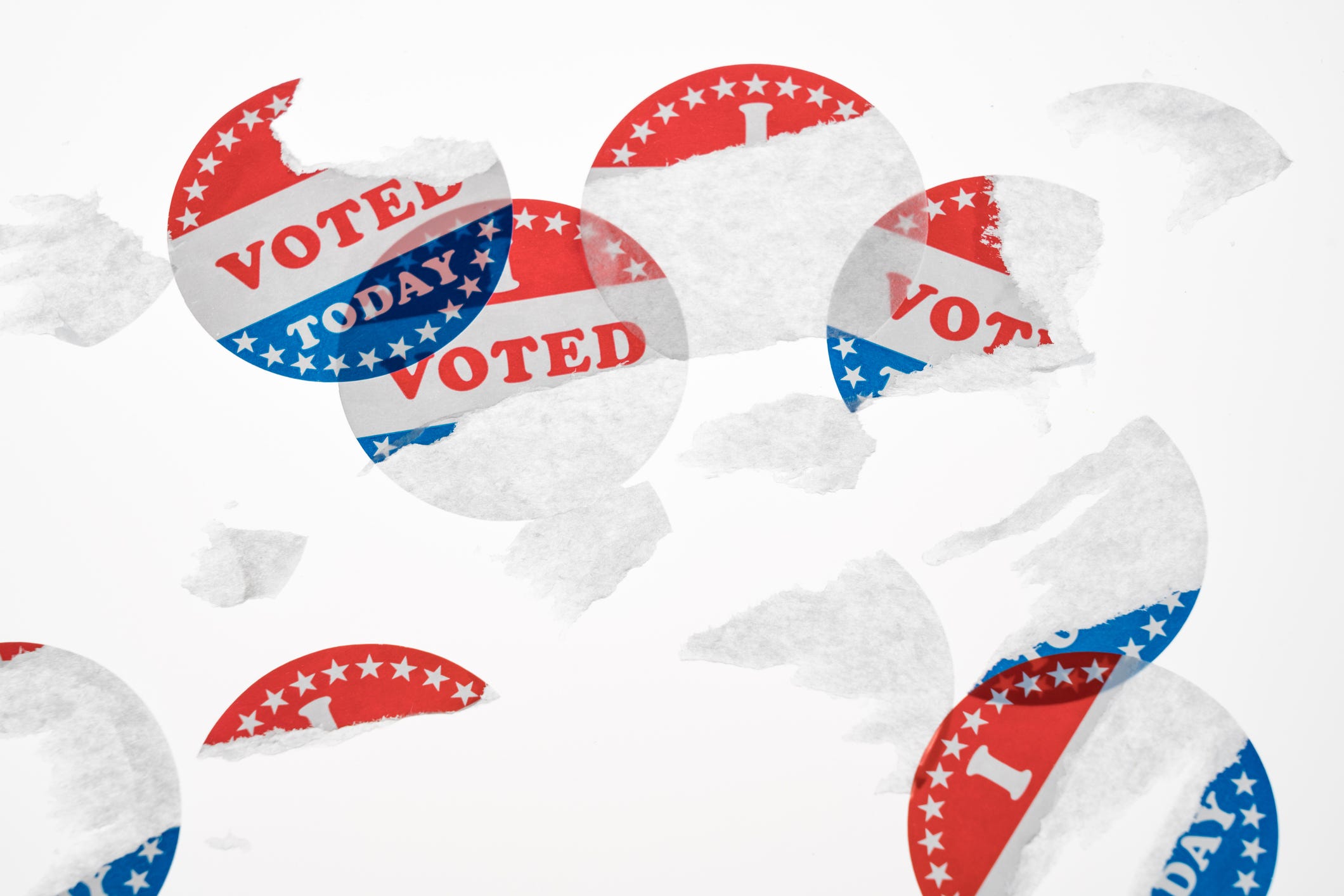
This is the anti-democracy Court.
In a stunning — but entirely expected — decision, the United States Supreme Court all but nullified the last remaining provision of the Voting Rights Act of 1965, the law that made the United States into a multiracial democracy. Even more galling is that the Court’s reasoning essentially holds that elected officials are constitutionally entitled to engage in antidemocratic behavior. Louisiana v. Callais produced an antidemocratic result, justified on the basis of antidemocratic reasoning, which will cause antidemocratic waves for decades. It’s basically a judicial coup — a revolution against the will of the people expressed in the VRA.
The facts of Callais are easy to describe: Louisiana drew new legislative maps after the 2020 census. Although about one third of the state’s citizens are Black, the maps would have allowed Black voters to form political majorities, and select candidates of their choice, in only one out of six districts. The math of representation wasn’t mathing. Unless, of course, the math was that Black voters should be locked out of political power….
The Voting Rights Act of 1965 had two key parts. One was a “preclearance” regime by which states with especially egregious histories of racial discrimination in voting were required get the federal government’s permission before changing their voting laws and policies. (This criterion meant that many former Confederate states and southern states were subject to preclearance.) The other, Section 2 of the VRA, was a nationwide ban on voting discrimination. Congress amended Section 2 in 1982 to block any state measures that have the effect of keeping Black citizens from voting — whether intended or not — or which have the effect of locking Black Americans out of power by making their votes count less than those of white voters (by, say, wild redistricting).
Because Louisiana’s maps violated Section 2 of the VRA, a court ordered new districts to be drawn that gave Black voters political opportunities. When Louisiana produced a map where Black voters had political opportunities in 2 out of 6 districts, several white voters argued that the revisions amounted to racial discrimination—against them.
The Supreme Court said in Callais that Louisiana actually didn’t have to draw new maps because their initial maps didn’t violate the VRA “as properly construed.” But the Court’s supposedly more “proper” reading is one that warps the Voting Rights Act such that the law will almost never require states to draw districts that provide racial minorities with political opportunities.
A key part of the Court’s reasoning turns on partisanship and partisan gerrymandering. The Court said that, generally, to establish a violation of Section 2 plaintiffs have to show that the state could have drawn a different set of districts that both give racial minorities the political opportunities to elect candidates of their choice AND allow the state to accomplish its partisan goals. More on “partisan goals” later (the Court apparently now thinks that partisan gerrymandering is not only legal, it’s also awesome), but in short, this puts the onus on anyone claiming a violation of the VRA to prove that they could draw a district map that would still result in the same number of Republican and Democratic seats as the map they’re claiming is discriminatory.
So if the state’s initial map resulted in five out of six safe Republican seats and one out of six seats where racial minorities could select a candidate, to establish a violation of Section 2, the plaintiffs would have to show that an alternative map also resulted in five out six Republican seats while allowing racial minorities to select their preferred candidate in two out of six seats.
That requirement is virtually impossible to satisfy given the extent of racial polarization in voting. To give racial minorities political opportunities is to allow them to pick a different representative. The Supreme Court said nope: racial minorities can have political opportunities only if they pick the same representative. Specifically, the Louisiana plaintiffs (and other plaintiffs, according to the Court’s logic) can have an additional district provided that they vote Republican. The decision allows states to lock racial minorities out of political power.
This result violates not just the fundamental purpose of the VRA but a key Congressional amendment to it. Justice Alito’s legal test in Callais — which Justice Kagan called the Callais contrivance — effectively requires plaintiffs to establish there was intentional discrimination in districting, i.e., that a legislature drew districts specifically to disadvantage racial minorities. But in 1982, Congress amended the VRA to make it clear the law prohibited discrimination whether intentional or through laws that resulted in discriminatory effects.
The ruling is the capstone in a trifecta of decisions that collectively demolish the VRA. In 2013, in Shelby County v. Holder, the Court nullified the requirement that states with abysmal voting rights records secure federal approval to change their laws. The Court had the audacity to say that preclearance was unnecessary since Section 2 of the VRA remained. Then, in 2021, in Brnovich v. DNC, the Court made it harder to establish that laws prohibiting voters from casting votes violated Section 2. After that decision, there has been *no* decision that found a voting condition violated Section 2. Now, the Court has said it’s also all but impossible to establish that laws drawing districts that determine how voters are counted violate Section 2.
The consequences of Callais will be swift. States may attempt an additional round of antidemocratic redistricting in the lead up to the 2026 midterms, erasing districts that were drawn to comply with the VRA. Nick Stephanopoulos, a professor at Harvard Law School and voting rights expert, estimated that “close to 70 congressional districts…could be stripped” of protection under the VRA.
The Court had the chutzpah to reach this antidemocratic result with antidemocratic reasoning. The ruling stresses that the Court has to require Voting Rights Act plaintiffs to disentangle race and partisanship, because legislatures are entitled to engage in partisan gerrymandering — i.e., to draw legislative districts in ways that advantage one political party and allow the party to outsmart democracy. And states have to be able to engage in partisan gerrymandering, the Court said, because of its 2019 decision in Rucho v. Common Cause…which is nonsense, because that ruling established nothing of the kind. All Rucho said was that partisan gerrymanders are “nonjusticiable,” meaning that federal courts can’t do anything to remedy them. Rucho hardly said that partisan gerrymanders are something legislatures have to be allowed to do.
Callais is as legally ridiculous as it is dangerous. If this doesn’t cause the Democratic Party to recognize that Supreme Court reform has to be part of democracy reform, it’s unclear what would.
Leah Litman is a professor of law at the University of Michigan, cohost of Strict Scrutiny, and author of the NYT best seller LAWLESS: How the Supreme Court Runs on Conservative Grievance, Fringe Theories, & Bad Vibes (paperback edition out June 16, 2026).

And the decline in the public's trust of SCOTUS continues unabated...
a very sad day for our republic