


I was vocal during the first months of this Trump administration about the removal of experienced general and flag officers from the military. I was also critical of what I regarded as the muted response from the ranks of retired senior officers.
My criticism of some retired officers may have been unfair. Several retired officers did speak out, and in February 2025 former defense secretaries issued a sharp warning that the firings threatened to politicize the military. But I continue to believe more dissent is warranted as the administration continues to remove exceptional military leaders, with women and minorities receiving particular attention, while Defense Secretary Pete Hegseth revels in his campaign to “man up” the ranks.
My concern went beyond the individual personnel decisions. It was what eventually happens when tested experience is subordinated to loyalty, image, and a particular conception of toughness.
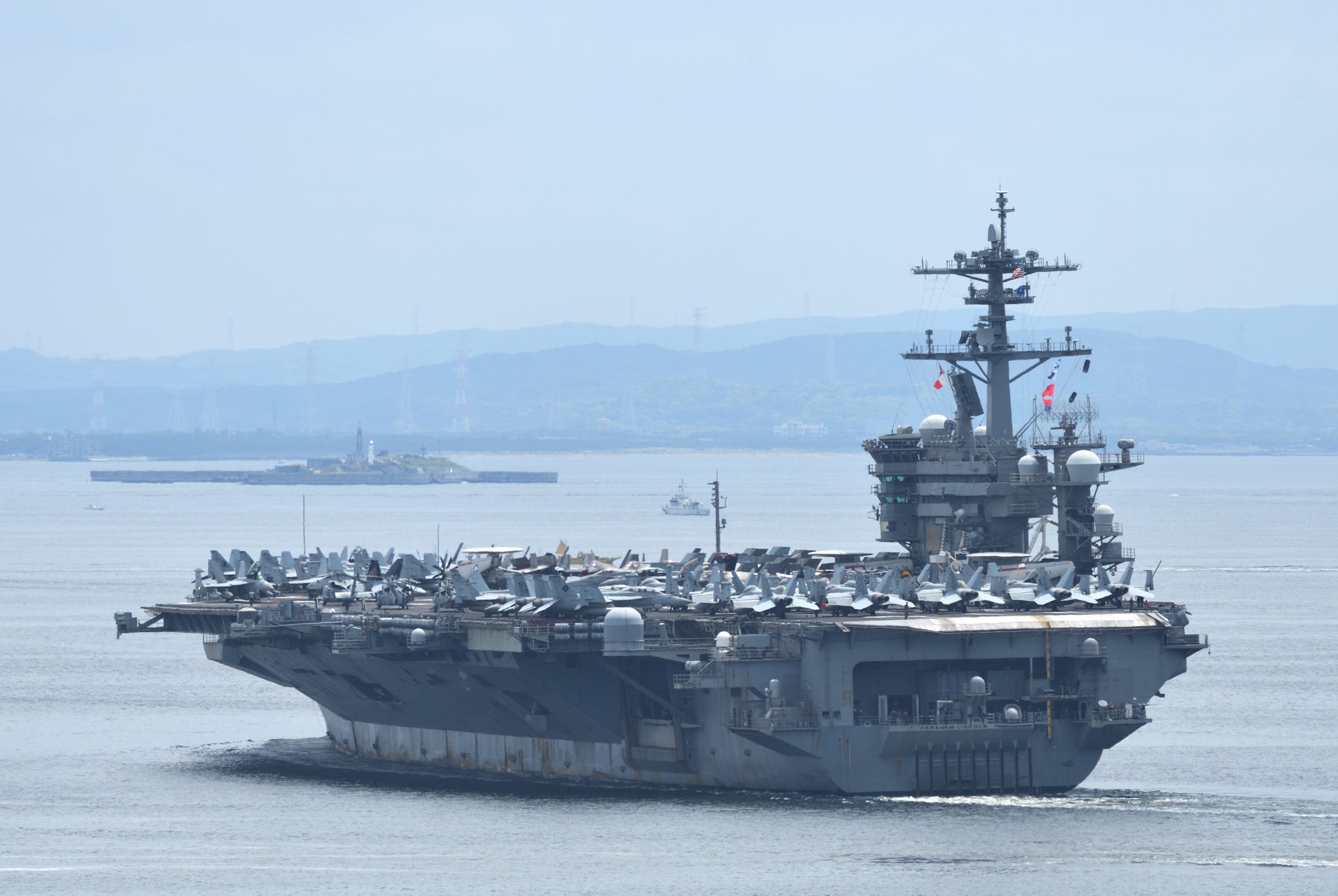
The status of the USS Abraham Lincoln may be telling us something about the answer.
The carrier has now been deployed for more than 260 days and has spent more than 200 consecutive days at sea without a port call, much of that supporting the war with Iran. Reports of conditions aboard ship have prompted complaints from Democratic senators and denials from Hegseth, who argues that accounts of inadequate food and broken plumbing have been “misrepresented.”
Some undoubtedly have been. Put 5,000 sailors and Marines on a ship for months, and there will be complaints, rumors, and sea stories. But reports of service members attempting to go overboard are something else and cannot simply be waved away as grumbling.
But the more revealing story is how the Wall Street Journal chose to frame it last Friday.
The Journal’s editorial board argued that Democrats complaining about conditions aboard the USS Abraham Lincoln displayed “chutzpah” because they have resisted additional funding for the war. The Journal also noted — correctly — that the Navy’s readiness problems predate this administration; unfortunately, they failed to mention that the first Trump and the Biden administrations took steps to address them, but neither solved them. Carrier deployments have been getting longer for years. There are too few ships for the commitments Washington has assigned them. Longer deployments mean more maintenance, more strain on sailors, and less readiness afterward.
The Journal used a structural problem to excuse a planning problem, however.
As I note above, the Trump administration knew the condition of the Navy before it attacked Iran. Indeed, the military spent months assembling forces for the campaign and was reportedly preparing for operations that could last weeks. What appears much less convincing is whether Washington prepared for a war that outlasted its assumptions about how the war would unfold and end.
Trump said the fighting would be over in two or three weeks. He contrasted Iran with America’s “forever” wars — World War I, World War II, Korea, Vietnam, Iraq. This was not going to be another one of those, according to him.
Those wars were long and bloody, but past American military leaders planned to sustain armies, fleets, and air forces. Ships require maintenance and relief. Weapons stocks have to be replenished. Bases that could face repeated air attacks require resupply and protection. Diplomatic personnel and their families need evacuation before missile strikes begin landing near American facilities.
Yet, when Iranian responded to U.S. and Israeli strikes, the State Department was still scrambling to arrange evacuations from several Gulf countries. In the ensuing weeks, the administration was calling defense contractors to the White House to accelerate production and replenish depleted stocks. The Pentagon, meanwhile, sought to deflect reporting about U.S. casualties and disputed accounts that troops lacked adequate hardened shelters.
The administration has since returned to Congress seeking tens of billions of dollars in supplemental funding after initially maintaining that it had ample resources to conduct the campaign. The USS Abraham Lincoln, meanwhile, has remained at sea, while the USS George Washington only began moving in recent days from the Pacific toward the Middle East.
The Navy says the George Washington deployment was planned. Perhaps. That still leaves the obvious question unanswered: Why did sustaining this supposedly limited war require one carrier to remain deployed for more than 260 days before its replacement arrived?
And the supplemental budget deserves more scrutiny than the Journal allowed.
Congress is not refusing to buy sailors food. The administration began this war presenting it as limited and manageable with the resources at hand. Yet, it came back earlier this summer asking for substantially more money but unable to articulate an exit strategy.
Congress is entitled to ask questions and demand answers. What was the war initially intended to accomplish, and which assumptions proved wrong? What is the additional money intended to sustain? How long does the administration believe operations will continue? What military and political objectives remain? How much more will achieving them require, and what is the plan for ending the operation Congress is being asked to finance?
That is not partisan obstruction. It’s congressional oversight. The fact that Republican lawmakers have joined Democrats in pressing the Pentagon for clearer answers about costs and requirements should make that point obvious.
There is a deeper irony in the Journal’s argument. If the Navy really is as overstretched as the editorial said, then the administration had even greater responsibility to account for that weakness before beginning the war.
To paraphrase former Defense Secretary Donald Rumsfeld: You do not go to war with the Navy you wish you had. You plan around the fleet you have.
That means knowing before the first strike how long a carrier can continue operating there, what relief will be needed, what happens elsewhere when another carrier is moved into the theater, how quickly munitions will be consumed, and what happens if the adversary absorbs the initial attack and keeps fighting.
The decision to move the USS George Washington also illustrates why this matters beyond the comfort of one crew. Forces committed to Iran are forces unavailable elsewhere. A war presented as limited has begun consuming readiness from the theater Washington continues to describe as its principal strategic priority — the Indo-Pacific, specifically China.
Those who have served in the military, intelligence community, or diplomatic service understand that plans go awry. Wars last longer than expected. Conditions change. No serious person expects leaders to predict everything, but we should expect them to prepare for what happens when their predictions are wrong — what U.S. Army doctrine calls adapting “to the rhythm of the battle.”
That is what makes the Journal’s charge of “chutzpah” so misplaced. Democrats did not decide to attack Iran. They did not tell the country the conflict would be short. They did not determine how the carrier force would be employed or how quickly American resources would be consumed.
Democratic lawmakers — and according to polls, a growing number of Americans — are asking why the administration that did those things now needs substantially more money to sustain a war whose end and objective remains unclear.
The USS Abraham Lincoln does expose a readiness problem. Just not the one the Wall Street Journal thinks it does.
Brian O’Neill, a retired senior executive from the CIA and National Counterterrorism Center, is an instructor on strategic intelligence at Georgia Tech. His Safehouse Briefing Substack looks at what’s ahead in global security, geopolitics, and national strategy.

We have an 'administration' staffed with utterly incompetent narcissists and people are dying because of it. And yet, those who can make it all stop, refuse to do so.
Real planning, taking multiple aspects into consideration and developing a cohesive plan of action based on reality is DEFINITELY NOT PART OF THE CURRENT REGIME. This war is a fever dream made reality by Felon47 and Kegsbreath, neither of whom appear to have any real or meaningful knowledge or comprehension of how our military functions, international relations, the importance of our historic alliances, or even the level of armaments in our stockpiles. It is disgraceful to have such incompetents running the operation and disgusting that they have made America directly responsible for the deaths and traumas resulting directly from their ineptitude.