

By Brian Katulis
President Donald Trump said that the war against the Islamic Republic of Iran that he launched with Israel could last for four to five weeks with “the capability to go far longer than that.” Trump even left the door open to putting U.S. troops on the ground.
One crucial element Trump has failed to clarify: the end state.
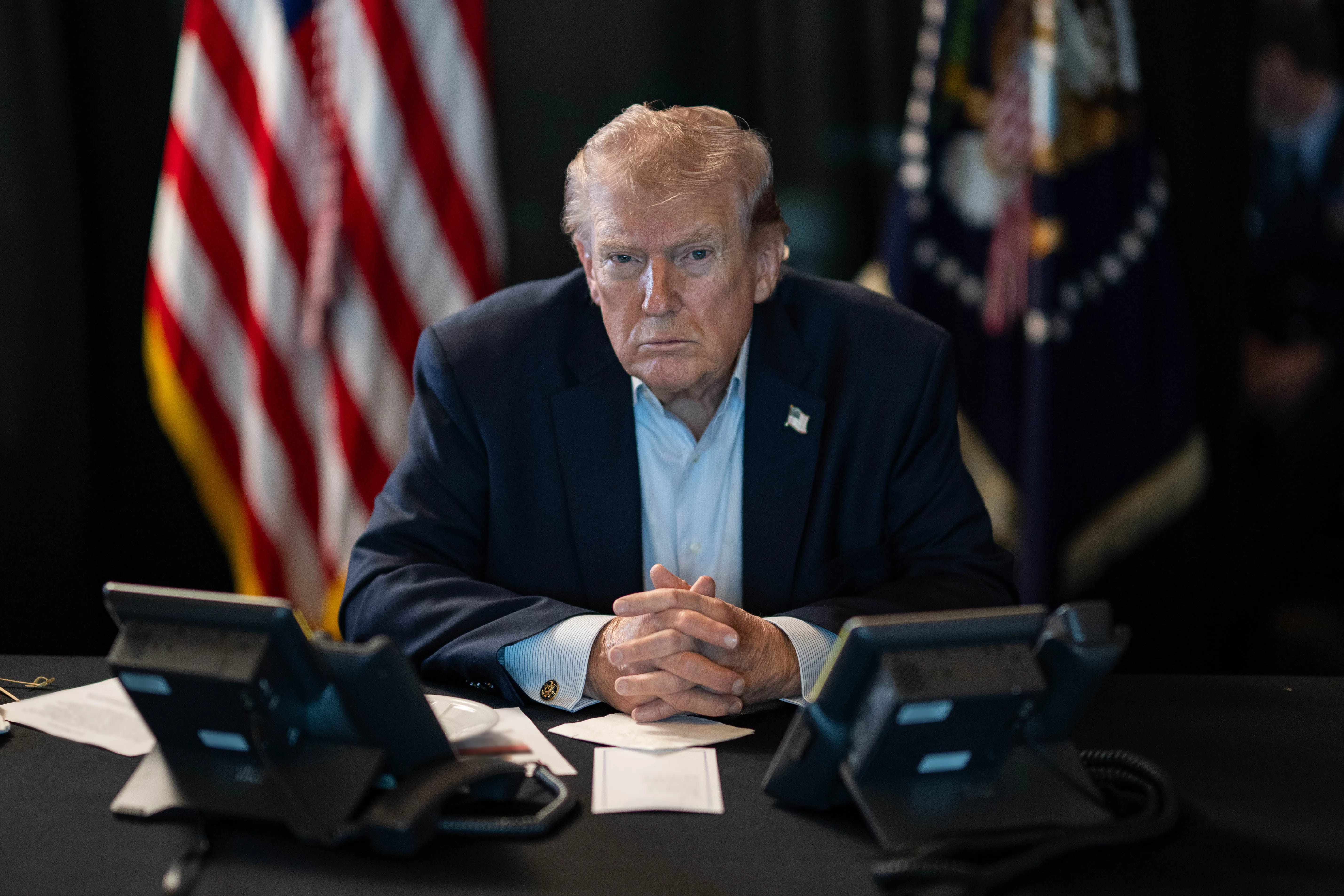
This is not new for Trump, who runs his foreign policy like an improv-performer-in-chief, zigzagging and making things up as he goes, from Gaza to Ukraine to Venezuela to Iran. That’s why others have given Trump’s overall performance on the global stage and in particular the Middle East in the first year since he returned to office is mixed. Trump’s proclivity to rely on bold statements and photo ops to project the image of success ends up hindering sustainable progress — just ask the Palestinians in Gaza what they think about Trump’s Board of Peace (not much).
The rotating rationales that Trump and his team have offered for the Iran war include: regime change and freedom for the Iranian people; the nuclear program; the ballistic missile threat; and the latest from Trump’s national security advisor and Secretary of State Marco Rubio: Israel made us do it. Rubio and others in Trump’s tight inner circle of “yes men” are part of the reason why America risks sliding down the slippery slope into another endless war. Seemingly, none of them challenged the president to address the hard questions, such as: How does this all end?
21st-Century Foreign Policy in the United States of Amnesia
From Iraq to Afghanistan, Syria, North Korea, and Ukraine, U.S. foreign policy is littered with examples of successive administrations, Democratic and Republican alike, falling far short of stated objectives or changing the rationales for why America was engaging in those places.
One example of the apotheosis of strategic unclarity came in President Barack Obama’s controversial decision to “surge” U.S. troops to Afghanistan in 2009 — then viewed as the “good” war by some in America’s increasingly hyper-partisan and ideological national security debates — versus the “bad” Iraq war. Obama defined his strategic goal as sending troops for a short period of time to “disrupt, dismantle, and defeat Al Qaeda and its affiliates in Afghanistan and Pakistan.” True, Obama’s great foreign policy success came shortly after that in May 2011 with the killing of Al Qaeda leader Osama bin Laden. But America’s troops still stuck around for a decade more — a consequence of not having a clear definition of the end state — until the disastrous, haphazard U.S. withdrawal in 2021.
Flash forward to 2026, and Trump is making the mistakes he vowed to avoid by not making clear what he seeks as an end state in Iran. This is his own fault, but there’s also a collective blame when the political opposition in America is not offering a strategic alternative: Democrats have not covered themselves in glory for years in how they have handled Iran, either.
Here’s How this Should End
Trump’s second-term foreign policy so far has had a strong element of “strikes without strategy,” a fixation on military operations conducted in the absence of a longer-term idea of what he wants to leave behind. That’s why the Houthis remain in power in Yemen — even after a punishing military campaign that Trump ended by simply declaring victory without fundamentally degrading the Houthis’ threat to the global economy and security in the Red Sea.
The most realistic, longer-term goals for America are to contain the threat Iran poses to the region and to set a framework for the Iranian people to control their own affairs and destiny. It may take some time for military operations to achieve the first goal. The second goal will likely take a generation.
Three strategic steps in the short run to set up America for success in Iran:
1. Build and expand a coalition for stability and progress in Iran and the region. In a briefing this week, Pentagon chief Pete Hegseth and Joint Chiefs of Staff Chairman Gen. Dan Caine identified a core military goal: “to prevent Iran from the ability to project power outside of its borders,” by eliminating its ballistic missile capability, degrading its navy and destroying other security infrastructure. Thus far, it has been the United States and Israel engaging in these operations, with growing risks that more countries in the region will move beyond defensive measures and join the fight. In the short run, it’s this fight that will matter the most, and how it goes will determine the longer-term options for U.S. policy. One issue to watch closely is the race between how quickly America and its regional partners deplete their weapons arsenals versus how quickly the remnants of the Iranian regime draw down its weapons arsenals, which are on balance cheaper than our side’s munitions. In fighting this battle, it is important to keep in mind that dealing with the remnants of Iran also means addressing the threats from the Iranian regime’s proxies like Hezbollah in Lebanon and the Houthis in Yemen. That military goal is necessary but insufficient to answer the wider question of how this all ends and the ideal end state. The United States should expand the coalition of two it has with Israel to a broader group of countries that have an interest in seeing the threat from the remnants of the regime in Iran contained. This will require diplomacy and the ongoing leadership of Central Command. A key challenge here: America’s bench of diplomats has been substantially depleted in the first year of Trump’s term, and several crucial U.S. ambassadorships in the Middle East remain unfilled, including in Saudi Arabia, the United Arab Emirates, Qatar, Kuwait, and Iraq — all countries on the front lines in this fight. The focus should be on defense of the region — including coordinating air and missile defense and ensuring sufficient stockpiles of weapons that preserves America’s options around the world.
2. Negotiate an off-ramp with diplomacy backed by force. An expanded regional coalition would require the usual compromises — and America has used such regional and international coalitions to great effect recently in the Middle East, notably in the Obama-Trump-Biden fight against the Islamic State. This regional diplomatic coalition could help coordinate the inclusive diplomatic approach necessary to produce an off-ramp. Pragmatism means that we might be looking at in the short term something less like “regime change” and more akin to an “ayatollah adjustment” or “mullah modification,” because the last thing America or any other country needs in Iran is a replication of what happened in Iraq, Syria, Libya, and Yemen during the past decade and a half — Iran is more populous than all of those countries combined.
3. Create a framework for the Iranian people to have a voice in their lives and future. This third element will be years in the making — and it will likely take a generation of Iranians to take over their own destiny and futures. But a transition for Iran led by its own people that results in Iranians having basic freedoms and a voice in their future should remain part of the longer-term plan.
For sure, these three elements cut deeply against the grain of Trump 2.0’s foreign policy approach, with its short-termism and transactional approach that’s more like a rigged game of three-card monte aimed at tricking those playing it. But if there’s one thing America should have learned from the past 25 years of foreign policy, it’s this: If you don’t know where you’re going, any road will take you there, and it will likely lead you astray.
Brian Katulis is Host of “Taking the Edge Off the Middle East” podcast and a Senior Fellow at the Middle East Institute.
Let us recall that the "disastrous, haphazard withdrawal" of troops from Afghanistan in 2021 was due Trump suddenly making a deal with the Taliban to do just that. Remember him inviting Taliban leaders to Camp David? Why not just give them the keys to the WH, Donald? That was his idea of a deal--to elevate their legitimacy and give away all leverage. Joe Biden merely played the hand he was dealt in keeping his promise to end our occupation there.
This would be a good time to say, Thank you, Joe Biden, and we miss you.
"Trump Brings America Closer to a Quagmire in Iran with No Clear End in Mind"
The REPUBLICAN Party Brings America Closer to a Quagmire in Iran with No Clear End in Mind.
We need to hold them ALL responsible