



The Trump administration’s subpoenas of several New York Times journalists highlight the threats the free press faces from government intrusion. They’re the latest moves from an administration that has been especially hostile toward the media.
Coverage of those subpoenas, meanwhile, highlights something else: media failure. Reporting by news giants has left out the history of reporters being subpoenaed by previous administrations. It’s crucial information because it shows the media’s successful track record in fighting back.
In the latest episode of They Stand Corrected, my podcast and newsletter fact-checking the news, I dig into this.

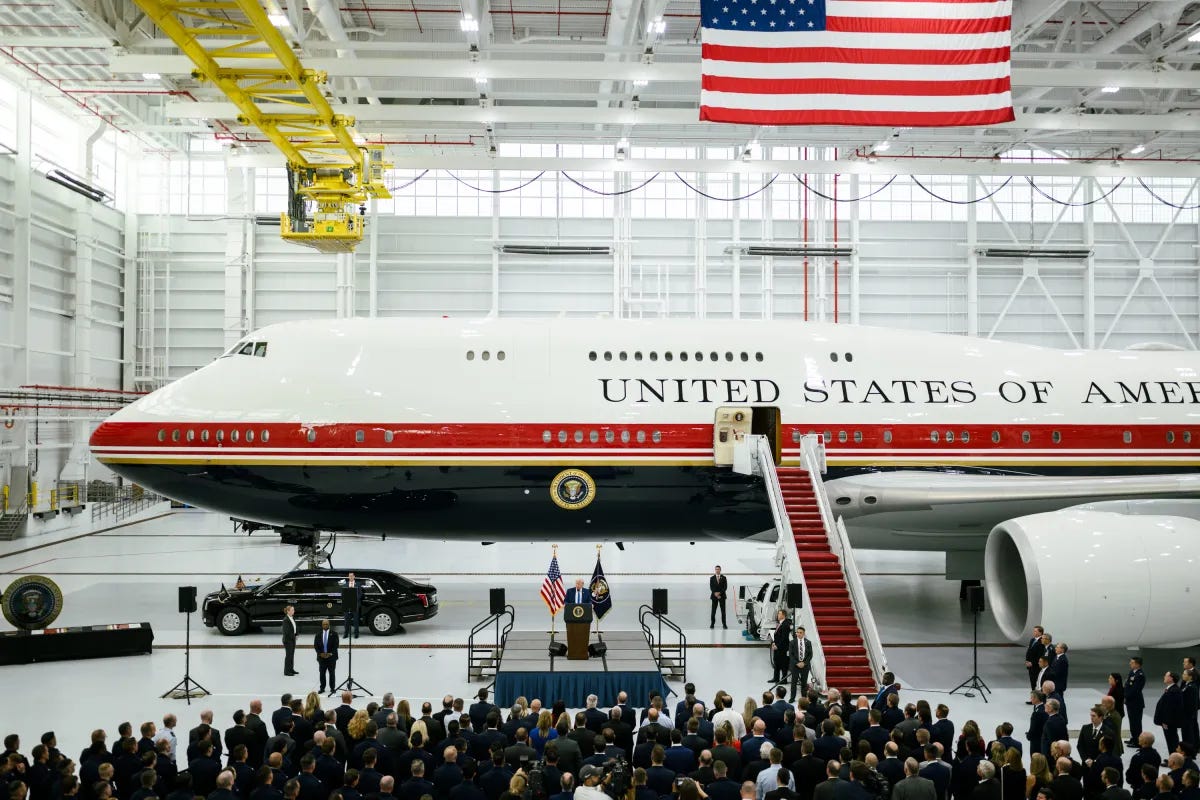
The story at issue begins with the airplane Donald Trump has presented as the new Air Force One — a $400 million gift he accepted from Qatar and plans to keep for his future library. (Although, in typical Trump inner-circle confusion, his son Eric recently sparked questions about which plane would actually be at the library.)
The Times reported that when Trump flew back from Turkey last week, he took “the old Air Force One” as “a security precaution related to the resumption of hostilities with Iran, according to people briefed on the plans, who said the change came at the urging of the Secret Service.”
Trump insisted that wasn’t the reason, but when pressed by reporters, he “repeatedly noted that he was Iran’s No. 1 target,” the paper said. The article raised questions about the new plane potentially lacking security features that the previous one had. Building those features would likely have taken longer than Trump gave the Air Force to prepare the plane.
“Government officials have told The New York Times that this more complex work includes advanced missile defense systems and hardening of the plane’s wiring to protect it from an electromagnetic pulse, in case there is a nuclear strike,” the Times wrote. “It is unclear whether such work was done to the Qatari jet.”
The Department of Justice has subpoenaed journalists involved in the story. The DOJ said “reporters are not the targets, those leaking classified information are.”
Times attorney David McCraw said, “This brazen act should be seen as nothing more than an attempt to prevent the public from knowing what is happening in their country by intimidating journalists from doing their jobs.”
This case highlights multiple issues. First, determinations about reporting on security matters are inherently subjective. Any administration might feel that people leaking information related to the president’s security is beyond the pale.
There may be concerns that the Times report could even unintentionally give an enemy ideas about the kinds of attacks that might be more likely to succeed against the new plane. On the flip side, given that Trump did not fly the plane back from Ankara, this report could be seen as a way to pressure the government to fix security lapses.
An administration can ask a news agency not to report certain classified information that it received legally. It can present an argument. But news agencies get to make these decisions. That’s the First Amendment in action.
The missing context
The coverage has generally failed to make clear what’s new and different here. Take the Associated Press, which is probably the most influential U.S. news agency. Its headline called the move “unprecedented,” with the word in quotes. The story did not mention any previous administrations.
But President Barack Obama’s Department of Justice used subpoena power to go after journalists. And back in 1992 under President George H.W. Bush, White House counsel subpoenaed Nina Totenberg (my former NPR colleague) and Timothy Phelps.
So there are precedents for subpoenaing journalists. Still, this move from Trump’s DOJ may also fit the definition of “unprecedented.” The AP quoted Frank Sesno, a media professor at George Washington University (and my former CNN colleague), using the term. I reached out to him to ask his reasoning. He pointed out that, according to the Times, FBI Director Kash Patel coordinated closely with the administration and was in the White House as the subpoenas were served. We don’t know of something similar — apparently, direct FBI coordination with the White House — having happened in the past when issuing subpoenas to reporters.
Also, federal agents delivered the subpoenas to at least some of the journalists at home. In the past, they’ve generally gone through news agencies’ legal counsel. (It’s worth noting that in 2023, the FBI under President Joe Biden raided the home of independent journalist Tim Burke, but that case involved accusations of hacking rather than confidential sources. He pleaded not guilty.)
Earlier this year, the FBI raided Washington Post reporter Hannah Natanson’s home and seized her devices, in a case centered on “a government contractor accused of illegally retaining classified government materials,” the paper reported. An aggressive legal defense from her newsroom and outside groups led to court rulings blocking the DOJ from accessing her files.
So the Times subpoenas serve as a crucial reminder that every generation must stand for press freedom, including the right to keep sources’ identities confidential in such cases. This move from the Trump administration may have new elements, but we benefit from the legacy — the precedents — set by many who fought that good fight before us.
Josh Levs is host of They Stand Corrected, the podcast and newsletter fact-checking the media. Find him at joshlevs.com.
Thanks for running this column, which accompanies my latest episode and newsletter. Press freedoms are hard won. The media should use them to deliver the truth, the whole truth, and nothing but the truth! Join me at: https://theystandcorrected.substack.com/
I think what the current administration is doing, on all fronts, is beyond the pale, beyond what any administration has done. The executive has weaponized every department to act on its behalf, and only on its behalf.