


On New Year’s Day, Nicolás Maduro was still talking as though he had time.
He had taken security precautions because President Donald Trump repeatedly threatened military action to remove him, but he believed he could outlast Washington’s “illegal warmongering.” In an interview on that day, he said he was prepared for serious negotiations with the United States to address drug trafficking and opening Venezuela’s oil industry to American investment.
Two days later, U.S. special forces captured Maduro and his wife and flew them out of the country to face prosecution in the United States.
This was the moment Venezuela’s democratic opposition had spent years waiting for.
No one had invested more into that moment than María Corina Machado. For months, she had been in hiding from Maduro’s government while pressing for the democratic transition that Venezuelans had been denied after the disputed 2024 election. Days after the American operation, Machado even offered Trump the Nobel Peace Prize she had received the previous October.
For a moment, it was possible to imagine where events were headed. Maduro was gone. His government had lost the protection its security apparatus was supposed to provide. Washington held formidable leverage over the officials who remained in Caracas. And a Venezuelan opposition that had demonstrated substantial popular support was poised to compete for, if not certainly ascend to, political control of the nation.
But that did not happen. Maduro’s vice president, Delcy Rodríguez, was allowed to remain in power under an arrangement in which the surviving government would cooperate with Washington.
Eight months later, much of the political and security structure Maduro left behind remains intact. There has been no fundamental reform of the judiciary, electoral system, or security services, even as Rodríguez’s government has made some concessions and entered negotiations with elements of the opposition. In July, Trump went so far to say that Venezuela was “not really ready” for elections and praised Rodríguez for doing “a fantastic job.” He then pivoted to reminiscing about the success of Venezuelan contestants in the Miss Universe pageant during his ownership.
If Washington has shown limited urgency about transforming Venezuela’s political system, it has moved considerably faster on another matter: the country’s oil.
Last Friday, Trump announced what he called the largest oil deal in history. The arrangement gives a new company 100-year rights over 17 Venezuelan oil fields containing some 65 billion barrels of proven reserves. The Pentagon’s Office of Strategic Capital will own 35 percent of the venture, and the United States will have the right to purchase 20 percent of its production at cost.
Trump claims that the agreement is an economic triumph that will lower gasoline prices and help rebuild Venezuela. Such expectations should be tempered.
Venezuela may possess the world’s largest proven oil reserves, but possessing oil and producing it are two different things. The country currently pumps roughly 1.2 million barrels a day — a third of what it produced in the late 1990s. Years of mismanagement and sanctions have left an industry in need of enormous amounts of capital just to recover what has been lost.
Analysts estimate that restoring production to its historic peak could require roughly $180 billion in investment through 2040. For perspective, estimates after the 2003 invasion of Iraq put the investment needed to restore that country’s oil sector to pre-1990 levels at $5 billion to $6 billion.
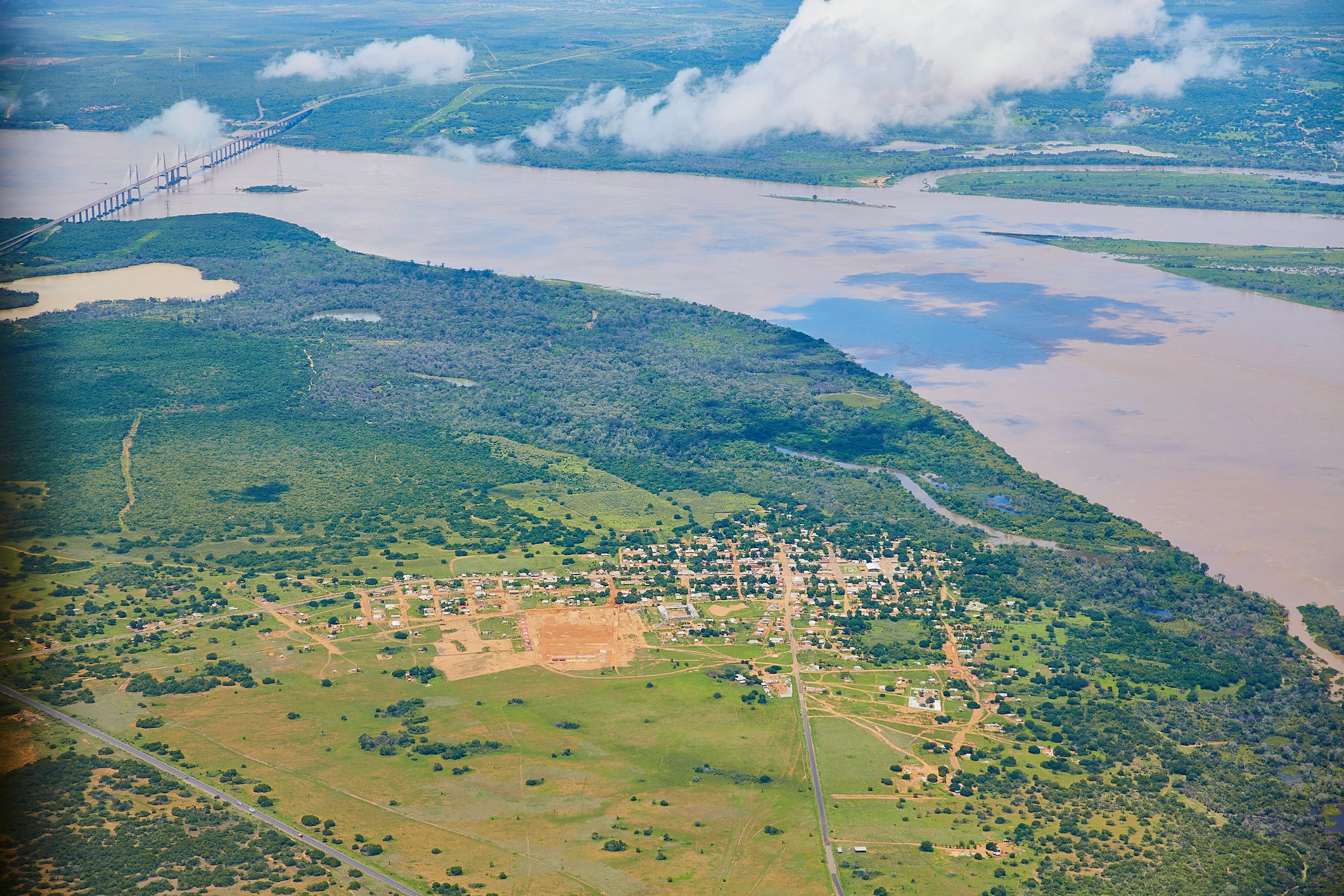
Whatever the deal ultimately delivers, cheaper gasoline is unlikely to be an immediate benefit. Many of the oil fields covered by the new agreement are in Venezuela’s Orinoco Belt, where infrastructure is limited or nonexistent. Energy experts estimate that getting substantial extraction from those fields to market could take five to seven years.
The agreement sits uneasily beside the economic case Machado herself has been making since Maduro’s ouster. In March, speaking to energy executives in Houston, she acknowledged that the rebuilding of Venezuela’s oil infrastructure was a national priority, but, in her formulation, political change — a democratic government and the legal certainty needed to attract private investment — was Step One.
The Trump oil agreement reverses that sequence.
In her first public remarks after announcement of the agreement, Machado again called for elections to be held, but she did not engage on its terms. Elsewhere within the opposition, the agreement has provoked anger and unease, with critics calling it unconstitutional, predatory, and an improper commitment by an interim government.
For the opposition, every month without elections allows a different political and economic order to become more firmly established — one in which Washington sets Venezuela’s priorities and a placeholder government carries them out in lockstep. That should be unsettling to Venezuelans who believed Maduro’s removal would return decisions about the country’s political and economic future to Venezuelans themselves.
Washington may still say it wants a democratic Venezuela, but it is constructing an economic order to its own benefit without waiting for one. The longer that arrangement remains in place, the more a future elected government may find that some of the most important decisions about Venezuela’s economic future have already been made for it.
Brian O’Neill, a retired senior executive from the CIA and National Counterterrorism Center, is an instructor on strategic intelligence at Georgia Tech. His Safehouse Briefing Substack looks at what’s ahead in global security, geopolitics, and national strategy.

Trump could not care less about the people of Venezuela.
Just finished Haberman's and Swan's Regime Change. It specifically states that Trump 's team was willing to work with Rodriguez, knowing that she is corrupt.
Machado, like so many others, mistakenly placed her faith in Trump.