


President Donald Trump’s speech to the United Nations on Tuesday was many things, but it should not have been surprising to anyone.
Certainly not the Iranians, whom Trump threatened to “annihilate” if they refuse his terms for ending the war. Not the Cubans, whose government he called “an absolutely failed state” that will soon fall. Not Greenlanders or Danes, who have spent more than a year listening to threats to seize Greenland by force. Not America’s allies, who have learned that treaties, institutions, and decades-old relationships hold little sway with this president who treats them more like vassals within an American sphere.
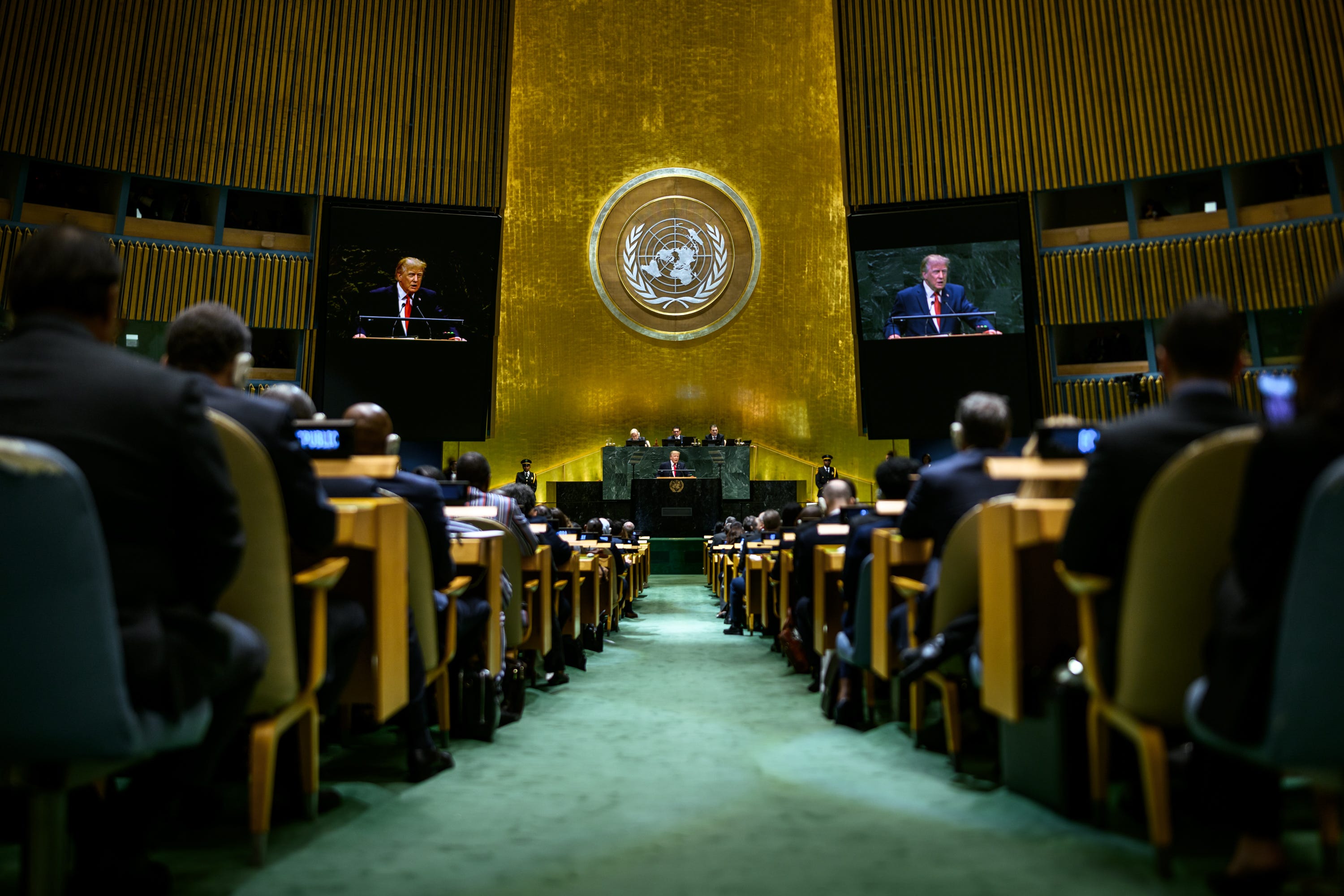
Reactions to the speech have been and will be parochial and diverging. Some will dismiss it as performative, typical of this president. Others will cite the threats and exaggerations as further evidence of cognitive decline. His defenders will hear strength, resolve, and a president willing to say aloud what weaker leaders would not.
The more useful question is what the speech portends for how Trump will use American power abroad as the pressures on his presidency mount.
One answer has become almost conventional. Trump’s tried-and-true cycle of bluster and retreat will continue, though he faces a world now accustomed to waiting him out. Trump threatens, markets panic, allies scramble, opponents brace themselves, and then he backs away. The Wall Street-assigned acronym TACO — “Trump Always Chickens Out” — and the market’s repeated willingness to recover from his threats and missteps suggest that investors still trade as though the label has merit.
Greenland offered another example this week. After months of demands that the United States acquire the territory, Washington, Denmark, and Greenland reached an agreement that gives Washington little that it could not already have pursued under a 1951 defense agreement still in force.
That outcome — as with many others — may look reassuring only if we ignore what happens between the threat and the retreat. Trump can abandon an objective without erasing the costs accumulated while pursuing it. Relations with Denmark and Greenland absorbed months of unnecessary strain. Tariffs can disappear, but businesses and consumers absorb the disruption that preceded their removal. The Iran war has shown the problem on a far greater scale: oil trading near $100 a barrel, depleted American munitions stocks, and regional governments absorbing retaliatory strikes from Iran and its proxies.
The smaller episodes — whether the White House ballroom, the renaming of the Kennedy Center, or the proposed 250-foot triumphal arch near Arlington National Cemetery that Trump now wants to turn into a military complex housing drones, snipers, and ammunition — are no less reflective of what comes next. His attention remains locked on initiatives that offer a visible display of presidential authority, even as more consequential national-security problems remain unresolved.
That is why I am not persuaded by James Carville’s prediction that Trump is “just gonna walk away” by Easter of next year. Carville argued that a political rebuke in the midterm elections could leave Trump frustrated enough to resign — just walk away. That argument, however, assumes Trump judges the presidency largely by his ability to govern successfully through Congress.
Even a hostile Congress would leave Trump commander in chief, head of the executive branch, wielder of the pardon and veto powers, conductor of American foreign policy, and the dominant figure inside his political movement. Leaving office would surrender all of that.
That distinction also makes me less convinced by the familiar argument that Trump will become more dangerous because he senses the walls closing in. His speech at the United Nations did not sound like that of a man preoccupied with shrinking authority. It sounded like a president oblivious to constraints and signaling where he will apply his power next.
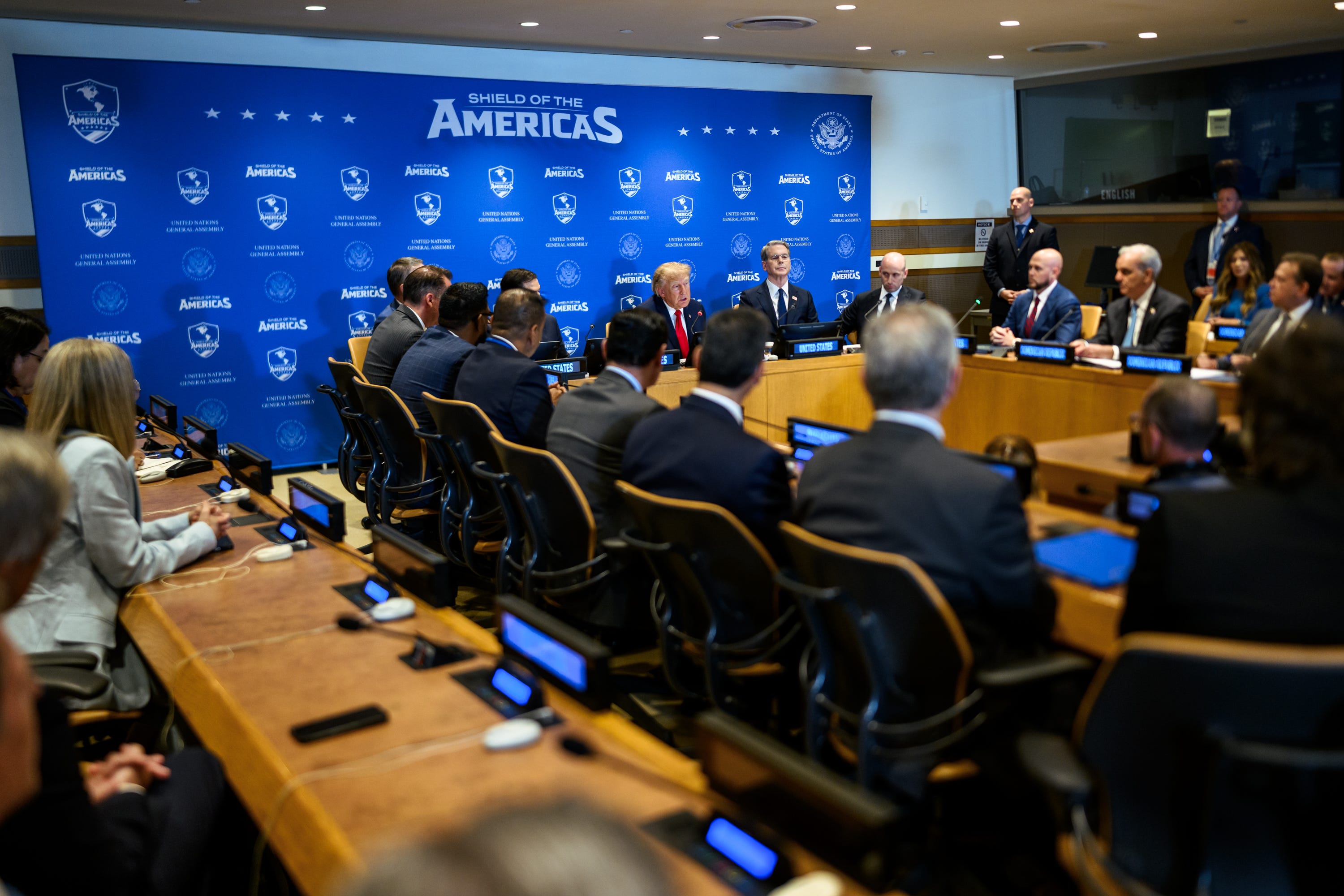
The Western Hemisphere stood out. Trump celebrated the American operation in Venezuela, predicted political change in Cuba, and promised to use America’s “unmatched military might” when necessary to protect U.S. interests in the region. His administration has simultaneously worked to organize Latin American governments around its campaign against cartels.
Whatever one thinks of those policies, the pattern deserves attention. Trump appears increasingly focused on a region where the United States enjoys enormous military and economic advantages and where most governments possess limited means to resist sustained American pressure.
Iran offers almost the opposite lesson. Tehran can retaliate. It can disrupt energy markets, threaten American bases, and work through partners across the region. Russia possesses nuclear weapons and conducts a war that the United States cannot end by declaration. China combines military power with economic leverage on a scale no Latin American state can approach. Europe can frustrate Washington through institutions, regulations, and collective action even as it remains dependent on American security guarantees.
The Americas, on the other hand, offer Trump something increasingly difficult to find elsewhere: leverage without an equal counterweight.
Trump’s United Nations speech matters for reasons that have little to do with whether it sounded presidential or unhinged. We already know how Trump talks. The important signal was where he directed his attention.
Trump still appears convinced that American power can compel outcomes if he finds the right place to apply it. On Tuesday, he gave the world an indication of where he intends to look next.
Brian O’Neill, a retired senior executive from the CIA and National Counterterrorism Center, is an instructor on strategic intelligence at Georgia Tech. His Safehouse Briefing Substack looks at what’s ahead in global security, geopolitics, and national strategy.
