


On Saturday, a massive civil rights organizing response to the Jim Crow redistricting enabled by the MAGA Supreme Court justices — then rammed through by MAGA-controlled state legislatures — will kick off in Alabama. Who is behind this bold campaign, and what can we expect?
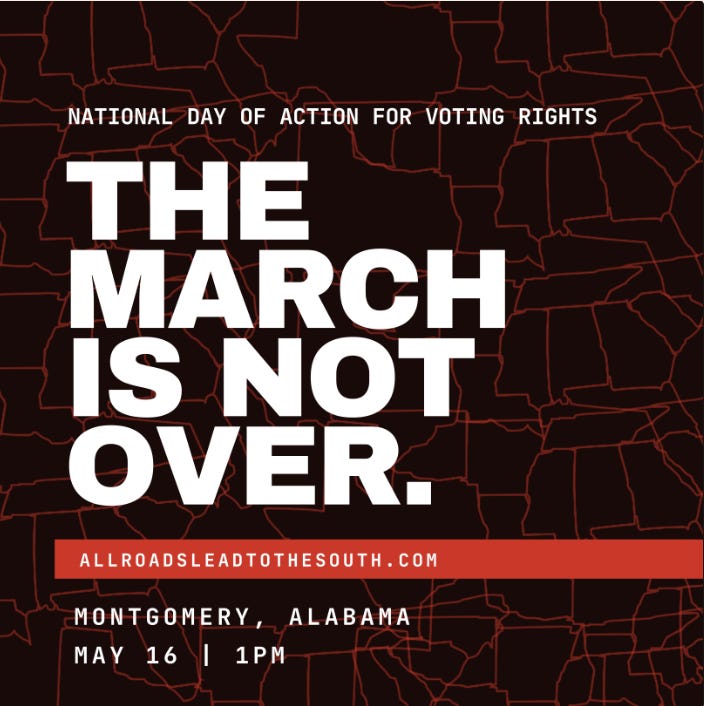
“All Roads Lead to the South,” focused on Selma and Montgomery (two iconic sites in civil rights history), is a coordinated effort championed by Black Voters Matter and over 200 (!) civil rights and pro-democracy organizations (including #WinWithBlack Women, National Coalition on Black Civic Participation, the NAACP Legal Defense Fund, the ACLU, Democracy Defenders Action, The Lawyers’ Committee, LULAC, The Brennan Center, SPLC, The Transformative Justice Coalition, and Fair Fight) as well as the broader No Kings Day coalition. A massive response to the re-imposition of Jim Crow, one-party rule (with Republicans racing to redrawn lines to eliminate batches of Black and Hispanic House members and dilute Black and Hispanic voting power) could not be more urgent.
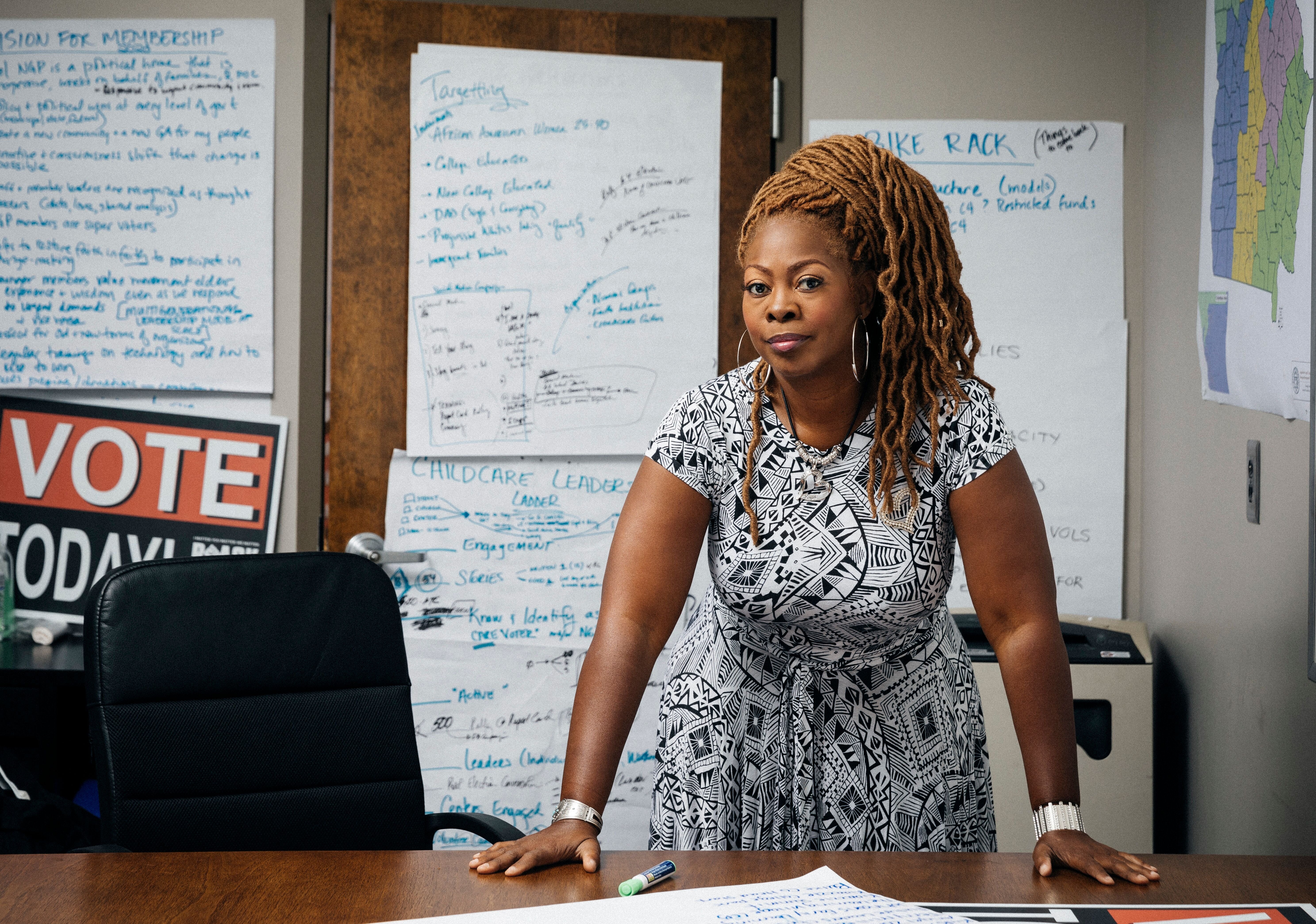
Cliff Albright and LaTosha Brown, co-founders of Black Voters Matter Fund, are at the forefront of an unprecedented voting rights campaign to push back against “a coordinated effort to weaken Black political power.” It’s only appropriate to start in Alabama, which “has always been sacred ground in the fight for freedom,” they remind us.
In her recent, inspiring call to action, Brown did not mince words about the impact of Callais, one that rivals Plessy v. Ferguson and Dred Scott in depriving non-white Americans the benefits of full citizenship. “This is a reshaping of the political landscape of this country,” she explained. “It will marginalize Black political representation not just in the South, but throughout the nation.”
If Republicans get their way, they could flip as many as “19 majority-minority congressional seats and 191 state legislative seats across the South” and replace 15 Black representatives with White Republicans, she noted. “We are looking at a level of racial revanchism not seen since the end of Reconstruction,” she said bluntly.
Leaders in the civil rights movement are not surprised at the aftermath of the Supreme Court’s ruling. Rightwing extremists on the court, in taking a “blowtorch” to voting protection, as Janai Nelson, who brilliantly argued Callais on behalf of the NAACP Legal Defense Fund, put it, ignited a furious scramble to disenfranchise millions of voters:
Within hours of the decision, Florida’s governor, Ron DeSantis, advanced a map that redrew 21 of its 28 congressional districts and signed it into law.
Thursday, Tennessee Republicans passed a new map that breaks up Memphis, a majority-Black city, into three different congressional districts, a deliberate effort to eliminate the state’s one Democratic-held seat. Alabama is poised to do the same. And the governor of Louisiana has postponed congressional primary elections that began with the mailing of absentee ballots on April 1.
White supremacists’ tactics have evolved, but their aim has not changed. “Enemies of that progress are clawing back the gains Black and Brown communities have made by whatever means necessary,” Nelson argued. “Instead of poll taxes and literacy tests, we have gerrymandered districts and a process of packing and cracking voters of color.” Whatever the method, “the goal is the same: dilute the power of Black and Brown voters. Shrink the electorate. Ensure the outcome before a single vote is cast.”
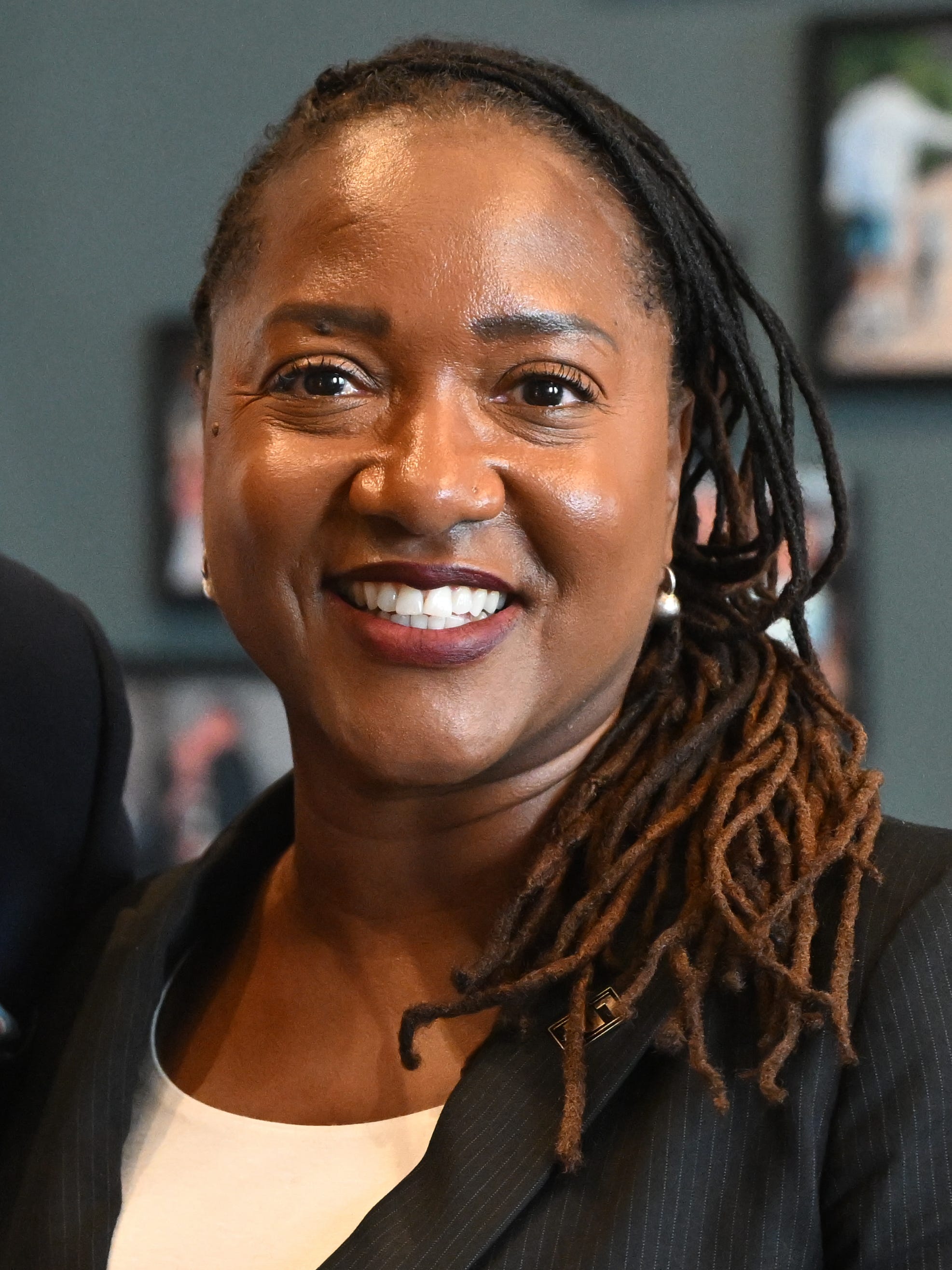
Years of civil rights organizing, litigating, educating voters, and developing sophisticated communications networks will now be tested, most immediately in the midterms but also over the long haul to build an enduring pluralistic democracy.
The response to Callais must be just as ferocious as the Supreme Court’s assault on voting rights. This is not simply an issue for the Congressional Black Caucus or the Democratic Party or one racial group. “This is an American crisis dressed up in colorblind language,” Brown reminded us. We do not have a true democracy when millions of Americans cannot elect representatives of their choice, or when a virtually all-white ruling class has a lock on office.
In the short run, Brown and other movement champions will organize massive voter registration drives, economic pressure campaigns against corporations that align themselves with White supremacy, and a voluminous communications effort to explain the stakes to all Americans. Engaging and turning out millions of new voters is the key to halting America’s descent into authoritarian, Jim Crow MAGA rule.
Beyond November, Brown implores Americans to think big to meet the moment. “I am asking us to stop being incrementalists. Incrementalism assumes a system that operates in good faith. We do not have one.” Instead, she explained, “I am asking us to be the architects. The people who understand that we are building for a hundred years, not for one election or news cycle.”
She proposes, for example, “proportional representation with multimember districts and ranked choice voting, so that Black voters at 30% of a state’s population reliably elect 30% of its representatives.” In other words: “No districts to gerrymander. No maps for the Court to strike down.” Other proposals include election of the president by popular vote (via the National Popular Vote Compact), same day registration, a federal department dedicated to democracy protection, and Supreme Court reform. “We are the architects now, “ Brown reminds us. “Pick up the tools so that we become the founders of what is next to come.”
Callais is a calamity, but not one we must accept as the new normal. The MAGA court does not get to define American democracy. Their judicial abomination can and must be the impetus for Americans to seize control of their own future. As Janai Nelson put it: “It has always been the ordinary Americans who have bent the arc of this country toward justice — yes, on a bridge in Selma and at so many other places throughout history: a lunch counter in Greensboro, North Carolina; a shirtwaist factory in New York City; a bar in Greenwich Village.” She and other civil rights veteran know that “collective power — the power of the people — will always be greater than the people in power.” She implore us not to “let Louisiana v Callais be the end of the story, the final chapter in a short-lived saga of a fledgling multiracial democracy.” The only question is whether we have the will to use our collective power.
Brown, Nelson, and their civil rights coalition partners remain undaunted, unafraid, and undeterred despite MAGA justices and lawmakers’ quest to undo 60 years of progress in achieving pluralistic democracy. They understand that mass political action is the answer to judicial Jim Crow and a reactionary movement rooted in White supremacy.
We salute the civil rights activists and “architects,” and urge all of you to join the movement to bring about a “new birth of freedom” that delivers on the promise of pluralistic democracy.
The Callais ruling underscores what many of us already knew. This regime is trying to consolidate power in the hands of the few. My only hope is that it is enough of a wake up call for all of us to organize and fight back.
If I were a fan of conspiracy theories, I would feel that someone on the Supreme Court somehow (illegally) communicated with red state leaders of their intent on Callais in advance. We see how these various states had plans ready to go as soon as the decision was announced. The Supreme Court is CORRUPT (well, actually six of the justices including the Chief Justice). By the way, just because the Court ruled that way did not force all these states to change their maps. But in just a few days, all these changes were approved and Black people were deprived of the representation they want. In addition, they halted voting already in progress in some states. That has got to be illegal. And based on remarks from the politicians, they are giddy with excitement that they could now eliminate minority-majority districts. When Democrates are back in power, they must institute reforms at the Supreme Court. No more shadow docket. All opinions must be signed by all justices. Increase the size of the Court to 13 and install term limits.