


The killing of Renee Good at the hands of an Immigration and Customs Enforcement officer has focused the nation’s attention on ICE violence. In a new survey, 76 percent of voters said they have watched the footage of her homicide. Seeing the federal killing of a citizen activist is the first time many Americans have felt skin in the game of Trump’s mass-deportation regime.
But there’s another scandal that requires our attention. ICE horrors aren’t limited to snatching community members off the streets in violent arrests (using banned chokeholds) or brutalizing bystanders. The Trump administration is also notorious for its mistreatment of detainees as they’re being held for potential deportation.
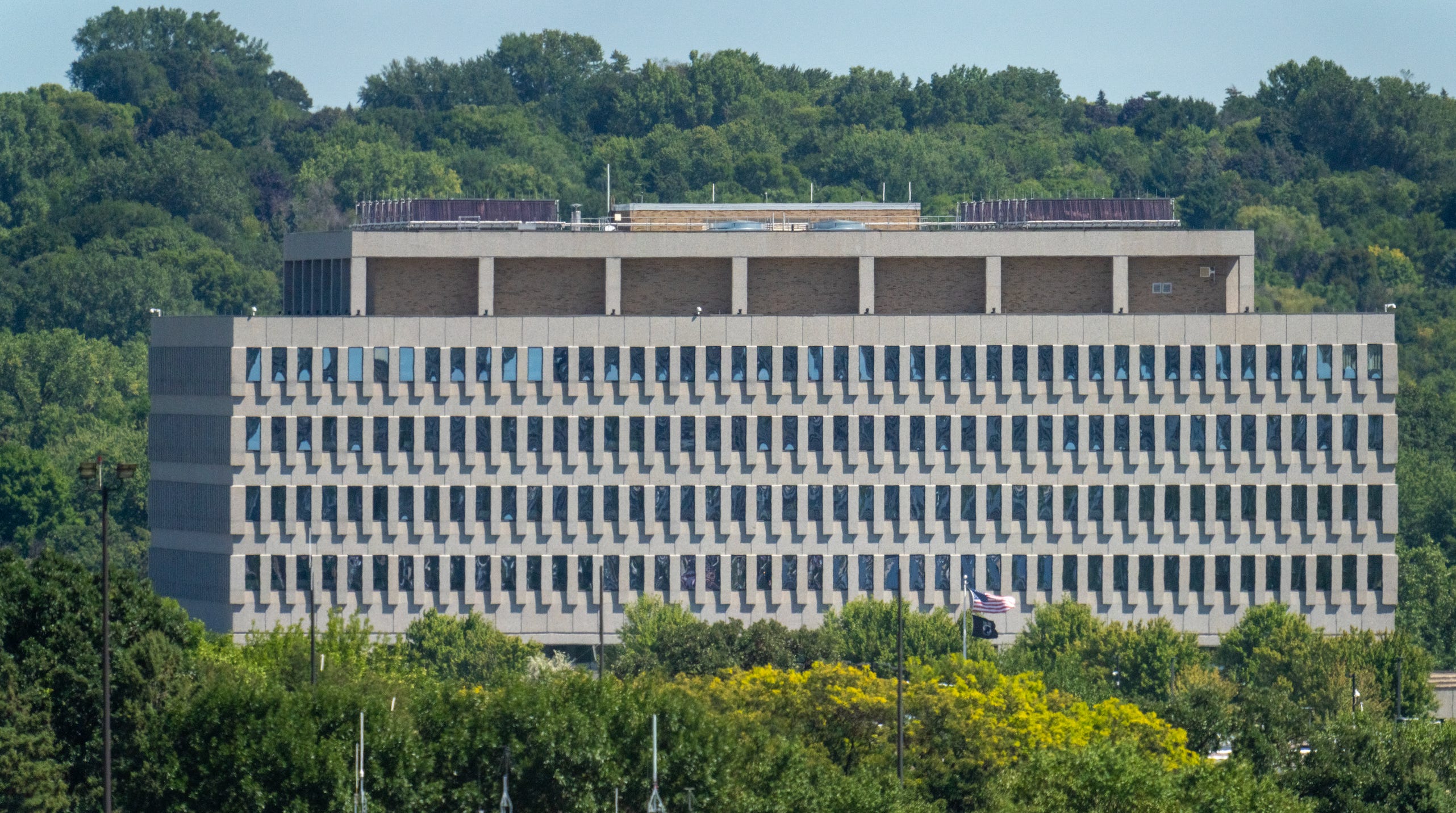
The Whipple federal building in Minneapolis — where captured immigrants and protesters alike are being detained by federal authorities — is currently a black box. Members of Congress have been banned from oversight. Religious leaders have been blocked from ministering to those jailed there. And the administration’s track record on providing adequate food, water, and hygiene to those swept up in its mass-deportation surges is egregious — as the case of the infamous Broadview facility, near Chicago, demonstrated last fall.
The hostile invasion of Minneapolis — dubbed “Operation Metro Surge” — has seen more than 2,000 federal agents descend on the Twin Cities, a metro about a third the size of Chicago. Agents have been called out for indiscriminate round ups of migrants, of Native Americans, and of activists exercising their First Amendment rights by opposing ICE operations.
The Whipple building at Fort Snelling sits on a narrow swath of land between the airport and the Mississippi River. How many people are detained there? How long do detainees stay? In what conditions? The Department of Homeland Security is not providing details, beyond a rough count of 2,400 arrested in Minneapolis since late November. A CBS affiliate reports that many detainees are eventually shipped to outlying county jails.
When members of Congress sought to perform oversight at the federal facility on Saturday, they were turned away after just 10 minutes — on the basis of a new policy issued by Homeland Security secretary Kristi Noem that states Congress must give one-week notice before entering a detention facility funded by Trump’s One Big Beautiful Bill.
What Reps. Kelly Morrison, Ilhan Omar, and Angie Craig (all Minnesota Democrats) glimpsed inside was upsetting: Detention rooms without beds or blankets. No apparent shower facilities. “The public deserves to know what is taking place in ICE facilities,” Omar wrote in a post on Bluesky.
Such oversight is critical given the abuses that have occurred at other facilities that were ill-prepared to scale up for mass detention. The Broadview ICE facility outside Chicago is the nightmare precedent. A class-action lawsuit filed in October compiled a litany of horror stories from detainees, who described being deprived of adequate water and food, being held in unsanitary conditions, being unable to contact attorneys, and lacking any modicum of privacy, including to use the toilet.
The Broadview declarations shocked the conscience.
One detainee named Juan described insufficient rations of clean water and marginal food (small Subway sandwiches) that could be withheld as punishment.
The only water I received was one bottle of water each time that I was given a sandwich…. When I asked officers for more water, they refused.
After the third day, there were more people in the holding rooms and people were banging on the walls to try to get more food. The Broadview staff became annoyed, and they started giving us less food.
A female detainee who was in Broadview for five days described being deprived of access to counsel and told her detention would only end if she agreed to be deported:
I asked to speak with a lawyer. The officer said no. He said I had no right to speak with a lawyer. He emphasized that until I signed the deportation paperwork, I would be stuck there in detention at Broadview.
A declaration by a “Jane Doe” described being held in a filthy cell with no bedding.
The floor in the room where I spent three days was concrete. There were no beds or mattresses. The only place to lie down was on benches around the room. They were made of a rubbery material. I used toilet paper as a pillow. There were bugs under the seats; I saw centipedes, spiders, and roaches.
This same detainee recalled zero privacy when using the toilet — which was in the line of sight of cameras. (Camera footage from Broadview later mysteriously disappeared.)
There was no privacy. We were in full view of the male officers and the detainees, even when we used the toilet. There were cameras as well, even in the toilet area.
A male detainee described similar conditions:
Other detainees—including the women and men in the other rooms—could see into our bathroom area. The women’s bathroom was visible to people in the men’s holding rooms and to the officers. The officers watched when we went to the bathroom.
The detainees decried inadequate hand soap and an inability to bathe. One wrote:
There was no opportunity to bathe or shower. There was a shower fixture in the room, but a sign on it read “out of order.” The room stank of body odor.
Medical attention was scarce. One male detainee described witnessing the mistreatment of a pregnant detainee:
In the women’s cell, I saw a pregnant woman. She asked the ICE officers for medication that she needed, but they would not provide her with any medication.
In early November, a federal judge issued a temporary restraining order to “address the serious conditions” at Broadview. The court ordered the government to guarantee detainees “a clean bedding mat,” adequate water, access to bathing facilities, and at least three full meals per day.
Despite improvements at Broadview, the legal arguments from the Trump administration continue to be upsetting. Earlier this month the Department of Justice claimed the government doesn’t have to guarantee detainees access to counsel. DOJ also argued it would be “overly (and unnecessarily) burdensome” to “review and fact-check” the myriad detainee denunciations against the government. DOJ referenced, specifically, an allegation that a detainee with dietary restrictions was forced to go hungry for four days instead of eating Subway sandwiches that violated his religious beliefs.
The filing also seeks to dismiss allegations that detainees were coerced to sign deportation orders in a language they didn’t understand — on the basis that government agents would never think of breaking the rules: “Plaintiffs’ claim is belied by the fact that DHS has a regulation that prohibits this alleged conduct.”
Are the horrors of Broadview being replayed at the Whipple building? Something is going on that the Trump administration doesn’t want Americans — even the legislative branch — to see. The blocked members of Congress have gone to court seeking to gain access to Whipple, appealing to a judge who earlier ruled in favor of oversight privileges.
Meantime, reports are emerging from those who spent time in the facility. The Minnesota Reformer and the Sahan Journal both reported on a pair of U.S.-citizen activist observers who were arrested by ICE for supposed obstruction, and detained at Whipple for eight hours before being released without charge.
They described being denied food or water, and having to plead to use the toilet. One described being denied a phone call, the other being offered informal enticements to rat out protest organizers. They described seeing immigrant detainees in crowded cells. “I saw people with their heads in their hands, people…that looked weak and tired,” one recalled. “I heard screaming, I heard crying.”
The Department of Homeland Security did not respond to questions from The Contrarian. For now, Whipple is operating at the sole discretion of the lawless Trump administration. We may have to wait for a new class-action suit to learn about the horrors within.
Tim Dickinson is the Senior political writer for the Contrarian
We shouldn't be shocked when they gleefully sent migrants to CECOT, a hellish place that somehow largely escapes global condemnation because "drugs and criminals are bad" despite the blatant human rights abuses. Now Trump is bringing similar torture and human rights abuses home to America. Maybe GITMO was the first warning sign on what was to come, but now we're way past the warning stage and falling deep into lawless authoritarianism where the constitution means nothing compared to unlimited executive authority granted by a corrupt Supreme Court and a cowardly congress.
What an horror! How those people can get as low as that?! 😤 American friends you have to gather your strength and do something: no one else is helping you from the courts to the most extreme administration you ever had. Your president has already mentioned he could eliminate the November elections. All my blessings to the poor people going through this nightmare 💗