

By Kate Andersen Brower
Much has been made of President Donald Trump’s superficial changes to the White House, from his gilded Oval Office to the childish “Presidential Walk of Fame” on which his predecessor Joe Biden’s portrait has been replaced with a zoomed-in photo of an autopen. But those are distractions when compared to his grandiose plan to build a $200 million, 90,000 square foot State Ballroom (for context, a football field is 57,600 square feet). It represents a permanent, dramatic change, unlike the others above, and it will have a far-reaching effect on the already diminished role of the president’s spouse. That’s because in order to make room for the new construction the East Wing, which for decades has housed the offices of the First Lady, will no longer exist as we know it today.
However Melania Trump feels about this loss, it will be a lasting blow to the hard-won stature of her role. First Lady is still an anachronistic and misunderstood job, one that comes with no official description, no pay, and endless expectations. Presidential spouses are scrutinized not just by the American people, but by the world at large. And now they may not even have a space to call their own.
At first the East Wing had nothing to do with first ladies. President Theodore Roosevelt constructed a one-story East Wing in 1902 as the guest entrance for large events, and Franklin Delano Roosevelt later expanded the East Wing partially to cover up construction of an underground bomb shelter. (This room is now the President’s Emergency Operations Center, built to withstand a nuclear detonation.) It wasn’t until Rosalynn Carter that first ladies began working out of their offices in the East Wing. Carter hired a chief of staff whose government salary and rank were equal to the President’s chief of staff, and expanded the hiring of full-time positions in the East Wing by almost 20 percent.
The first lady’s office is located along a quiet corridor on the second floor next to the calligraphers, who write elegant invitations to formal White House events. In order to get to work efficiently every day and not be distracted by the tourists who visited the White House from 8 a.m. to noon, Rosalynn took a secret passageway through the basement underneath the mansion, passing large laundry rooms, the Plumber’s Shop, and the bomb shelter, and coming up through a stairway that led straight to the East Wing. The steam pipes running in the basement ceiling made the route especially welcome on cold days.
What Rosalynn knew, like most first ladies before and after her, is that proximity is everything in the White House. The East Wing has been referred to as “Siberia” over the years by West Wing aides, and it’s true that it has always been an after-thought, probably because it is designed for the first lady and her mostly female staff while the West Wing is traditionally the purview of alpha males. And yet, it has remained an invaluable resource: a stable, secure home base from which each first lady can choose how she wants to approach her impossible job, just as the president has in the Oval Office. If the first lady’s space is removed so that an event space can replace it, then we are turning back the hands of time.
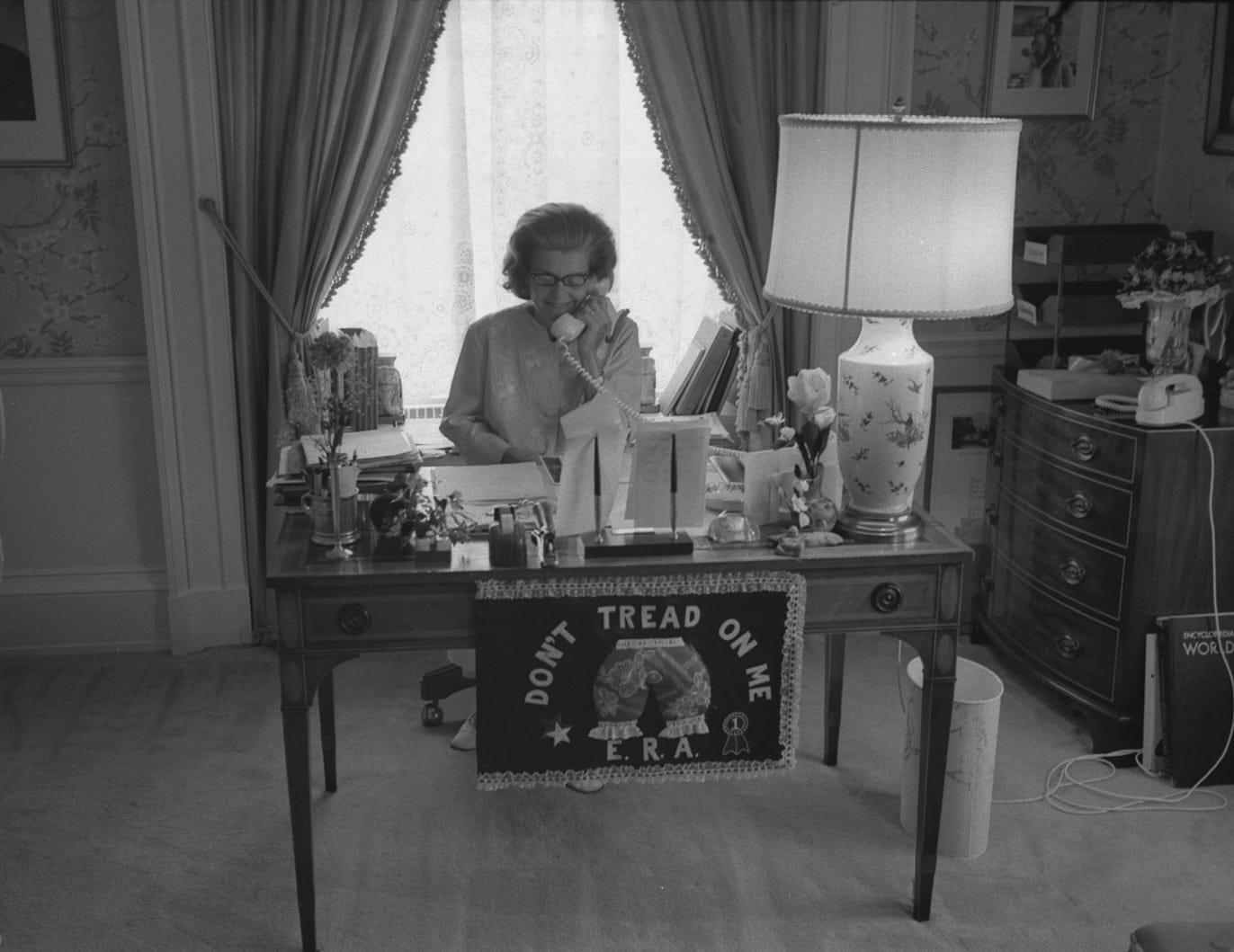
Not every first lady chooses to use her East Wing space. Melania Trump reportedly only visited her office a couple of times during Trump’s first term; staff took to using it as a gift-wrapping room, while the military took over additional offices. An aide to Jill Biden told me that she had to work out of the Eisenhower Executive Office Building because there wasn’t enough space in the East Wing. Nancy Reagan preferred working out of her office in the private family quarters on the second floor of the residence rather than their formal offices in the East Wing. But eliminating even the option of working from the East Wing, moving the first lady and her staff to a building outside the White House, as the new construction would necessitate, can only make the role of president’s spouse more old-fashioned and outdated.
Many former White House aides agree that the 200-person capacity of the East Room is too limited for the kind of large state events the new ballroom would host, and that the tents on the South Lawn for larger gatherings are not an ideal permanent solution. “Those tented state dinners were costly and unattractive no matter what you did to design them,” one aide told me. “But,” she added, “I’m just curious about the East Wing.”
That is the pertinent question here. What will we lose if we lose the East Wing? One can only imagine how upset Rosalynn Carter would be to learn that her well-loved offices may no longer exist, sacrificed for a ballroom that can fit 650 (sorry, 900) people.
It might be like Jackie Kennedy getting a look at the new Rose Garden.
Kate Andersen Brower is the author of FIRST WOMEN: The Grace & Power of America’s Modern First Ladies and THE RESIDENCE: Inside the Private World of the White House.
Trump's audacious behavior in making so many big changes shows me that he is planning on living in the White House for quite a while. The humble stature and elegance of the People's House is being transformed into a king's glittering palace. It makes me furious. How can he just do it? And, when I remember that our government is supposed to be "of the People, by the People, and for the People," ... the spending of this administration is disconsonant with our values. His huge tariffs and outrageous budget takes hard-earned money from the People, and his massive tax breaks for the rich ... are only part of the story of how he is corruptly placing those funds into his bulging pockets.
A rose garden has much more aesthetic appeal than a gaudy ballroom.