


When I was in elementary school, I had to cope with a recess yard bully, who turned his attention to me. I tried to mollify him—offering him part of my lunch or even lunch money. Sensing my weakness, he doubled down. He provoked a fight, and I ended up in the nurse’s office with a bloody nose. It taught me a lesson: Mollifying bullies is a fool’s errand—the more you try, the more you reveal your weakness, and the more the bullying intensifies.
That was my first thought when I saw the news of the “deal” to end the shutdown. I seethed. The first word I used on social media? Capitulation. I was and still am angry. But it is important to step back and unpack the action and the dynamic here, including how we proceed from here.
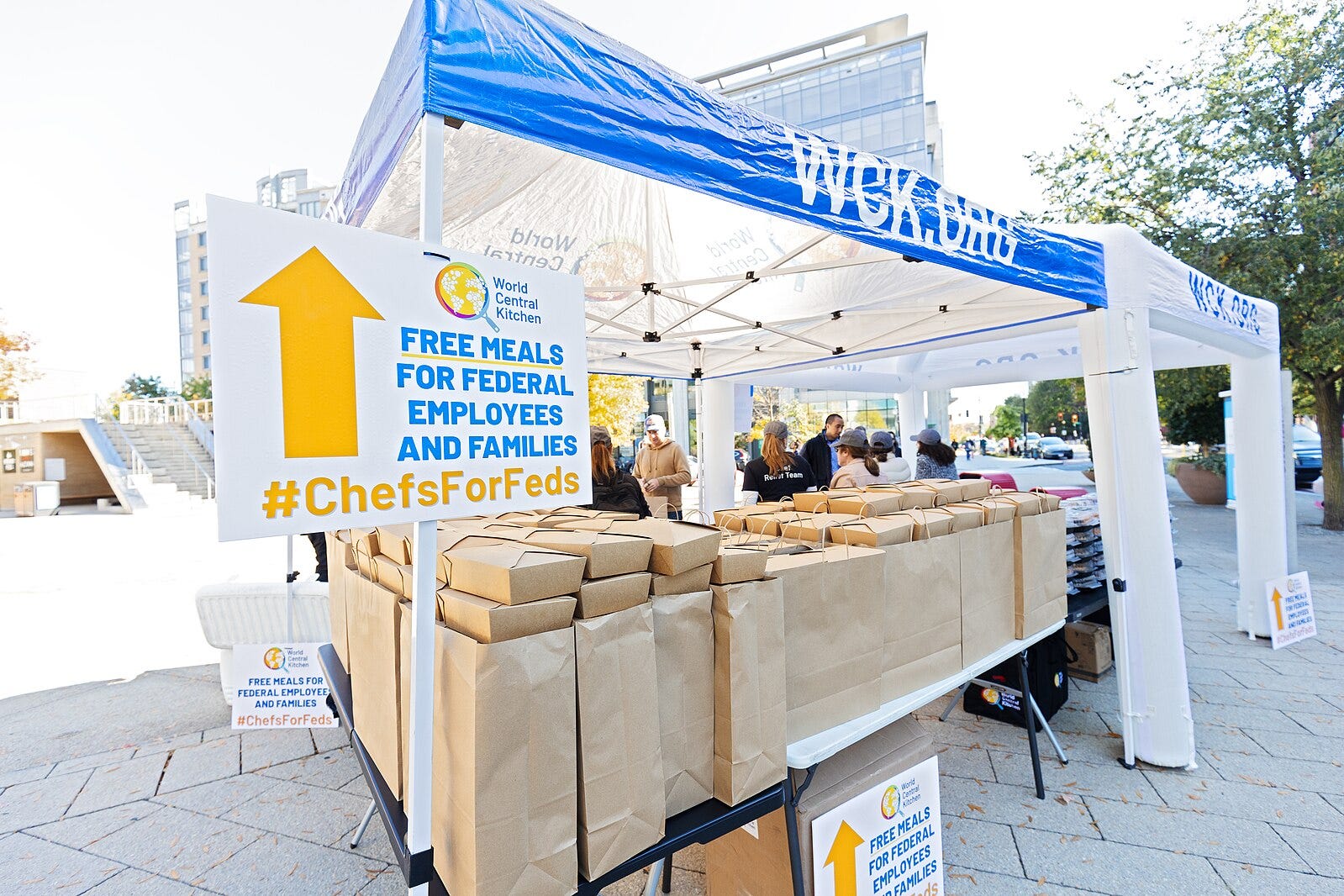
The shutdown was absolutely necessary. If the capitulation had occurred without it, Democrats would have been yoked to Republicans in sorting out the responsibility for the healthcare protection mayhem on the horizon. False though it would be, the right-wing wind and message machine would have blared it out, and obedient mainstream media would have dutifully reported it as such.
A shutdown that would last at least into November made sense. On Nov. 1, 30 million Americans, including some newcomers to the Affordable Care Act applying during open enrollment, were to get notices from their insurance companies of premiums to start on Jan. 1—with two possibilities: one if subsidies were extended, one if not. The latter, of course, would mean two-, three-, or fourfold increases in premiums, putting them out of reach for most Americans. A shutdown without Republicans agreeing to extend the subsidies would have made clear that Trump and Senate Republicans were responsible for snatching coverage away from 30 million Americans, leading to preventable fatalities and a ton of medically driven bankruptcies. And, of course, that could have led Republicans to decide whether a compromise made sense, especially after the first week in November also delivered a sharp rebuff to Republicans in the elections.
After the elections—with results that showed a backlash against Trump and his cult, not just in Virginia and New Jersey but also in Georgia and Mississippi—it was reasonable to expect that Senate Majority Leader John Thune would begin to talk compromise. He did not—in fact, he doubled down on his party’s obduracy. That alone tells us something about Trump and his party. Americans largely blame the president and Republicans for the shutdown, but elected members and their leader do not care. They are not driven by what affects or motivates small-d democrats or those who respect public opinion—they are not even provoked by their own constituents and voters. They believe that their varied moves for voter suppression; a highly partisan Supreme Court combined with the structural bias of our system; and a pliant-enough cult will enable them to retain power, even if a majority of voters turn against them.
It also became clear that any vestiges of fundamental decency are gone from Thune and congressional Republicans, who observed as Trump, Russell Vought, Sean Duffy, and other minions turned the screws to make the pain of the shutdown more severe for average Americans. The longer the shutdown went on, the more they would applaud the turning of the screws.
So, waiting longer, including through the holidays and past Jan. 1, when the actual premiums would take effect, could have turned the bully’s tactics against them. Of course, that also would have meant playing a game of chicken against a deranged driver—with big risks. One being Republicans resorting to changing the rules, ending the filibuster, and jamming through a straight CR—balancing the blame for healthcare disasters even more firmly on their shoulders with passage of a drastic national voter suppression plan, ending vote by mail and most early voting, requiring proof of citizenship tailored to elude many older and poorer voters, and more. (Of course, that might still happen, if GOP standing continues to plummet as the midterms approach.)
The shutdown, however it ended, has at least firmly established the blame for the healthcare protection debacle. But the way this one ended remains cringeworthy. First and especially important, the timing. Doing this immediately after premium notices and an election triumph was bound to infuriate the Democratic base, bring bloodletting, and accentuate a problem that already exists—the sense among far too many Democrats and independents that party leadership is too weak, too complacent and compliant, and too willing—as a New Yorker cartoon put it—to say “When they go low, we cave.” With voter suppression already underway, Democrats need an ardent base, ready to do anything to get out the vote. True, many things will happen in the next year to get that base ready to go to the barricades, but many of those things might lead to more demoralization.
Second, the deal let Thune and his colleagues bilk Senate Democrats by slipping into their CR an unacceptable provision: giving millions in taxpayer windfall to eight Republican senators who had their phone meta records subpoenaed for good reason—not to look at their calls, but to see whom Trump and his cronies were communicating with during the coordination of the Jan. 6, 2021, violent insurrection. Who knows what other outrageous and destructive provisions they snuck in as well.
How bad this deal will be remains to be seen. Maybe enough House and Senate Rs will listen to their constituents and extend the ACA subsidies—a very, very unlikely outcome. More likely, the Senate will vote, the House will ignore it and refuse to vote (the deal is only for the Senate), and—absent any provision to keep Trump from using rescissions to undo some of the constructive elements of the spending provisions—a good part of the positive will unravel.
It is also possible, after the premiums go up and there are catastrophic outcomes, Republicans will reverse their course. But we know what they also will try to do: bring back the horrible idea of creating sham insurance plans, cheap on the surface in the same way the first car I bought (a 1954 Plymouth for $50 that looked like a bargain until the floor rusted out while I was driving on Minnetonka Boulevard in St Louis Park, Minn., and suddenly I was looking not at the road but at the dashboard, with my seat scraping the road beneath). Cheap plans that cover nothing serious, with subscribers finding out only when they file claims.
All of this will come to a head when this deal expires on Jan. 31. Then what? If Republicans come up with yet another CR that contains obnoxious and unacceptable provisions, will this set into motion Groundhog Day, shutting down yet again without any sense of another endgame? Nobody knows.
The Affordable Care Act required insurers to cover equally serious illnesses and took away the excuse provided by denying coverage due to preexisting conditions—which some insurers interpreted as having a hangnail without previously reporting it. It took away the ability of insurers to get rich through insuring the healthy while denying coverage to the sick or those who might get sick and—forcing those with ailments into high-risk pools that were unaffordable. And the ACA, thanks to an Al Franken provision, required insurers to give 85 percent of premiums back to their subscribers, taking only a maximum of 15 percent for overhead and profit. Republican attacks on greedy insurers do not apply to the ones in the ACA—only to the ones who prey on innocent Americans seeking affordable care.
If the end of the shutdown at least strips away the shield of that phony rhetoric and shows why the ACA is widely popular, and if Republicans are (finally) put back on their heels, that will be good. But the downside of giving up too early will still be significant. Buckle up: The same dilemma might well raise its ugly head again in 11 weeks.
Norman Ornstein is a political scientist, co-host of the podcast “Words Matter,” and author of books, including “It’s Even Worse Than It Looks: How the American Constitutional System Collided With the New Politics of Extremism.”

Federal worker household here. Groundhog Day is way too cute a name for the continual stress inflicted upon us by holding our jobs hostage because Republicans--and apparently, many Democratic senators--refuse to do their jobs and compromise over a reasonable budget that serves all Americans. That is not our fault. This shutdown cycle has robbed us of our physical health and peace of mind, as well as the morale needed to do a good job ourselves. Yet we soldier on. If anyone deserves the equal and opposite praise that should be generated by the outcry over capitulation, it is federal workers. How about insisting that our working lives be improved as a bargaining point?
Mr. Eisen stated the situation that we're now facing very clearly.
Appeasement only invites further attacks and concessions from a bully who considers any form of capitulation or appeasement as weakness.
In this case, we have a vague and open-ended "promise" from Senator Thune that the matter of funding ACA subsidies will take place "sometime later in December." This, from a party that is well known not to keep promises, was not a good bargain. If we ever see any legislative action, it will be a miracle.