

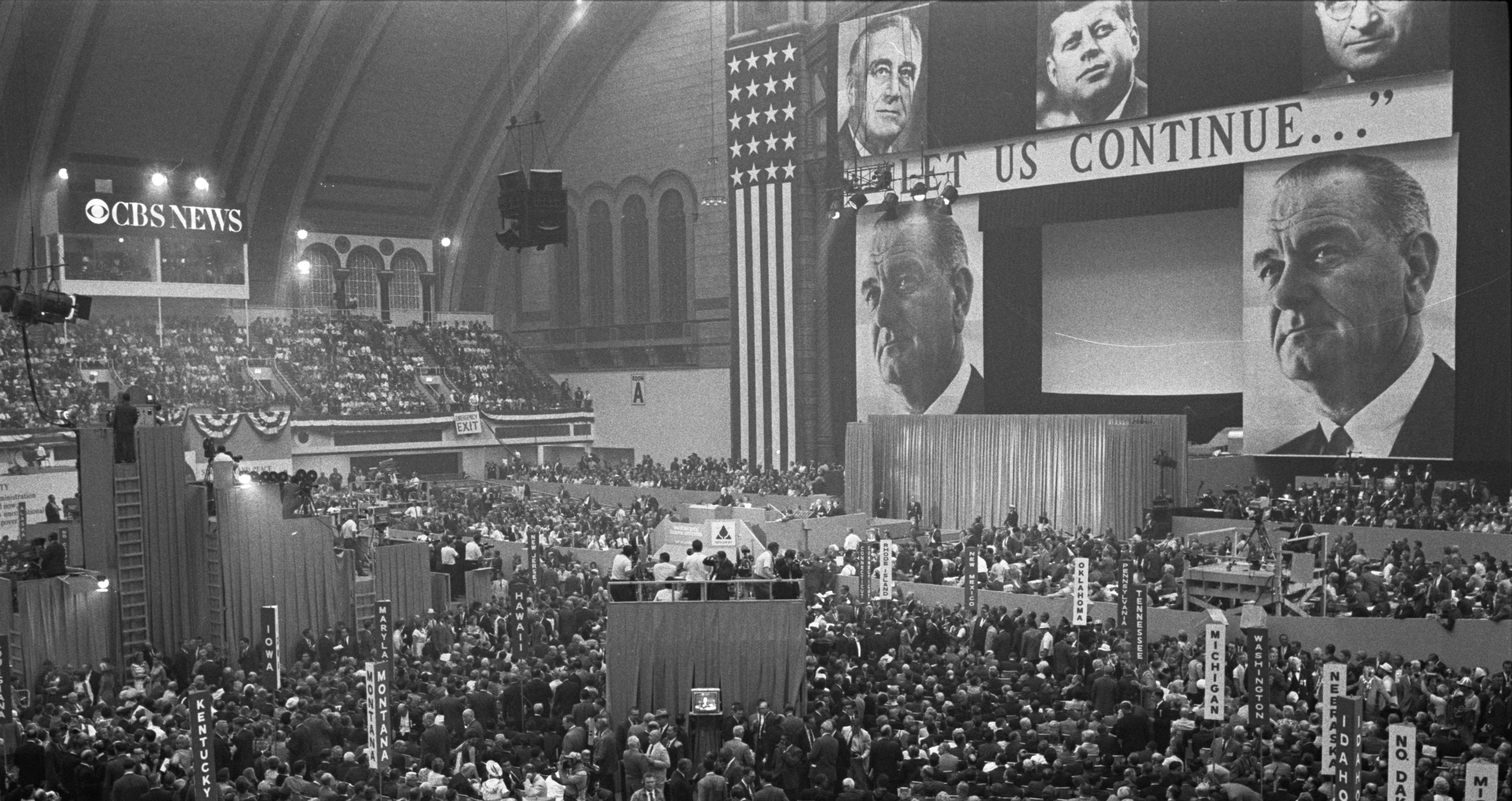
Once upon a time, “CBS News” was known as the “Tiffany network,” proud of such remarkable journalists as Edward R. Murrow, Robert Trout, and Walter Cronkite. Like clockwork, millions of Americans tuned into their radio and television broadcasts. “And that’s the way it is,” pronounced “Uncle Walter,” and most people believed him. His credibility, and CBS’s, was untouchable. William Paley, the original owner, a Philadelphia cigar manufacturer, would often boastfully refer to his journalists as “the jewels in my crown.”
No longer.
Today, CBS News is a pale shadow of its once glorious past. Except for broadcasts, such as “60 Minutes” and “Sunday Morning,” it is rarely the network that notches impressive ratings or collects many bulletins. Of course, it’s not just CBS that has seen its finer moments; it’s the entire news industry, which has been experiencing an economic and technological revolution, lowering taste and quality, and has now been challenged further by eye-catching changes in two media empires, run by the Murdoch and Ellison families, each with a similar story.
The Murdoch empire, hatched in Australia, valued at roughly $25 billion, home for Trumpian conservatism on Fox News, recently experienced a father-to-son switch in leadership following a long, occasionally bitter legal struggle. When the ninety-four-year-old Rupert Murdoch, husband of four wives (at different times) and father of six children, began to consider who would be his likely successor (he was looking, of course, for another staunch conservative), he soon found himself in an embarrassing family struggle lasting months and costing the services of more than 50 expensive lawyers. The reason: the old and familiar quest for power—who would control the media empire often called the “golden goose.”
Finally, a settlement of sorts was reached. Son Lachlan, known to be deeply conservative, would inherit his father’s power to run the Murdoch empire, and the other five children, a few tilting toward liberal in their political outlook, would be left to divvy up $3.3 billion. Lachlan thus becomes the media mogul deemed best able to feature and advance President Trump’s controversial policies and to support the drive of political conservatism in America. With Fox News already in hand, the younger Murdoch now commands the ratings and commercial heights of conservative broadcasting, and is not likely to change his father’s approach to news, profit, and politics.
But if Murdoch intends to rest on his Foxy laurels, he’d better keep his eye on an aggressive competitive threat looming just around the corner, namely David Ellison’s bulging media empire. Son of Larry Ellison, the energetic California businessman and entrepreneur, who may be the wealthiest man in America (depending on the market on any given day), the younger Ellison launched Skydance, his own media corporation, and began to produce popular movies in Hollywood. Apparently dissatisfied, he began to entertain bigger dreams. He wanted to expand Skydance into a media powerhouse, comparable to Murdoch’s Fox empire, so impressive he’d soon be a mogul and therefore assured a seat of political influence in a national dialogue now swinging precariously from democracy to authoritarianism.
Ellison scanned the media horizon and spotted Paramount, another moviemaker, but one that owned an underperforming CBS News. As his luck (and the misfortune of journalism’s integrity) would have it, Paramount was on the market. Owner Shari Redstone wanted to sell, and the negotiations quickly got off the ground, opening a splurge of media acquisitions by Ellison. After winning the support of Brendan Carr and Trump’s FCC, a necessary step in major media transactions, Skydance formally acquired Paramount, including CBS News, and settled a $16 million law suit caused by Trump’s unhappiness with a 60 Minute interview last year with former Vice-President Kamala Harris. Wasting little time, Ellison has since intensified his effort to acquire Warner Bros. Discovery, another Hollywood moviemaker, which was also on the market, and— not by accident—happened to own CNN, a major cable news broadcaster.
Ellison was obviously imagining the formation of a broadcast conglomerate consisting of both CBS and CNN, both former media giants currently experiencing poor ratings but capable, in his view, of bouncing back under his management to new heights of political and economic influence. Like Lachlan Murdoch, he too would be recognized as a major tech titan, a booming new voice in American media. With this prospect on the near horizon, Ellison has already begun to generate headlines, news stories and one big question: would his Skydance empire become like Fox News; another conservative voice competing for Trump’s favor? Or, might Skydance blossom into something new, different, interesting, profitable, and undercut Fox? No one knew.
In Ellison’s plans was the urgent need for a bold, unafraid leader, and he thought he’d found one tucked away in his expanding media empire, namely, the publisher of the small, highly successful, conservative-leaning online newsletter called The Free Press, which he’d recently purchased for $150 million. Bari Weiss seemed perfect. He’d read and become an ardent fan of her controversial opinions. She tilts conservative, though neither pro- nor anti-Trump, certainly anti-woke, definitely patriotic, and powerfully pro-Israel, a key consideration for both him and his father. He saw her as the perfect editor-in-chief of CBS News, even though CBS had never had an editor-in-chief, and even though Weiss has never managed a television newsroom, nor has she ever operated foreign bureaus. He proposed the idea. She immediately accepted.
The announcement stunned CBS, leaving many reporters, editors, and producers feeling “fractured,” as one put it, and “shocked,” to quote another. In fact, the announcement sent waves of anxiety through the entire industry. Using language precious to most American journalists, certainly to those raised in the old, tested and revered traditions of CBS News, it tried to strike the right notes. CBS, under Weiss, would be “fearless,” covering the news “wherever it led,” suggesting it would, if necessary, be tough on Trump. Both political parties would be treated “fairly,” it stressed. “Facts” would determine coverage, and “opinion” would be so labeled. In other words, as Weiss pronounced at her first meeting at CBS, let’s just cover “the fucking news” and forget about labels. She tried to light a revitalizing fire under CBS, but ended up leaving most staffers worried about their jobs as well as her definition of “news,” especially in the darkening Trump era.
One obvious problem was Weiss’s reputation as an impassioned, opinionated firebrand, raising immediate doubts about her ability to lead a network modeled after Murrow’s usually cool, careful adherence to fact over opinion. “Tell me what you’ve seen and heard,” Murrow used to tell me, “not what you think.” Moreover, though Weiss had absolutely no experience in managing a radio/tv news network, she had labored in the uncertain fields of journalism for some time.
Weiss, forty-one, started as a cub reporter for Haaretz, an Israeli newspaper, then went on to Tablet, a website focusing primarily on Jewish issues, before getting a job at the Wall Street Journal on its op-ed and book review desks, which opened the door to the editorial desk of The New York Times. From there, she relentlessly pressed her anti-woke, pro-Israel points of view—until, suddenly in 2020, she resigned (or was fired), alleging mistreatment by colleagues and discrimination by a frightened management. Seeking a new adventure in journalism, she launched The Free Press on Substack, which became a huge success, earning roughly $15 million annually off 1.5 million subscribers. She does know the opinionated side of the journalism business (that’s clear), but her installation as editor-in-chief of CBS News still generates important questions about whether she is the right person to represent and manage a radio/tv network at a time of profound change in the media world.
A writer for the Columbia Journalism Review judged Weiss to be an “explosive” writer with an “inflammatory attack-dog style,” not exactly the proper qualifications for CBS’s new editor-in-chief; but President Trump expresses no disapproval of the prospect of her atop the historic CBS News. In fact, he considers the Ellisons, father and son, to be “friends of mine,” adding, on reflection, “they’ll do the right thing.”
Generally, in Trump’s view, journalists who do “the right thing” are those who praise him and do not ask him any probing questions. Those who do not do “the right thing” in his estimation are sued, kept at a distance and, if possible, even driven out of the business. Few aspects of presidential power concern Trump more than his appearance on television. Portray him as a tough, articulate hero, and, in his view, you are doing “the right thing.” Criticize him, dig into Epstein moments of his unsavory past, and you—and your network or newspaper—will quickly find yourself in legal trouble.
The Ellisons, the new owners of CBS and soon CNN, are successful, unemotional entrepreneurs. They did not buy CBS to restore the tattered traditions of CBS News; they bought it primarily to make money. The Murdochs have shown the way. Media can still make money; big media can make big money. With their “golden goose” at Fox, the Murdochs have made fortunes while accelerating the decline of American democracy. They have learned to treat Trump not with editorial clarity and fearlessness but with undeserved respect—facts be damned—as we learned from a recent lawsuit, which did not go Fox’s way. Now the Ellisons are on the edge of creating a media empire strong enough to challenge the Murdoch world of little foxes. If their motivation is simply the accumulation of additional capital, the path is crystal clear. Copy the Murdochs, and help pave the road to a deeper Trumpian authoritarianism. But if they wish to introduce a new voice in the spreading fight against authoritarianism, helping in this way to restore and strengthen American democracy, they would have the media tools in CBS and CNN to do the job, or try to.
But by appointing Weiss to put her editorial imprint on CBS, David Ellison must have admired her accomplishments at The Free Press. There are few other ways of judging her journalistic skills or accomplishments. There is little doubt she earned lots of money, identified her audience, and has run a breezy, interesting newsletter that occasionally criticized Trump but more often found ways of sidestepping criticism. During the presidential campaign last year, Weiss chose not to formally support Trump or Harris, though one study showed that between May and November of 2024, 70% of The Free Press content was favorable to Trump.
So, if Weiss’s pro-Trump instincts are to liberate CBS from its old journalistic habit of striving for good, clean, balanced copy, even if such copy does not draw enough eyeballs to make lots of money, the effect, unfortunately, will be the deepening and widening of the conservative voice in American journalism and politics. Ellison would have joined up with Murdoch. The chance for a change to decent politics and better journalism will then have been lost.
Marvin Kalb, who worked for CBS News for 24 years, is Murrow professor emeritus at Harvard and author, most recently, of “A DIFFERENT RUSSIA: Khrushchev and Kennedy on a Collision Course.”
I once heard that CBS news didn't make money in it's golden years, and Bill Paley didn't care. He was proud of his news division, and subsidized it out of a sense of duty, recognizing the importance to democracy of a strong news division.
How low we have fallen since then. Now it's "anything for a buck"
Thank you, Marvin Kalb. Your years of exceptional journalism stand in stark contrast to what we see today. You are missed.