


Less than two years into Donald Trump’s second presidency, it often feels as if we are living through a perpetual culture war. In the MAGA era, seemingly every choice we make — from the sports we enjoy to the music we listen to — feels like a political statement, while quotidian items like jeans and beer have become battlegrounds in an endless conflict between left and right.
Two events last week threw this divide into stark relief: Trump’s $60-million UFC cage-fighting birthday bash on the White House lawn, followed days later by the star-studded opening of the Obama Presidential Center, where music legends including Bruce Springsteen and Stevie Wonder performed.
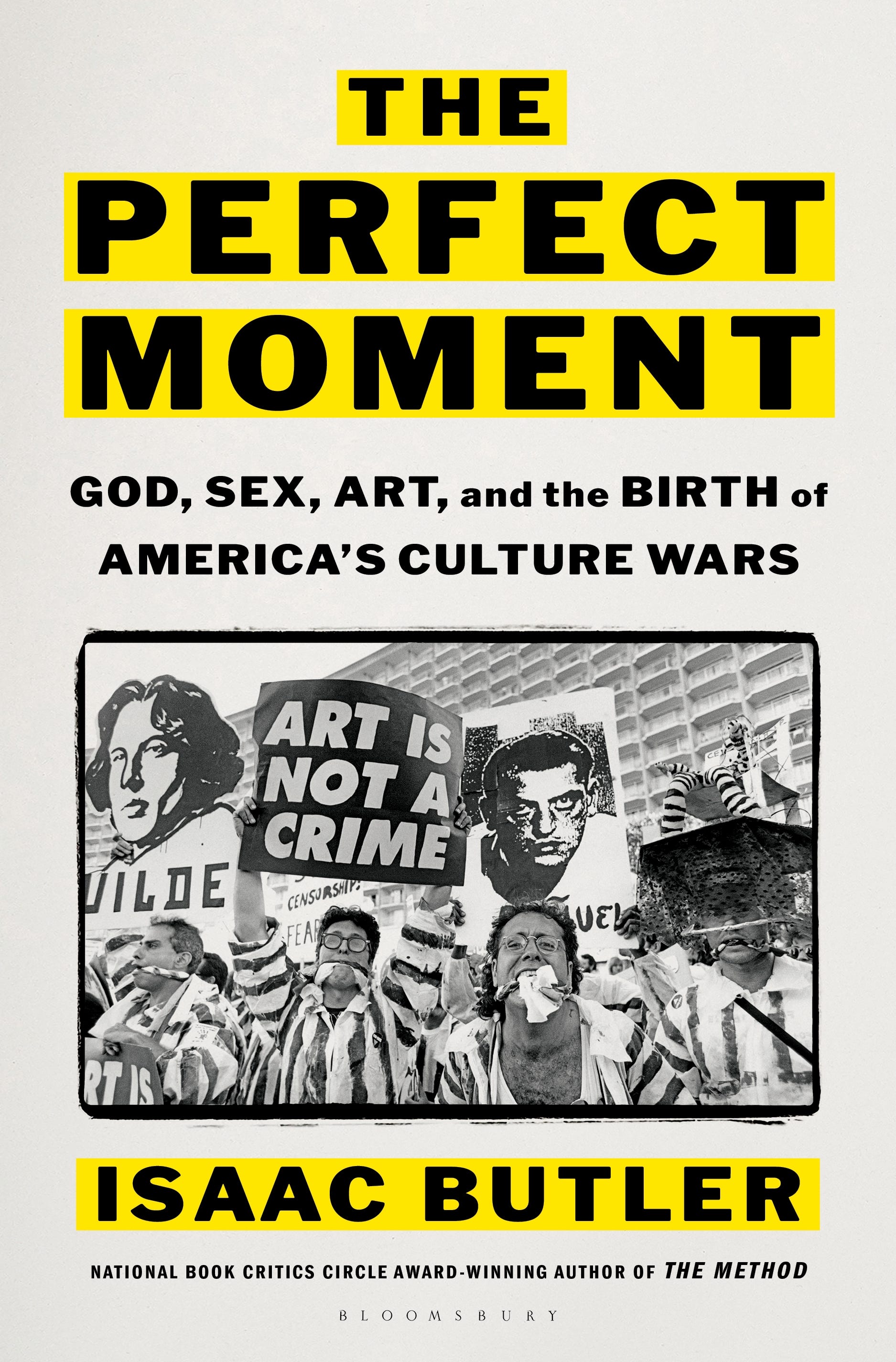
“Everything is a culture war right now, because we have gotten into this period where whatever consensus there is about who we are as a people and our values has completely broken down,” said Isaac Butler, author of The Perfect Moment: God, Sex, Art, and the Birth of America’s Culture Wars.
In his gripping and exhaustively researched book, Butler argues that this state of non-stop cultural warfare dates back to the twilight of the Reagan era. As the Cold War began to wind down in the late ‘80s, the newly powerful religious right found a convenient new enemy in artists whose provocative work was indirectly supported by the federal government via the National Endowment for the Arts.
Fanatical conservatives like Jesse Helms, the long-serving senator from North Carolina, and Donald Wildmon, founder of the American Family Association, stirred outrage over the use of taxpayer money to fund supposedly obscene works of art and somehow made it seem as if a handful of downtown New York artists who few normies had ever heard of were the greatest threat facing the country.
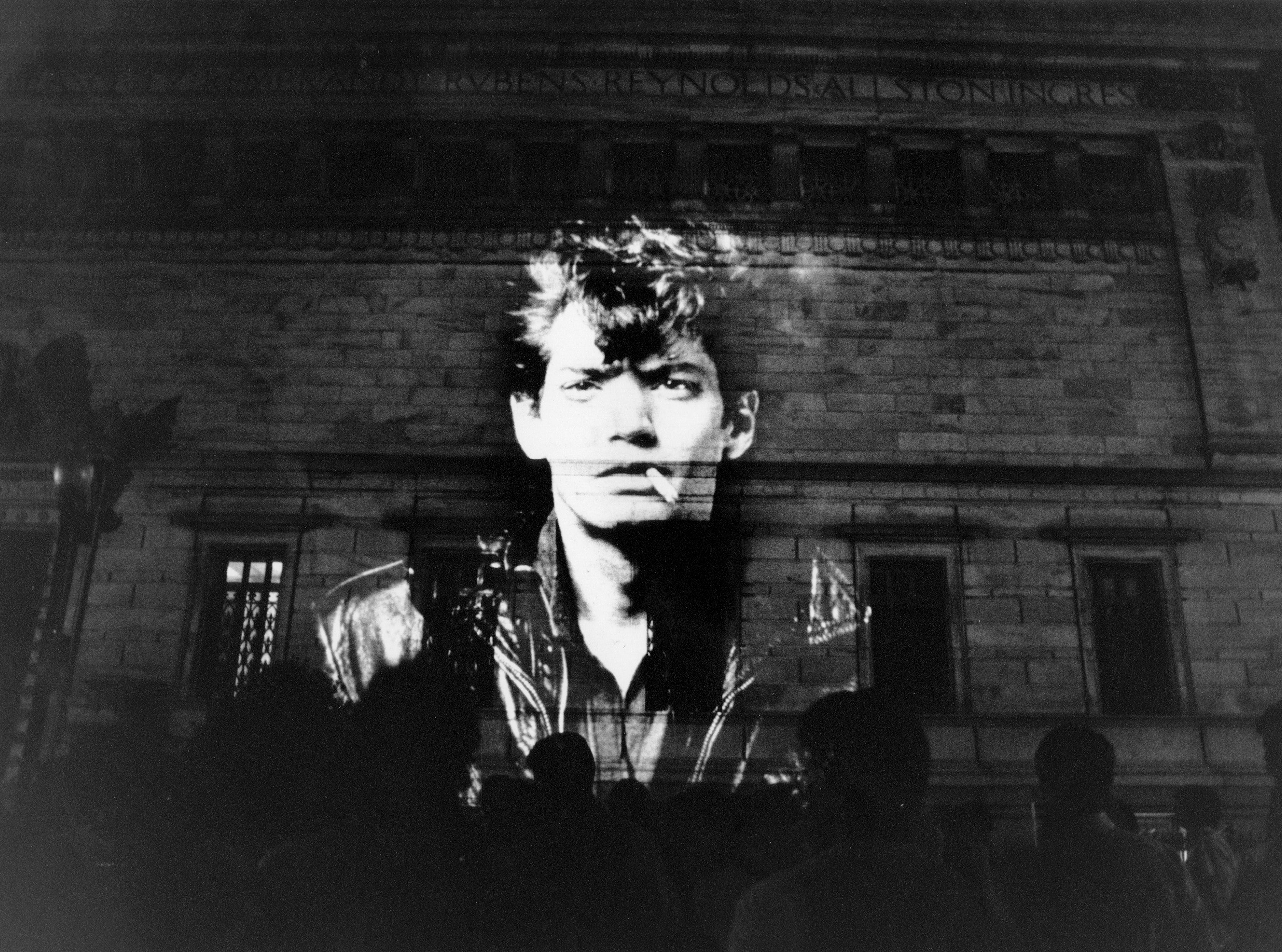
Their targets included Robert Mapplethorpe, the celebrated photographer known for elegantly composed images of gay men engaging in sadomasochistic activity (among many other subjects), and multimedia artist Andres Serrano, whose 1987 photograph Immersion (Piss Christ) depicted a crucifix submerged in urine.
They also included the “NEA Four” — Karen Finley, John Fleck, Holly Hughes, and Tim Miller — controversial performance artists known for exploring gender, sexuality, and queer themes.
During this pivotal chapter in American history, the religious right waged a largely successful campaign to undermine the NEA, often by cherry-picking the most extreme examples of work underwritten by the agency and painting the left as out of touch elitists. Their movement created a template for right-wing grievance campaigns and attacks on free speech that have accelerated under Trump 2.0.
The Perfect Moment “is in some ways a military history, of a war fought by other means. Through politics. Through religion. Through letter-writing campaigns and posters and performance art,” Butler writes. “It’s the story of two sides — American artists and the religious right — who viewed their opponents as existential threats to their way of life.”
“A FIGHT OVER WHAT IT MEANS TO BE AN AMERICAN”
In a recent video chat with The Contrarian, Butler explained why this raging debate over cultural identity is relatively unique to the United States. “There are countries that work hard to have a coherent national identity and national culture,” he said. “We do not, we never have, and so, as a result, our nation is quite prone to huge and sometimes violent eruptions of conflict over cultural objects, because it’s really a fight over what it means to be an American.”
Butler’s book primarily focuses on the period between 1988, when Martin Scorsese’s The Last Temptation of Christ inflamed the Christian activists who would soon mobilize against “blasphemous” contemporary art, and the end of the millennium. Until recently, Butler explained, this discrete period is what people meant when they referred to “the culture wars.”
“Now, we say it, and it could mean anything, because now we’re fighting over everything, from Miller Lite to whether Helen of Troy should be played by a Black actress.”
The Perfect Moment borrows its title from a retrospective of Mapplethorpe’s work that was shown at the Contemporary Art Center in Cincinnati in 1990, resulting in the arrest and trial of director Dennis Barrie on obscenity charges. But it also refers to the very specific historical moment from which the culture wars emerged in the latter part of the 20th century.
Butler points to the rise of the New Right, a “coalition of evangelicals, neo-cons, right-wing Catholics, and free marketeers” who objected to government funding of the arts for a variety of moral, religious, and economic reasons. The end of the Cold War also brought the end of “the post-war consensus on which the NEA rested,” Butler said.
Then there was the AIDS crisis, which had mobilized large swathes of the LGBTQ+ community who could only express themselves through street protests — or art. “They’re shut out of the news media, they’re shut out of most movies, they’re shut out of the political square,” Butler said. The religious right understood that “LGBTQ Americans, people with AIDS, and people of color had built a locus of power within the federal government” through the NEA. “They don’t want those communities to have any power, and they don’t want them to be able to have their say in the public square.”
HEROES AND VILLAINS
One of the most powerful themes in The Perfect Moment is the connection between AIDS activism and the artists who became the focus of right-wing outrage. David Wojnarowicz, for instance, was an influential member of ACT UP whose work spoke directly to the horrors of the epidemic (and was singled out in deceptive mass mailings by fundamentalist groups). His ashes were spread on the White House lawn in a 1996 protest inspired by his writing.
“AIDS activism was really the secret fuel of the arts response movement,” Butler said.
Butler has a personal connection to the subject matter: as the battle over the NEA was reaching a fever pitch in the early ‘90s, he was a twelve-year-old professional actor starring in a hit production of Falsettoland, a musical about a family affected by AIDS, at Washington, D.C.’s Studio Theatre.
The experience gave him a personal connection to the crisis and also made him aware of how deeply intertwined art and politics actually were.
“It just really lit this fire, both for theater and art in general, and about this horrible thing that was ripping through the country, and that a significant portion of the country not only didn’t give a shit about, but seemed hostile to the idea that they should have to give a shit about it,” Butler said.
If activists like Wojnarowicz are the unsung heroes in the battle over the NEA, the undisputed antagonists are Helms — a.k.a. “Senator No” — and Wildmon, whom Butler reluctantly described as “political geniuses.”
“The thing they both share is an absolute genius for communications and organizing,” he said. “We really live in the country Jesse Helms helped make.” Their crusade began with The Last Temptation of Christ, which they weren’t able to suppress. Soon after, they saw an opening with The Perfect Moment and Piss Christ, “and they just fucking pounced.”
They also benefited from the fact that the left was repeatedly unprepared for such attacks and seemed to suffer from what Butler calls “recurring amnesia.”
“The liberal establishment seemed to really not understand that this was a highly networked, incredibly disciplined alliance,” he said. “This was a real social movement, and they just thought it was a bunch of yahoos who every now and then got pissed off about a movie.”
If that scenario sounds painfully familiar, that’s entirely the point of Butler’s book.

WHAT NOW?
As Butler explores in The Perfect Moment, there’s a level of irony to the right-wing assault on the NEA. The agency was established in 1965 as a way of bolstering the country’s standing as a cultural superpower. “In the era of the Cold War, the arts were a way of expressing the unique value of the American way of life to the rest of the world.” Butler writes.
Compared to other federal expenditures, the budget for the NEA was always relatively tiny (never more than $500 million annually, adjusted for inflation, according to Butler), but it was money well spent, fostering the exponential growth of local arts councils, non-profit theaters, modern dance troupes, and symphony orchestras.
“The National Endowment for the Arts is the greatest expression of what the American federal government can do,” said Butler, whose previous book, The Method: How the Twentieth Century Learned to Act, explored the history of Method acting.
The NEA (just barely) survived the culture wars of the ‘90s. It also endured repeated attempts by conservatives to defund it since. But under an emboldened Trump, the future of the NEA is now more precarious than ever. Last year, the administration canceled hundreds of NEA grants, saying it was focusing on “funding projects that reflect the nation’s rich artistic heritage and creativity as prioritized by the President.” Trump has repeatedly called for the elimination of the NEA, and his proposed budget for 2027 includes $29 million that would be used to wind down the agency.
Butler has a lot of ideas about how to rebuild American arts without the NEA, starting with a more generous system of public welfare that would enable artists to pursue creative work while also being able to afford groceries and rent. (It worked for Britain in the ‘70s.) He also looks to France, where a small percentage of every movie ticket sold goes to funding the national film council and supporting the ecosystem as a whole. “If you look at France’s film culture, it’s incredibly robust and healthy,” he said, suggesting American creative industries, like the theater, could implement a similar system.
“I think it would be revolutionary, and it would transform the soul of our country for the better.”
Meredith Blake is the culture columnist for The Contrarian
Great article, valid points made, lived experience for some of us. I’ll go further, because there’s another facet we’re facing here: generational scapegoating. Now we boomers are being blamed for the economic distress of younger adults. It’s an easy out, but frankly, it’s just plain lazy. Pro Tip: How about continuing the fight along with boomers to break through corporate greed, institutional stonewalling, racial and gender oppression; get actively involved at the grassroots level, and maybe eventually start winning back the civil rights we fought for and won, the ones you were born with and let slip away and still don’t feel appropriately pissed off about losing. Nah — easier to blame the boomers. Boomers on the left will continue fighting as we’ve always done. Admittedly, we’re not as ideologically pure as you might like, but if you hold your nose and join in, perhaps you might learn something about going up against entrenched power structures, skills you’ll need after we’re gone. If I sound annoyed — yeah, I am. It seems that we boomers on the left were born pissed off at the way things are.
I have to adapt a phrase by Faulkner:
The 60s aren't over-- they're not even past!
Spoken as someone who came of age in the late 60s and early 70s.