


In 1939, President Franklin D. Roosevelt became the first president to donate his personal and official papers to the public, ending the long-standing tradition in which presidential papers were considered personal property. FDR also donated to the public a building on the grounds of his Hyde Park, New York, estate. Two years later, on June 30, 1941, the Roosevelt presidential library was dedicated.
Roosevelt said that donating his papers would help the public “to learn from the past that they can gain in judgement in creating their own future.” Legislation enacted since his time in office enshrined into law the public record-keeping of presidential papers and the presidential library system overseen by the National Archives and Records Administration.
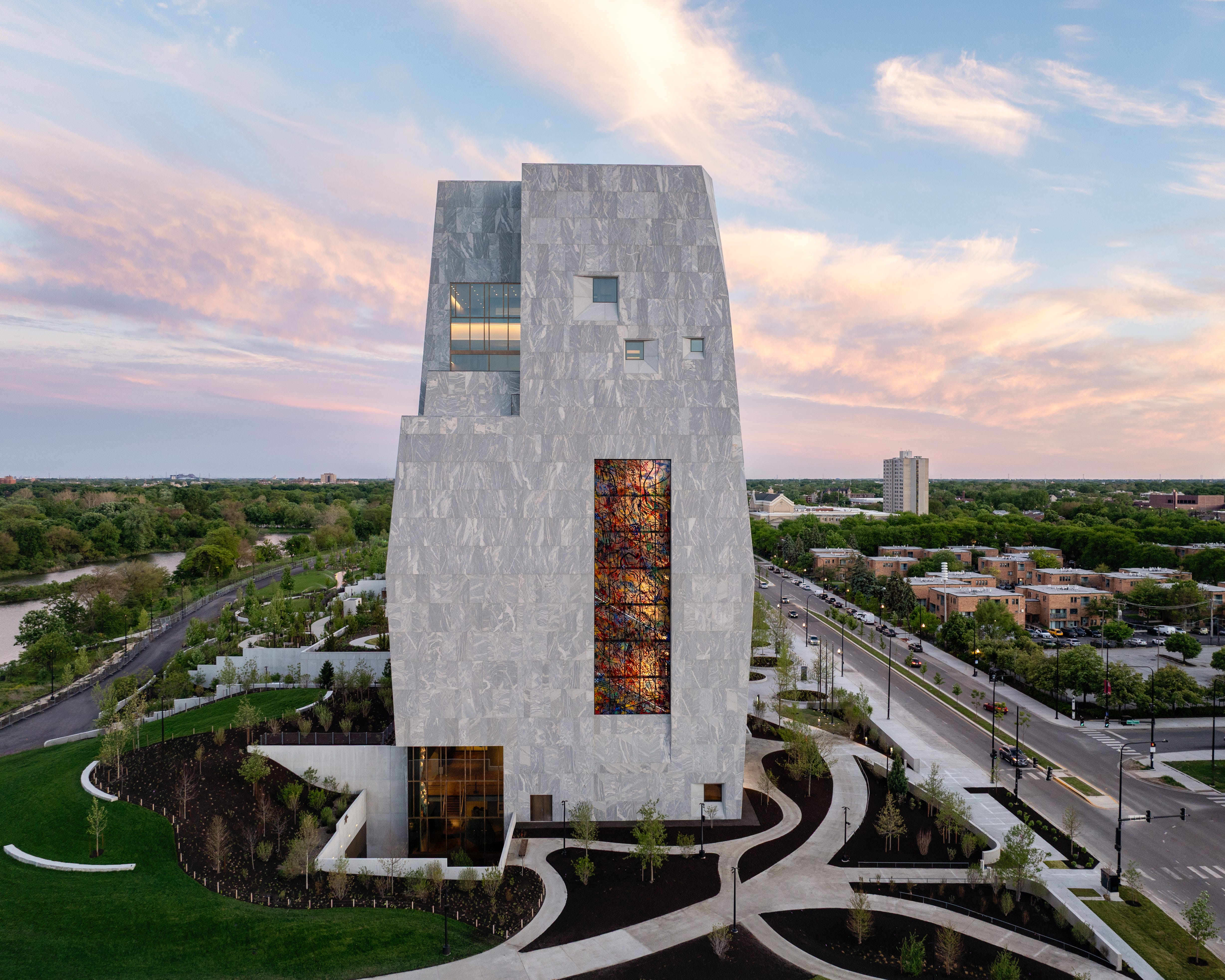
Roosevelt’s was the first presidential library. The newest one opens this Friday: the Obama Presidential Center in Chicago’s Jackson Park. (Technically, the Obama Center is not an official presidential “library” because Obama’s papers are stored elsewhere, though his records are available digitally at the center.) Opening events, many open to the public, will run through Sunday; other public events are planned through August.
Roosevelt’s decision was good for history: Having presidential papers in the public domain gives Americans a better understanding of its past. But presidential libraries, one expert notes, can present a skewed version of history if “a president and his supporters act as their own curators [and] want a whitewashed portrayal,” said Benjamin Hufbauer, a University of Louisville professor and the author of “Presidential Temples: How Memorials and Libraries Shape Public Memory.” Two examples: Ronald Reagan’s library initially didn’t mention the Iran-Contra scandal, though an exhibit was added later; and the Richard Nixon Foundation reportedly tried to derail the creation of an exhibit on Watergate at Nixon’s library.
Done well, however, a library can transform a former president’s public image, Huffbauer added. That happened with Jimmy Carter, whose presidential library was envisioned as “a forum to advance a broad, nonpartisan agenda of public policy concerns, such as human rights, health, hunger and international diplomacy,” the New York Times wrote.
Carter’s presidency was widely considered “a failure,” Hufbauer said. But the Carter Center (housed at the library) and Carter’s own active philanthropy were widely admired, and the former president went on to win the Nobel Peace Prize in 2002.
A place for hope
Barack Obama’s image, of course, needs little or no burnishing among most Americans. Ten years after leaving office, he remains unusually popular with the general public, and historians give the Obama presidency high marks.
Earlier this month, journalists and content creators got a sneak peek at the Obama Center’s exhibits — and it’s clear that the center isn’t intended as a grand monument to the former president. The Obama Foundation’s programs are squarely focused on community engagement and democracy, as I wrote last month. There are plans for policy-focused public talks and a revival of the annual Democracy Forum that went on a hiatus last year.
“The president has really thought about these themes, and they are very much present, no matter what’s going on [or] who might or might not be in any given role right now,” said Tina Tchen, executive vice president of programs for the Obama Foundation. “These are things that we think are important for any democracy and any point in time.”
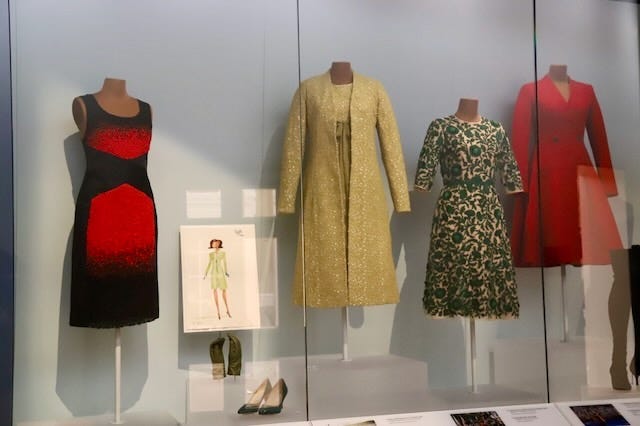
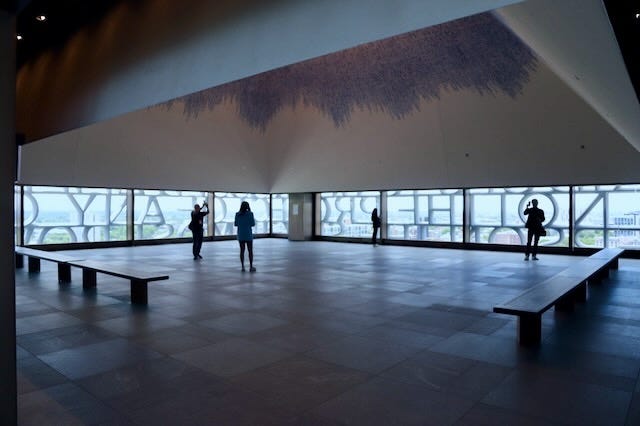
As expected, the museum itself has plenty of videos, photos, interactive displays and memorabilia; a full-scale replica of the Oval Office as it appeared during Obama’s presidency; a top-floor Sky Room with panoramic views of Chicago’s South Side; and some of first lady Michelle Obama’s more memorable outfits. The surrounding 19.3-acre campus includes a public library branch, an event forum, an athletic center with an NBA-sized basketball court, gardens and other amenities.
Yet, one of the first exhibits visitors will see is “Democracy 101,” a gallery that “doesn’t say anything about Barack Obama,” Tchen noted.
“It’s about civics [and] teaching the basics of separation of powers, the Bill of Rights, voting rights,” she said. “We intentionally designed that to be very interactive. We want to teach people generally about civics, not necessarily about our administration’s history.”
Another exhibit, “Toward a More Perfect Union,” covers movements that transformed American society and government for the better and were often led by everyday people — suffragists, labor leaders, civil rights activists — who felt driven to make change.
There’s plenty more to see — and get inspired by — at the Obama Center. At a time when our democracy is under threat, a visit is well worth it. A livestream of today’s events begins at 11 a.m. central time.
Lorraine Forte is a journalist in Chicago and former editorial page editor of the Chicago Sun-Times.

I watched the dedication ceremony in its entirety, and I still am awed at what the Obamas have done with their center. I am so proud! So proud. And so grateful, for all I saw and heard and learned today. Hope is alive, and I am raised up seeing the celebration and hearing the music and seeing the effect of all of this on the faces of the people there and, I'm sure, on those folks who watched on TV like me. The enormity of what this center means and will do brings tears to my eyes and touches my heart. Thank you to the Obamas for doing this and helping us remember what is true.
Thank you for this inside look and preview, and also for the photo that does the center justice. South Chicago is the perfect place for this memorial library, which reminds us of what the Obamas brought to the presidency and our nation. This makes up for the insulting piece in The Atlantic.