


Chief Justice John G. Roberts Jr. finally got what he wanted. He has been working toward this moment since he was a young lawyer in the Reagan Justice Department arguing that the Voting Rights Act that ended Jim Crow was a mistake. On Wednesday, after decades of methodical court-packing and chipping away at civil rights law, he finally got there. The 6-3 decision in Louisiana v. Callais guts Section 2 of the Voting Rights Act, the provision that for four decades gave Black voters a legal pathway to challenge districts drawn to silence them.
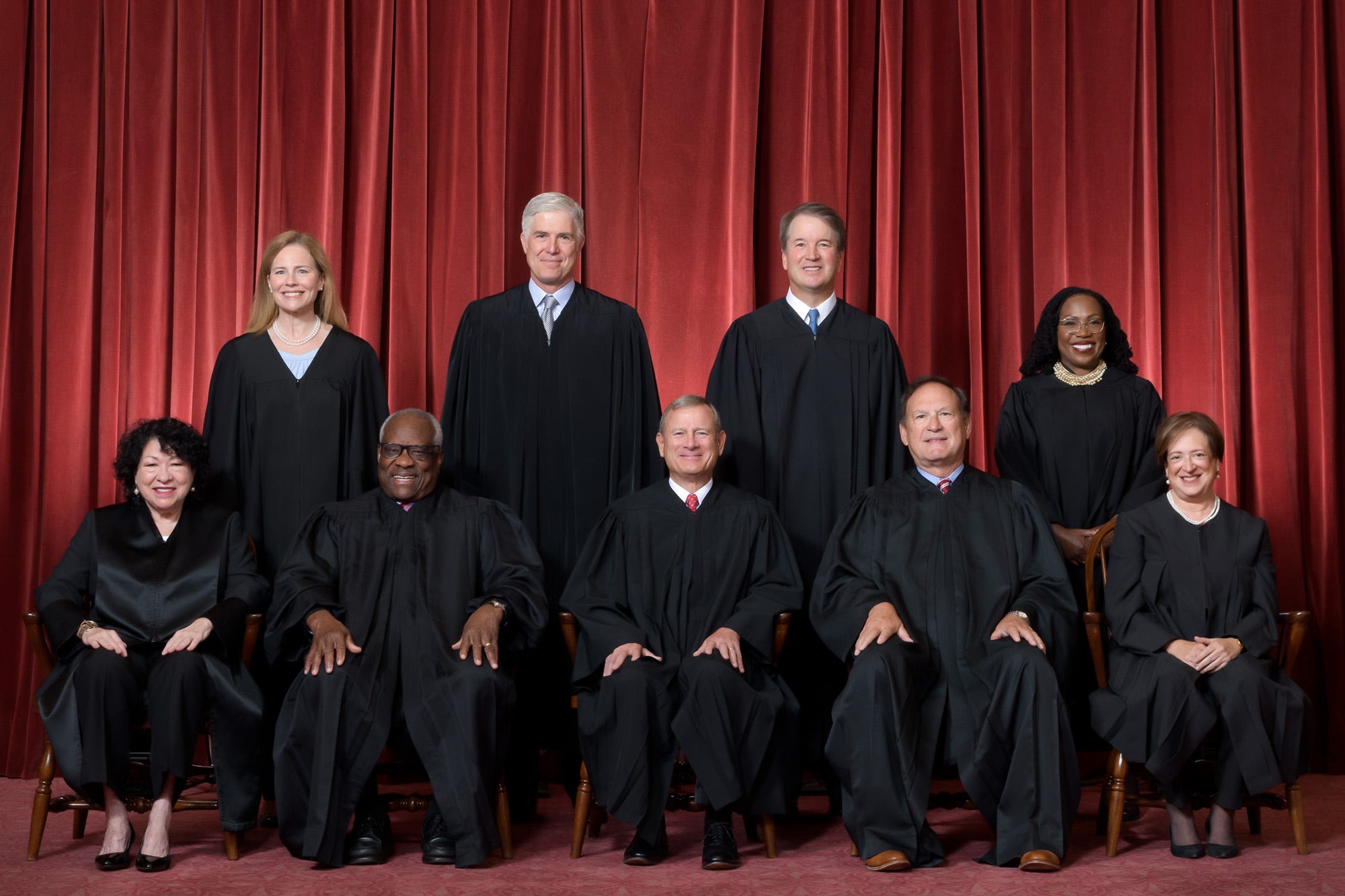
Justice Samuel A. Alito’s majority opinion left the statute on the books. But plaintiffs must now prove intentional discrimination rather than discriminatory results, a standard Congress explicitly rejected in 1982 precisely because discriminatory intent is so easy to hide behind a smile and a process memo. As Justice Elena Kagan wrote in dissent, the majority has eviscerated the law. The words remain. The enforcement is gone.
This distinction matters more than it might appear. Under Section 2 as Congress wrote it, you could win a voting rights case by showing that a map consistently kept Black voters from electing anyone who represented them. You didn’t have to prove anyone sat in a room and said the quiet part out loud. Callais now requires proof that someone meant to discriminate. And conveniently, states can now claim they were just doing partisan gerrymandering, which the federal courts cannot touch, thanks to a 2019 ruling. So racial gerrymandering is now effectively legal as long as you label it something else. Kagan called this out directly. The majority, she wrote, had the nerve to rule that the Voting Rights Act must be weakened to protect partisan gerrymanders.
Republicans in Georgia were calling for new maps within hours. Florida, already in a special session, got the green light to go further. Analysts estimate this could cost Black members of Congress up to 15 seats.
If you read history, not the sanitized version that describes enslaved Africans as “workers,” this should sound familiar.
In the 1870s, after the Civil War ended and laws gave Black men the right to vote, the Supreme Court began dismantling those protections case by case. Black voter registration in Louisiana went from 130,000 to 730 people. Not 73,000. Just 730 people. Then came the onerous voter identification requirements and literacy tests, technically race-neutral on paper, administered by white registrars who decided on the spot who passed and who didn’t. Then came the white primaries, declaring the Democratic Party a private club where the Constitution didn’t apply. Then came the grandfather clauses, exempting anyone whose ancestors voted before 1867, which was a creative way of saying everyone white. Each tool was built to achieve through the legal loopholes what could no longer be done openly.
Callais is the modern version.
The parallels to the Gilded Age are unmistakable.
The Pinkerton men who broke strikes with clubs and rifles were private armies hired by corporations and deputized by a government that had decided labor organizing was a threat to public order. Eugene Debs organized a railroad strike and ended up in federal prison. The Sherman Antitrust Act, written to break up monopolies, was used primarily against unions. Today, immigrant workers who organize or speak out face immigration enforcement. Activists at demonstrations face federal charges. The Justice Department has been pointed at political opponents. The uniforms are different. The machinery is identical.
Then, employers kept blacklists of union organizers so they could not find work anywhere. Today, organizers are tracked through social media surveillance, doxxed, and targeted by coordinated pressure campaigns designed to make the cost of speaking out unbearable.
Then, convict leasing criminalized Black life to produce captive labor after emancipation. Today, mass incarceration and felon disenfranchisement do the same work: remove Black men from their communities, strip their voting rights, extract their labor.
Newspapers manufactured consent for suppression of workers by portraying strikers as criminals threatening civilization. Today that function belongs to coordinated social media disinformation and, coming fast, AI-generated deepfakes engineered to suppress Black voter turnout and fracture Black solidarity. The technology is newer. The intent is identical.
They keep running the same play because the same play keeps working. Until it doesn’t.
The first Gilded Age did not end because the oligarchs ran out of steam or the courts grew a conscience. It ended because people organized. Unions forced recognition. The women’s movement refused legal subordination. Black-led movements built political power under violent opposition. Populists took on corruption directly. Decades of fighting and organizing eventually cracked the system open and created the conditions for the New Deal, for labor protections, for the Voting Rights Act that Roberts just finished dismantling.
The people who built that resistance had almost nothing. No foundations, no donor networks. Unions ran on dues paid out of wages workers could barely survive on. They were self-organized and self-financed. And they moved the entire political economy of the United States.
Eighteen days ago, a coalition of opposition parties and young voters defeated Viktor Orbán in Hungary. He had spent 16 years building one-man rule. The playbook is always the same. Rigged election systems. Captured media. Weakened courts. American conservatives flew to Budapest to take notes. Donald Trump hosted him at his Florida home, in the gilded excess of a man who has made a lifestyle of demonstrating that rules apply to other people. Orbán was held up as proof that you could dismantle democracy legally and hold it forever.
Then came the election, and Orbán is gone.
Youth voters who had never known another leader organized, turned out, and finished him. The rigged electoral system he constructed to make himself permanent worked in reverse. A 53 percent vote share flipped into a two-thirds constitutional majority that can now undo everything he built. The system he designed to make democracy impossible became the tool to restore it.
Sixteen years. Then suddenly, all at once.
We have more than the organizers of the first Gilded Age had. Significantly more. And there is a real difference between denying people something they only imagined and taking from people something they remember having. People fight differently when something has been taken. We are in that moment right now. The same conditions that ended the first Gilded Age are accumulating again: youth disaffection, economic pain compounding across every community, insider defection, generational exhaustion setting in.
Things change slowly. Then steadily. Then all at once.
At Color of Change, we prepared for Wednesday’s decision because history told us it was coming. We have spent 20 years building the infrastructure to respond: millions of members, deep trust inside Black communities, the ability to move people from outrage to action on the issues that shape their daily lives. That trust is more important than ever. The legal assault on voting rights is arriving alongside a coordinated AI-powered disinformation campaign designed to suppress Black turnout and fracture Black solidarity. The only antidote to a lie engineered to look like truth is to earn trust, show solidarity, and stand with the people before the lie arrives.
And we have to imagine and work toward a future that does more than simply restore what they have destroyed. We must build what should have existed from the start. Systems that actually serve us all. Power that belongs to us all. The court has run this racist play before. In 1876. In 1883. In 1896. In 2013. Each time, it assumed it was the last word.
It never was.
We’re going to prove that again.
Nadine Smith is president and CEO of Color of Change, the largest online racial justice organization in the United States.

The way things are going, we should expect another black swan event changing the course of the current regime, though. Yes, we keep up the dissent, but sooner or later incompetence will bring these fools down--including the high court. Don't despair--as we deal with the Project 2025ers, Trump will topple of his own accord.
I never want to hear anything from conservatives about how their judges are not activists. They definitely are! This decision is the latest substituting their policy preferences for what Congress enacted. And it gives us minority rule over the majority. Shame.