


This week, the National Symphony Orchestra (NSO) belatedly unveiled its 2026-2027 season, which will include performances of works by Handel, Beethoven, Tchaikovsky, and other classical music titans.
But the schedule includes at least one major departure from tradition: none of this season’s 60 concerts will take place at the Kennedy Center, the longtime home of the NSO, which faces possible closure amid a legal battle over Donald Trump’s decision to slap his name on the building.
Instead, the orchestra will perform at six venues in Washington DC, Maryland, and Virginia, and will also complete a national tour with dates in California, Oklahoma, Nevada, Indiana, and Missouri.
In a statement, music director Gianandrea Noseda described the season on the road as “an opportunity to connect in a special way and also cultivate future audiences” in new places.
One could reasonably call it something else: a lifeline for a venerated arts organization thrown into crisis due to the president’s meddling. As Rep. Jamie Raskin put it on X, the new season will enable the NSO to play in new venues “away from the chaos, corruption and vandalizing desecration that Trump has brought to the Kennedy Center.”
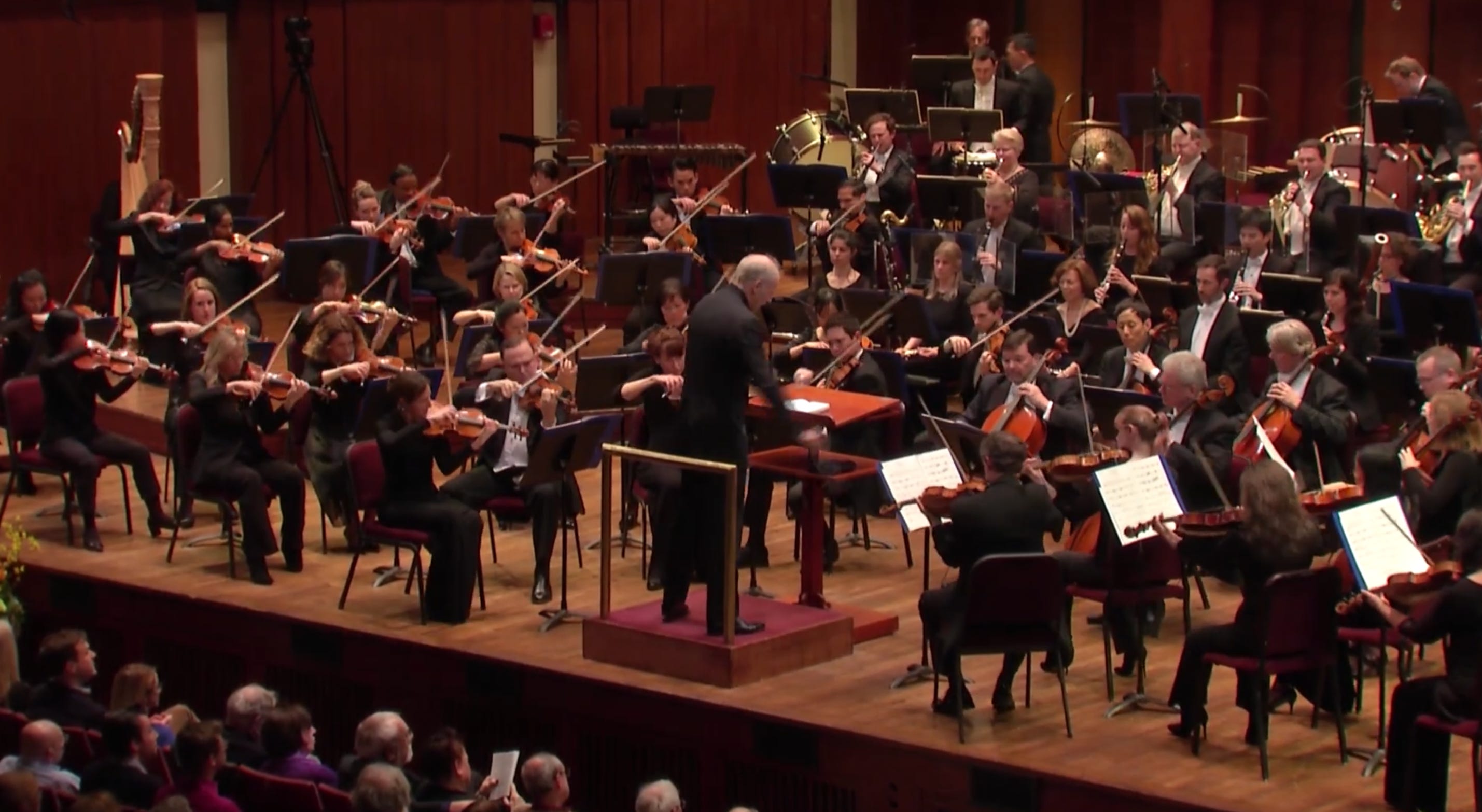
The announcement quelled at least some of the mounting anxiety around the future of the nearly century-old orchestra.
For months, news reports have documented the uncertainty at the NSO, which, since 1986, has operated as an affiliate of the Kennedy Center — with finances and administrative operations deeply intertwined. Over the weekend, The Washington Post reported that since Trump’s takeover of the Kennedy Center last year, which alienated many longtime patrons, donations have fallen by 25 percent. Ticket revenue is even worse: about half of what was projected in the organization’s budget.
The uncertainty has cast a pall over the future of the NSO, whose dedicated musicians continue to perform under enormous scrutiny.
“They’re incredible musicians,” says Michelle Rofrano, the co-founder and musical and artistic director of Protestra, an organization that puts on benefit orchestral concerts for political and social causes, and who had the honor of working with the NSO as a guest cover conductor at the end of their season last spring. “But the atmosphere was definitely tinged with the melancholy of ‘would this group of people continue to be playing together?’”
Communal benefits
Things are so bad that Jean Davidson, who left her role as executive director of the NSO earlier this year, told The New York Times that “it’s very possible” that the orchestra might fold entirely, calling such an outcome “an international embarrassment.”
In the Trump era, Americans have sadly grown accustomed to embarrassment on a global scale. But they are also dealing with a biblical assortment of plagues, rising costs, and needless wars. Why should anyone who isn’t a classical music connoisseur worry about the fate of the NSO?
Orchestras are “often the largest arts organizations in their city,” says Simon Woods, president and CEO of the League of American Orchestras. “They tend to be carriers of civic pride and are very visible, and they have big loyal audiences, so when things go wrong in the public eye, people care.” (See also: the current brouhaha over the ouster of the Boston Symphony Orchestra’s music director Andris Nelsons).
Classical music may seem like a rarefied pursuit, but that’s a misconception, Woods says. “Every time anybody in a Hollywood movie is going to the opera or going to a concert, the audience is all wearing their tuxes. It’s a stereotype that refuses to die, despite all the work that orchestras do to break down barriers.”
Orchestras are also “economic and civic engines and play a massive role in music education.” According to the League of American Orchestras, orchestras put $2.8 billion back into local economies in the 2024-2025 season. 4.6 million students participated in concerts and other community events. The NSO is particularly active in its outreach, presenting a variety of community programs for families, students, and aspiring performers. It also runs an innovative music and wellness initiative in collaboration with the National Institutes of Health.
But the primary mission of the NSO, like all orchestras, is creating timeless music — a contribution that matters even, perhaps especially, during a period of discord. “I think it’s important to be reminded that the music speaks to people,” Woods says. “A lot of this music has been around for a few hundred years, for very good reason — because it’s still meaningful in people’s lives.”
Orchestras “have a unique capacity to inspire empathy in the listener,” Rofrano says, likening attending a performance to “going to the gym for your emotions. It’s cathartic.”
“There’s nothing like hearing an orchestra live,” she says. “It’s one of the most powerful experiences you can have.”
Orchestras also serve as a metaphor for successful collective action. They require dozens, sometimes hundreds, of performers — who may not even speak the same language — to come together before large audiences and play music on a scale that inspires profound awe.
Ensembles like the NSO offer “a beautiful example of the beauty that can be created when so many people come together for a common cause,” Rofrano says.
A unique institution with unique problems
On a basic level, the NSO faces the same challenges as countless arts organizations across the country, which have relied on aging baby boomers for financial support. Now they face the monumental task of making inroads with younger generations, “who are more loyal to specific causes than institutions, and don’t have the same connection with classic art forms,” Woods says.
The NSO has faced financial crises in the past and has long operated at a deficit typically covered by the Kennedy Center. But the current predicament is unique in that it can be pinned on a single person: the president of the United States. In his first term in the White House, Trump seemed content to ignore the Kennedy Center, skipping the annual honors entirely during those four years. This time around, he’s made it a priority to conquer and remake these elite cultural institutions in his image.
His takeover of the Kennedy Center board in February 2025 prompted a wave of artist cancellations and a massive internal exodus. Musician Ben Folds, who became the NSO’s first artistic director in 2017, stepped down immediately. “When you politicize art, you’ve got propaganda,” he later explained, although he continues to express his support for the musicians in the ensemble.
A slew of staffers at the Kennedy Center, which shares administrative personnel with the NSO, subsequently resigned or got laid off. The chaos intensified as Trump tried to rename the center, attempted to plaster his name on the building’s facade, and abruptly announced it would be closed for two years for renovations. Amid this turmoil in January, the Washington National Opera announced it was severing ties with the Kennedy Center. Such a move would be difficult, if not impossible, for the NSO because of its unique arrangement as an affiliate.
‘Collateral damage’
The situation at the NSO has put classical music lovers with a political conscience in an impossible bind. Do they continue to support the arts organizations they value by making donations and buying tickets? Or do they register their discontent through a boycott, which can be extraordinarily effective, but can also lead to massive unintended consequences?
“We should all be voting with our dollars, especially in this country where politics seems to be so influenced by who is making money from it,” Rofrano says. “But I hope that people wouldn’t let any unfairness going on with the Kennedy Center color their view of these musicians who are just trying to do their job.”
The musicians at the NSO have been put “in a tough position,” Rofrano says. “Of course, you wouldn’t want to support arts ensembles that are promoting things you don’t agree with. This orchestra is absolutely not doing that. They are the collateral damage of this administration.”
“To me, what an orchestra chooses to program says a lot about what they stand for,” she adds. Rofrano was particularly moved by the NSO’s decision to perform Lincoln Portrait by Aaron Copland last spring. The piece includes text from the Gettysburg Address and speaks to “how leaders need to come together to continue the ideals of freedom and democracy that the nation is founded on,” she says.
This week the NSO-in-exile showed welcome signs of vitality. On Tuesday, the orchestra made its debut at the Hollywood Bowl in Los Angeles. A concert with Jon Batiste scheduled for Friday at Wolf Trap in Virginia is sold out.
Woods believes the NSO will be able to weather this latest storm.
“Orchestras are pretty hard to keep down, because people love the music and the experience of hearing an orchestra. They tend to have a habit of coming back even when they fail,” he says. (Several other Washington-based orchestras failed before the NSO was founded in 1931.)
“Ultimately, my money’s on the National Symphony,” Woods says. “I think they will be fine in the long term, although exactly what that looks like is not clear to me yet.”
Meredith Blake is the culture columnist for The Contrarian.
.
My grandmother, Mary Howe confounded the National Symphony Orchestra at the request of the conductor, Hans Kindler. I’m sure they both would be horrified at what has occurred this year and would be so supportive and proud ofwhat the Orchestra is doing to to continue to provide we the people with the wonderful gift of music.
That was a wonderful article. Thank you so much. I have never seen the National Symphony Orchestra, but was born in D.C. and lived in the Metro area until I was 10. I did get to see Leonard Bernstein conduct in a program for children when I was about 8. I am 72 now and still remember how wonderful it was and he was. He received the Kennedy Center Honor in 1981. Here's to the return of decency.