


“Mom, what were you like in the 90s?” The question has gone viral — and the response, a flood of celebrity flashback montages, captures the likes of Halle Berry and Courteney Cox in their Kodachrome heyday, set to (what else?) the Goo Goo Dolls’ “Iris.” The trend dovetails FX’s Love Story, the trashy yet wildly popular mini-series purporting to depict the behind-the-scenes courtship and ill-fated marriage of Carolyn Bessette and John F. Kennedy Jr.
I always appreciate when Gen X, the perennially forgotten generation, gets its props. Generally, cultural relevance spikes when younger counterparts, Millennials or Gen Z now, catch a glimpse of the sweetness of our unsupervised youth and un-curated coming of age. Yes, Stranger Things fans, we really did roam like feral cats after dark. (Parents needed a PSA at 10 p.m. to be reminded to check on us.) Yes, Love Story binge-watchers, New York City’s downtown scene had far more appeal pre-Instagram and “West Village Girl” vibes.
Here are a few more modern Gen X truths, specifically for Gen X women. Now in midlife, we are the ones credited with dismantling stigma around menopause and breaking through decades of medical and research neglect. We have an outsized financial footprint: Since hitting our 50s, we have been dubbed “super consumers … the healthiest, wealthiest and most active generation in history,” according to Forbes, accounting for 27 percent of all domestic consumer spending (3 percent more than men of the same age). Though the AARP notes that women over 50 make nearly all household purchasing decisions, for many, that amounts to covering costs both for grown children and aging parents: After all, we are also the sandwich generation.
It is also no secret that many Gen X women voted for Donald Trump. Not so for all of us: Black women supported Kamala Harris at a rate greater than any other group of women voters. Conservative pundit Christopher Scalia, a senior fellow at the American Enterprise Institute (and youngest son of the late Supreme Court Justice Antonin Scalia), surmised Gen X pop culture might partially explain it, some combination of a penchant for raunchy movies and deadpan devotion to irony á la Alanis Morissette. All told, a pretty depressing legacy to swallow.
Something is changing though. For context, readers may recall that menopause policy is my main beat; I’ve got a new book out later this year (check it out!) that does a deep dive into related civic engagement. I also wrote for The Contrarian a month ago about what I’ve been hearing from folks on the ground and across social media — a palpable outrage, a new level of fed-up-ness, that is hitting differently than anything I witnessed in the first Trump administration or right after Dobbs or in 2024. For all kinds of reasons — the future of American democracy among them! — I am deeply invested in unpacking the stories of the midlife women who may be having a change of heart and are out front and behind the scenes fighting to:
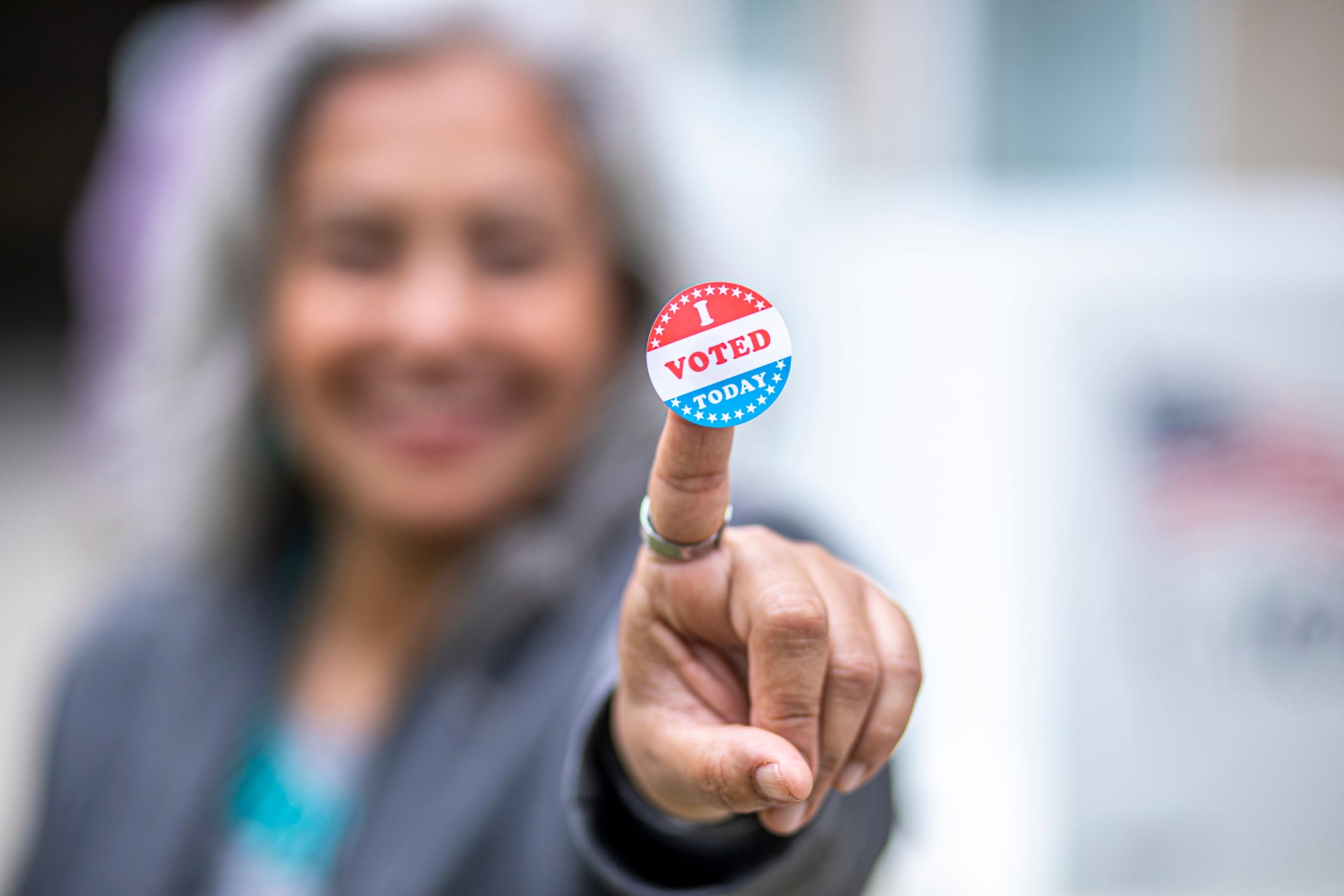
Help tank the SAVE Act. Since it was introduced in its first iteration last year, the bill has been a lightning rod for women. This week, it is headed for a major showdown in the Senate as President Trump keeps ratcheting up pressure. Among its provisions, the bill would uniquely impact those who changed their name at marriage, affecting their ability to register and cast a ballot. Which is why several mom-focused advocacy groups are organizing in creative ways. Says Kristin Rowe-Finkbeiner, president of Moms Rising, a grassroots organization that focuses on policies benefiting women and families, “We’re hearing from our members in every state in the nation that they are incredibly insulted by and upset about the SAVE Act.” Moms Rising has posted a petition, created a story bank, and mobilized nearly 50,000 calls to U.S. senators, marking “record high action rates,” according to Rowe-Finkbeiner. Meanwhile, White House press secretary Karoline Leavitt can’t get the story straight — saying there is “zero validity” to concerns that the bill would affect married women trying to vote while acknowledging that it would create extra steps “for the small fraction of individuals who have changed their name.” Hardly. There are 69 million women who have changed their names, nearly 80 percent of all women married to men.
Protect their communities from ICE. In his recent extraordinary column in the New York Times, “Why Minnesota Matters More Than Iran for America’s Future,” Thomas Friedman introduced the concept of “neighboring,” protecting the people next door, plain and simple, and its transformational role in Minneapolis. It is the stuff PTA volunteers and community-minded women have long done and are great at — organizing meal trains, overseeing carpools, donating breast milk. Friedman writes that Immigration and Customs Enforcement “was sent packing by a bunch of moms and dads armed with only cellphone cameras and whistles, ready to walk out on a freezing morning in bathrobes and bunny slippers.”
Today’s quiet democracy protectors are the same people, the same Gen X women, who may become tomorrow’s pro-democracy voters. We can’t afford to write them off. I know I won’t.
***
Good reads. I have been particularly moved by feminist essayist (Gen X cusp herself) Rebecca Solnit’s latest collection, The Beginning Comes After the End, and companion pieces. In a similar vein as Friedman, Solnit points to solutions that are surely the purview of many midlife women: “The counter to Trump always has been and always will be civil society…. Maybe changing the world is more like caregiving than it is like war. Too many people still expect it to look like war.”
She also calls out the plight of politeness, an attribute Gen X is more than willing to shed, remarking: “I think we got into this situation in part by a lot of people in the mainstream thinking it was more important to be polite than to call things by their true names…. You do not get authoritarians to behave better by being meek and gentle and polite. You get it by being strong.”
Be strong, Contrarians!

I am truly embarrassed by any woman, no matter her age, voting for the orange fascist dumpster, or any fascist for that matter. If they don't have their own interests at heart, who does?
Right now we’re fighting for our daughters and granddaughters. Reproductive rights have been taken away and some cases are still under fire. And unless the SAVE Act is defeated many will not get the privilege of a vote. Unless we rise up and defeat the pseudoscience bs coming from the department of HHS we can forget about vaccines and other life saving treatments. There’s a lot to fight for.