


Summer is a prime season for reading of any kind. This summer, as we celebrate the 250th anniversary of the Declaration of Independence, will be an ideal time to think about where we are — and how we got here.
I’ve rounded up some revolutionary reading recommendations from my colleagues at The Contrarian. The list includes fiction and non-fiction, books about the past and present, books focused on the United States, and books about the entire human race. They vary in tone and subject but offer perspective — occasionally by way of a much-needed escape — at this pivotal moment.
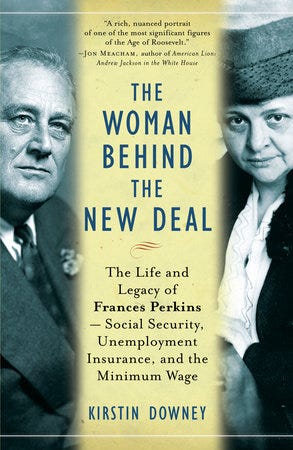
The Woman Behind the New Deal: The Life and Legacy of Frances Perkins, Social Security, Unemployment Insurance, and the Minimum Wage, by Kirstin Downey
Before Nancy Pelosi, there was Francis Perkins, the first female Cabinet member, FDR’s Labor Secretary and the mastermind behind Social Security, unemployment insurance, the first workplace safety laws, child labor protections, and other key components of the New Deal. Along the way, she struggled over objections of other Cabinet officials to rescue Jews fleeing the Holocaust, waded into violent labor clashes, and coped with her husband’s severe mental health issues. A resonant read when functional, humane government is under attack, and the super-rich seek to shred the social safety net that bears her imprint.
The Worst Hard Time: The Untold Story of Those Who Survived the Great American Dust Bowl, by Timothy Egan
A man-made environmental disaster, well-meaning government policy gone terribly awry, tough-as-nails immigrants unwilling to be forced from their homes, and plenty of shady media and real estate hucksters. It’s all frightfully relevant. But it’s also an inspirational story, revealing that Americans — in the face of hardship few can imagine — can show breathtaking resilience.
The Personal Librarian, by Marie Benedict and Victoria Christopher Murray
Ragtime meets Passing. It’s about race and family identity, private wealth and public philanthropy, and the making of New York as the cultural trendsetter for America. Belle da Costa Greene might be the most fascinating Gilded Age character you’ve never heard of.
— Jennifer Rubin
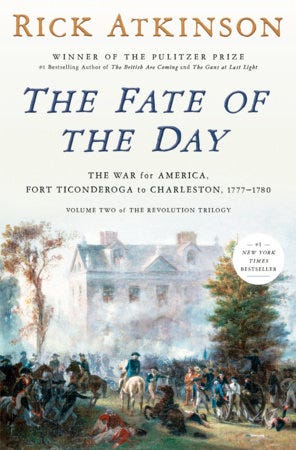
The British Are Coming: The War for America, Lexington to Princeton, 1775-1777, and The Fate of the Day, The War for America, Fort Ticonderoga to Charleston, 1777-1780, by Rick Atkinson
Giving Up Is Unforgivable: A Manual for Keeping a Democracy, by Joyce Vance
Liar’s Kingdom: How to Stop Trump’s Deceit and Save America by Andrew Weissmann
The Fix: Saving America from the Corruption of a Mob-Style Government by Barb McQuade
I’m recommending Atkinson’s books — the first two volumes in a planned trilogy on the American Revolution — because they’re a reminder of how we started: in resistance to autocracy. (Can’t wait for part 3!) And books by my friends and colleagues Andrew, Barb, and Joyce because they are a guide to where we need to go from here to get back to where we started!
— Norm Eisen
The Lost Trees of Willow Avenue, by Mike Tidwell
With the nation newly knowledgeable about algae blooms, a book about the climate crisis seems appropriate, especially considering that the Trump administration cut research on algal blooms as part of its broad attack on science and health. Mike Tidwell’s The Lost Trees of Willow Avenue is a glorious love letter to the dying trees in his neighborhood and an assessment of the climate catastrophe that sentenced them to death. Tidwell, founder of the Chesapeake Climate Action Network, also looks forward to what America and Americans can do to save the next generation of giant oaks and their ilk.
— Jamie Riley
The Beginning Comes After the End: Notes on a World of Change, by Rebecca Solnit
In this sequel to her bestselling Hope in the Dark, Rebecca Solnit charts and reckons with the dramatic changes we’ve endured since 1960. With characteristic insight and balance, she surveys worlds ranging from hard science to Indigenous beliefs. As inspiring as it is informative, she reminds readers that constant change is an inevitability we must embrace rather than mourn.
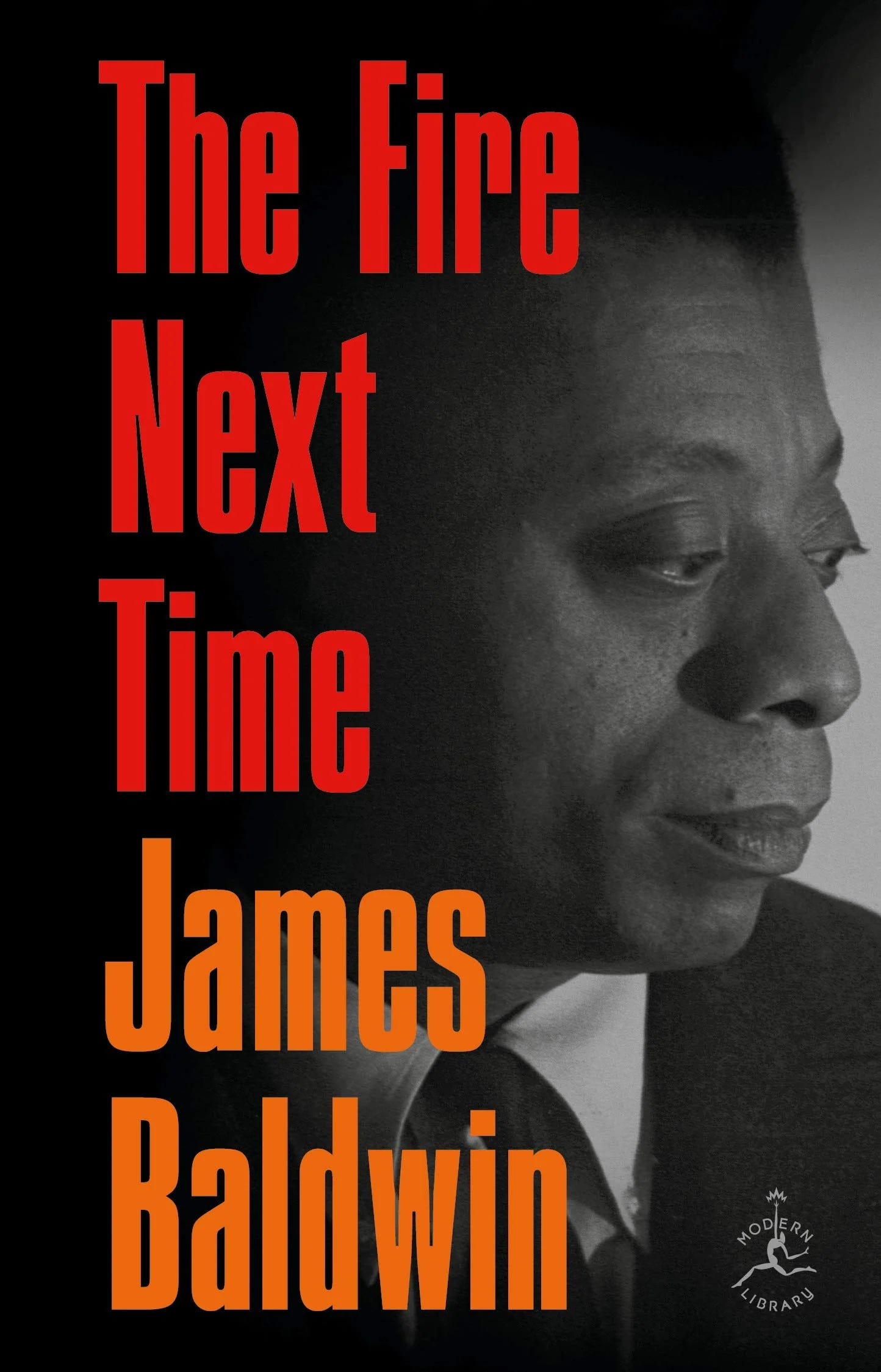
The Fire Next Time, by James Baldwin
From one of the most powerful voices of the Civil Rights movement, this personal chronicle (delivered in essays and letters) still resounds and offers an invaluable lesson — through stunning, poetic language — on the complexities of race in America.
These Truths: A History of the United States, by Jill Lepore
Though it pulls no punches, Lepore’s comprehensive history of the past 250 years is infinitely readable and grapples with both our challenging legacy and our troubling present-day. Her narrative aims to provoke the question of whether we have delivered on the promise of the American ideal: political equality, natural rights, and the sovereignty of the people.
Our Towns: A 100,000 Mile Journey into the Heart of America, by James Fallows & Deborah Fallows
Renowned magazine journalist and author Jim Fallows and his eloquent wife, Deborah, spent five years traveling across America in a single-engine prop airplane, discovering the lesser-known pockets of the country and emerging with an understanding of what binds us together, the challenges we face, and the inherent opportunities of our complicated nation. If you don’t have five years to spare and have zero desire to traverse our landscape in a prop airplane (or even if you do), this book is a must-read for anybody seeking to appreciate the infinite layers and ludicrous characters that define being an American.
The Declaration of Independence and Constitution of the United States, by the Founding Fathers
In case you were distracted in your American history classes, or on the off chance that you come across one of our six Republican Supreme Court justices who appear to have forgotten the principles upon which we were founded, revisit these blockbusters. Though justly unheralded as the ultimate summer beach read, you’ll be surprised at how digestible these (literally) formative works are, and how astoundingly ignorant of their tenets our current administration is.
— Domenica Alioto
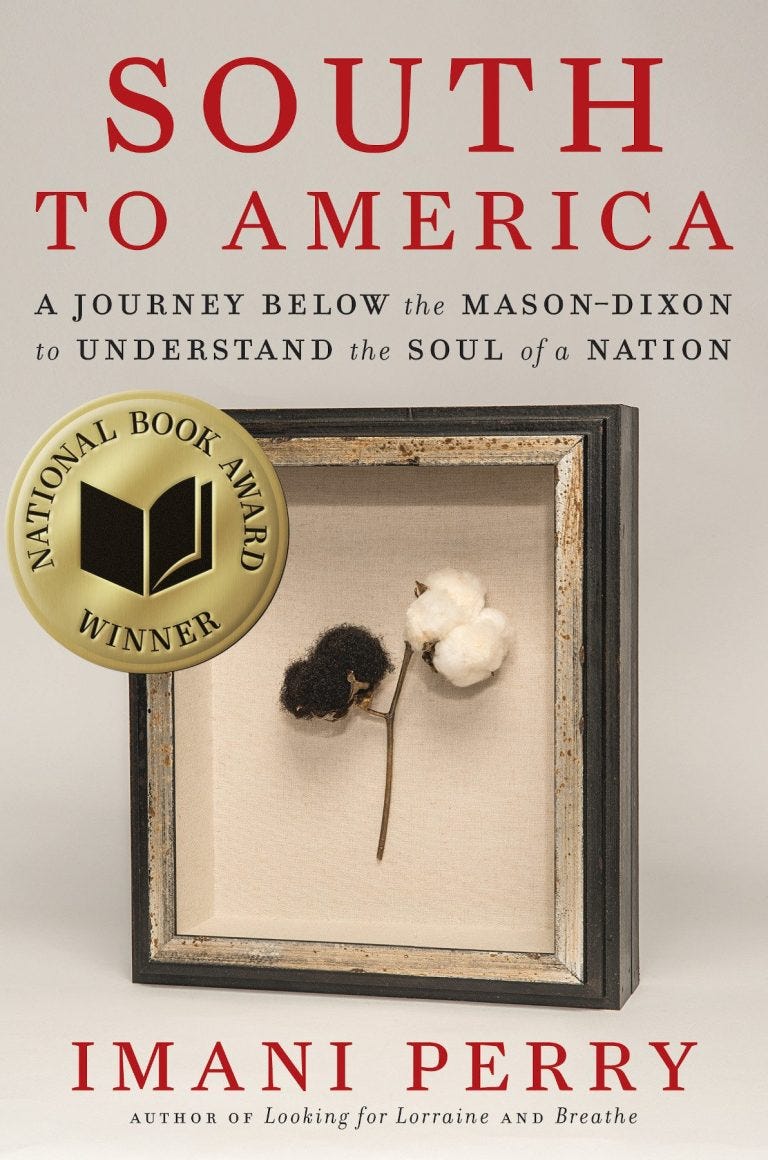
South to America: A Journey Below the Mason-Dixon to Understand the Soul of a Nation, by Imani Perry
“History sometimes tends and sometimes distends.” If that line isn’t enough to get you interested in Imani Perry’s National Book Award-winning deep dive below the Mason-Dixon line, there are plenty more where it came from. At once a fleet regional history, travelogue, and memoir — Perry excavates her own family history from enslaved ancestors to the present — it’s a brilliant argument for why understanding America will always start in the South.
Is A River Alive?, by Robert Macfarlane
Our premier literary naturalist is back with another soulful ecological pilgrimage-cum-investigation. The question of the book’s title is literal, and along with Macfarlane’s gorgeous descriptions of watery arteries in India, Ecuador and Alaska, his account of the Rights of Nature movement is a fascinating, empathy-expanding exercise in considering legal personhood in its broadest sense. We could do with an updated bill of rights, as Tim Dickinson wrote, and Macfarlane makes a compelling case that it’s not just humans who deserve to be included.
Unruly: The Ridiculous History of England’s Kings and Queens, by David Mitchell
Am I really recommending, á propos of America’s 250th anniversary, a medieval history of the English monarchy by a British comedian? Yes, but HEAR ME OUT. A recurrent theme in this sharp, hilarious tour of several centuries of nepotism, beheadings, and failed attempts to take over France is how radically disruptive seizures of authority were almost always (falsely) sold as a restoration of conservative ideals. Which, you know, makes one think.
— Meghan Houser
The Invisible Life of Addie LaRue, by V.E. Schwab
A fantasy take on “careful what you wish for,” the novel follows Addie LaRue, who, in 1714, wishes for freedom after fleeing a forced marriage. A dark god grants her immortality, but at a cost: she is forgotten by every single person she meets, unable to leave any trace of her existence. Multiple locations throughout the U.S. have banned or removed the book from their library shelves due to “sexual content, depictions of queer characters, the devil,” etc. Of course, the “sexual content” in question involves nondescript references, and there is no explicit mention of the devil. Queer characters do exist, which is likely the damning factor. This is entertaining, touching, thought-provoking, and a wonderful escapism route. It’s a banned book worth reading.
Yesteryear, by Caro Claire Burke
Published in April 2026, the #1 NYT Bestseller and Book Of The Year (so far) has already made a splash. Yesteryear is a dark, satirical thriller about Natalie, a tradewife influencer with a “homesteading” traditional empire, who wakes up one day in 1855. Flashing between the present and her new reality, Natalie confronts her online and traditional values, which quickly unravel into horrors she tries to escape. You will think you’ve guessed the ending midway through, only to be shocked by its finale.
Nobody’s Girl: A Memoir of Surviving Abuse and Fighting For Justice, by Virginia Roberts Giuffre
Giuffre’s posthumous memoir is a raw, courageous, and infuriating (given the circumstances) recounting of her life. Virginia holds nothing back as she details her painful, exploitative childhood, being trafficked and haunted by Jeffrey Epstein and Ghislaine Maxwell, and fighting for justice regardless of the risk. In honor of her legacy and to support Epstein’s victims and survivors, her memoir is a must-read. Forewarning: Guiffre’s account is difficult, graphic, and potentially triggering, so please read with discretion and care.
— Ciera Stone
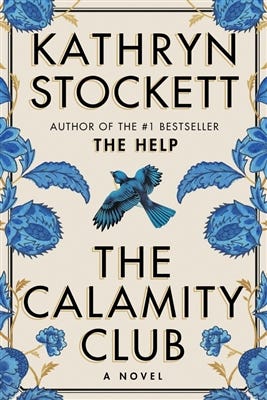
The Calamity Club, by Kathryn Stockett
If you’re looking for a beach read with a bit more gravity to it, consider this novel — Stockett’s much-anticipated follow-up to the ginormous bestseller The Help. Set in Depression-era Oxford, Mississippi, The Calamity Club is narrated by two characters: Meg, an 11-year-old orphan abandoned by her mother who now lives at a grim asylum for girls, and Birdie, an unmarried 24-year-old volunteer at the wretched institution.
The Perfect Moment: God, Sex, Art, and the Birth of America’s Culture Wars, by Isaac Butler
In this timely work of history (which I wrote about at greater length here), Butler chronicles the political battle over the National Endowment for the Arts in the late ‘80s and early ‘90s. With a keen understanding of the intersection between politics and culture, Butler explains how a newly ascendant, highly organized right-wing coalition turned American artists into public enemy No. 1, stirring outrage over supposedly obscene work by the likes of Robert Mapplethorpe and Karen Finley. The Perfect Moment is a fascinating cultural deep dive that captures the creative vitality of a bygone era in American art. It’s also an illuminating read at a time when the president is actively using the levers of the government to silence his critics and staging vengeful takeovers of the nation’s most revered cultural institutions.
Eve: How the Female Body Drove 200 Years of Evolution, by Cat Bohannon
I have had Bohannon’s sprawling book in my “to read” pile for longer than I care to admit, because I was a little intimidated by its length (400 pages) and subject matter (evolutionary biology). Turns out, I had nothing to worry about. A shockingly entertaining combination of On the Origin of Species and Our Bodies, Ourselves, Eve nimbly moves through the eons to explore the evolution of the female body. Bohannon introduces us to various “Eves” — genetic predecessors who first developed traits associated with the female body — starting with morganucodon, a prehistoric weasel-like creature that co-existed with the dinosaurs and secreted milk through its skin (nipples weren’t a thing yet). Instead of a dry tome about science, Bohannon has written a colorful, pithily funny time-travel adventure that has much to teach us in 2026. As she notes with dismay, the scientific establishment still fails to take sex differences into account when conducting medical research — sometimes not even using women as subjects because their fluctuating hormones make the science too “messy.” In post-Roe America, we’ve seen how few policymakers understand how women’s bodies work and the disastrous implications of this ignorance. Eve is a necessary and compulsively readable step in the right direction.
Lawless: How the Supreme Court Runs on Conservative Grievance, Fringe Theories, and Bad Vibes, by Leah Litman
Contrarian contributor and co-host of the Strict Scrutiny podcast uses humor and vivid pop culture analogies to argue that the Supreme Court, which is supposed to be a nonpartisan arbiter of the law, increasingly operates based on personal bias and “vibes.” She likens the court’s bros — with their hostility to rights for anyone who isn’t a white male — to Ken and his embittered buddies in Barbie. Rather than merely fretting over the woeful state of the judiciary, Litman lays out the path forward through court reform.
On Courage: How to Be a Dissident in an Age of Fear by Julia Angwin and Ami Fields-Meyer
Anyone looking for practical, research-driven advice on resistance should check out this book by Angwin, an investigative reporter, and Fields-Meyer, a senior policy advisor in the Biden White House (and Contrarian contributor). To write this practical guide, an expansion of their 2025 New Yorker piece, “So You Want to Be a Dissident?”, the authors spent a year interviewing political dissidents across five continents, from Cairo to suburban New Jersey. They found that most of these people were just ordinary citizens who let their conscience — and not their fear — guide them. “Dissidents don’t choose to be dissidents. They simply choose to be who they are,” they write.
Living Declaration: A Biography of America’s Founding Text, by Ted Widmer
Just in time for the 250th, Widmer — a historian, presidential speechwriter, and Contrarian regular — has written this fascinating book tracing the living history of our country’s founding document. He analyzes 68 texts by authors including John Locke, Emma Goldman, Hannah Arendt, and Barack Obama to tell the story of how the Declaration came to be and how it has shaped political thinkers around the world for two and a half centuries.
This is the Plan: How to End America’s Meltdown and Save Democracy, by Ben Wikler
In this book, out July 21, Wikler shares the lessons he learned as chair of Wisconsin’s Democratic Party from 2019 to 2025, a period which saw widespread democratic reforms at the state level, including the end of conservative rule of the Supreme Court and the reversal of state legislative maps gerrymandered by Republicans. Wikler argues that the lessons of Wisconsin — a state where five of the last seven presidential elections have had margins of victory of under 1% — should be applied nationwide in the fight against Trumpism. As he puts it, “To hear Wisconsin’s story, told from the inside, is to realize that there’s a way out of this mess.”
— Meredith Blake
Happy reading, Contrarians!
Read or listen to Mamdani’s speech today.
A word in support of Unruly by David Mitchell - screamingly funny, often obscene (if the F word upsets you, you will frequently be upset), and remarkably subtle in its political and historical observations. It will add to what you know about the British monarchy and its institutions, in a very good way.