


We have dutifully tracked and criticized the shortcomings of legacy media outlets — the capitulation to Donald Trump’s bullying at the White House, the incessant sanewashing of a patently unwell president, the repetition of Trump lies in headlines by innocuous phrasing (“Trump says X,” when X is objectively untrue), the false equivalence between a party that embraces authoritarianism and one that adheres to democratic values, and the stubborn refusal to use plain, accurate language (“lie”) when describing events playing out before their eyes.
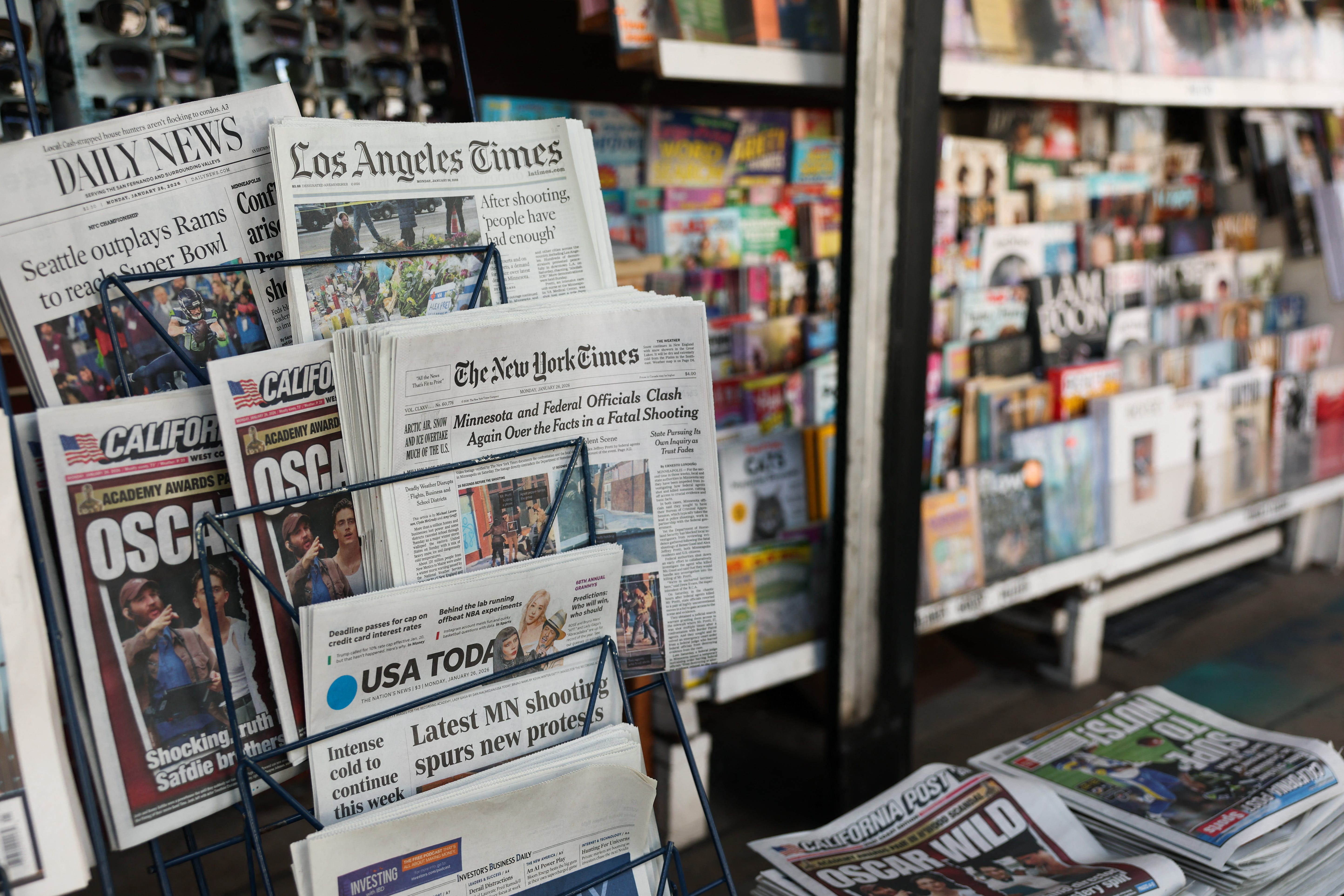
In returning to the White House press pool while CNN remains excluded, the press has repeated the cardinal sin of capitulating to a bully. “By being timid bystanders as Trump and his cadre of liars have assaulted their profession for more than a decade, many journalists have not only enabled this terrible behavior, they’ve volunteered to be victims,” observes media critic and former Chicago Sun-Times and Tribune editor Mark Jacob.
Former New York Times public editor, former editor and vice-president of The Buffalo News, and former media columnist for the Washington Post, Margaret Sullivan has been highlighting these fundamental shortcomings and beating the drum for improved news coverage for decades. She now calls our attention to the non-profit Media and Democracy Project’s outstanding endeavor: a set of 27 media guidelines that aim to shore up independent, effective press coverage, and provide the sort of unvarnished, pro-democracy news that will be essential in this election and beyond.
The group has published its guidelines and invites the public to sign on; a phenomenal cause for The Contrarian community.
“It’s been my experience, as a longtime newsroom leader myself (I edited a metropolitan daily newspaper, The Buffalo News, for 13 years) that editors do care what their readers think,” Sullivan writes. “A letter signed by thousands of individuals may indeed get their attention. Whether it can overcome ingrained practices is a different matter, but it’s worth the effort.”
The guidelines include the following:
MAKE THREATS TO DEMOCRACY CLEAR
Cover attacks on any aspect of the First Amendment as an attack on democracy.
Express solidarity and stand up for fellow journalists and news organizations when they are attacked or intimidated.
Inform voters of the rights and freedoms they are losing because of government actions that subvert the Constitution and undermine democratic principles.
Spotlight how corruption and nepotism are driving harmful policies that impact democracy and people’s lives.
Avoid “sanewashing.” Don’t normalize abnormal behavior, instead call it out.
Do not contribute to “democracy-washing,” when the reality is that American democracy is under siege and in jeopardy from an authoritarian movement.
Prominently cover the Big Lie-fueled attacks on election legitimacy and voting rights.
Report on the voter-suppressing effects of threats to send federal agents or the US military to polling places.
Report on the harmful effects of concentrated power in the hands of a few oligarchs, especially those who control media such as Elon Musk, Rupert Murdoch and Larry Ellison.
PROTECT AMERICANS FROM DISINFORMATION
Inoculate Americans against a repeat of the Big Lie strategy that led to the riots at the Capitol by pre-bunking false claims about election integrity.
Expose disinformation whenever it is used, and hold the source accountable.
Explain that lying and disinformation are actual strategies for some politicians and their supporters.
Don’t platform liars or act as a stenographer for those who repeatedly lie.
Don’t set aside moral judgment when covering obvious lies.
Avoid euphemisms that conceal uncomfortable realities. For example: Use “racist” instead of “racially charged,” “lie” instead of “inaccuracy,” “war” instead of “kinetic action,” “discrimination” instead of “extreme vetting.”
Remind your audience of any public figure’s refusal to honor election results and/or support of the January 6 insurrection when they appear in stories.
Build public trust by explaining the newsroom decisions you make about election coverage.
Have a plan for identifying and handling deepfakes.
The guidelines also contain an entire section advising outlets not to cover our democracy and elections as if they matter more than sports, to refuse to rely on prediction gambling markets, and to prioritize substance over polls.
Denuding politics of meaning and treating it as if it were all a matter of insider expertise (akin to sports-talk) has been among the most insidious aspects of legacy media coverage; a convenient dodge for avoiding the task of calling out Republicans for lying or prejudice. In criticizing coverage of the fascist-style Dallas Republican convention, for example, we noted the unsavory tendency of billionaire outlets to treat Trump’s authoritarian tactics and despicable appeals to racism as clever tactics rather than threats to democracy.
Unfortunately, the gamification of politics has served to inhibit one of the most important functions of an aggressive, independent press in our current environment — namely, putting Trump and MAGA tactics in historic context. Were they covering a foreign leader or European election, for example, our press would undoubtedly (and they have, in covering the Hungary elections) point out the antecedents of anti-democratic tactics and blatant appeals to xenophobia in fascist and communist movements that suppressed free speech, persecuted minorities, deployed the apparatus of state machinery against political enemies, and used state propaganda to bamboozle the public. We should expect nothing less when the media cover American political events.
Corporate media does a great disservice to voters when they present Trump’s outrages as a series of discrete, unrelated incidents or, worse, offer the absurd dodge that Trump ‘doesn’t seem concerned about norms.’ (Concerned?! He seeks to destroy them!) Accurate coverage of the current election requires connecting Trump’s tactics as part of a unified scheme to rig voting and retain power at all costs. It demands that the press explain the degree to which Trump mimics historic authoritarian movements, in which the cult of personality blurs all distinctions between the leader (along with his family and cronies who feed at the trough of corruption) and the instruments of government (e.g., using taxpayer funds for his own campaign ads).
Like Margaret Sullivan, we do not believe legacy outlets are going to reform overnight. Indeed, CBS’s current management suggests that some outlets intend to work as handmaidens on behalf of their MAGA patrons. But plenty of executives, editors, and journalists at other outlets are looking to recover their audiences and their integrity. Improving their coverage by offering guidelines — ones that are widely supported by engaged news consumers— can only help.
Saving our democracy requires a whole-of-society approach, which includes a reformed and emboldened political press. And that is only going to happen when the marketplace of viewers, readers, and listeners demand something better than what we have seen of late.


An Trump 2024 campaign ad returns, now paid for by taxpayers in flagrant violation of federal laws.
Trump self enrichment, emoluments violations & institutionalization of kleptocracy.
How much grifting & fraud is too much?
https://www.nytimes.com/2026/09/27/us/politics/trump-ad-government-campaign.html?unlocked_article_code=1.ElE.3uHE.KMn7WTDw0UmT&smid=url-share
Please, #VoteBlue
Personally I despair of the eventual improvement of legacy media. The major TV & cable outlets have become complicit in or eager to help with the Trumpist project. Many news stories are now being held hostage behind a paywall and one still must endure constant advertising bombardment. Video reports and commentary pieces by "independent" reporters and "new" media (Contrarian, Bulwark, MediasTouch, Jason Jay Smart, Jake Broe, Professor Gerdes, etc) has overtaken the likes of CNN, CBS, ABC, NBC, etc. I will not grieve for the billionaire-operated channels when they are gone.