


On Wednesday morning, I settled into my seat in the ornate U.S. Supreme Court chamber, with its coffered ceiling 40 feet above me, tall Ionic columns lining the walls, and heavy red drapes behind the elevated mahogany dais that the justices would shortly occupy. I was there as a member of the legal team defending birthright citizenship, one of my almost 300 legal cases and matters supported by the paid subscriptions of you Contrarians.
Like the hundreds of others in the crowded courtroom, I expected to see history in the making — a case that would enter the annals of American law. What I didn’t expect was to witness a scene out of a reality TV show: The Real Cabinet Members of D.C.
I was seated in the third row of the gallery. The first row is reserved for cabinet members and VIPs, and it was filling up when, at about 9:45 a.m., Attorney General Pam Bondi arrived and took an open seat for the 10 a.m. argument. She looked uncomfortable and unhappy, her face a grimace, her back stiff. I assumed she knew her side was going to have a rough day of it. We now know that she had just been fired in the car ride over with the president.
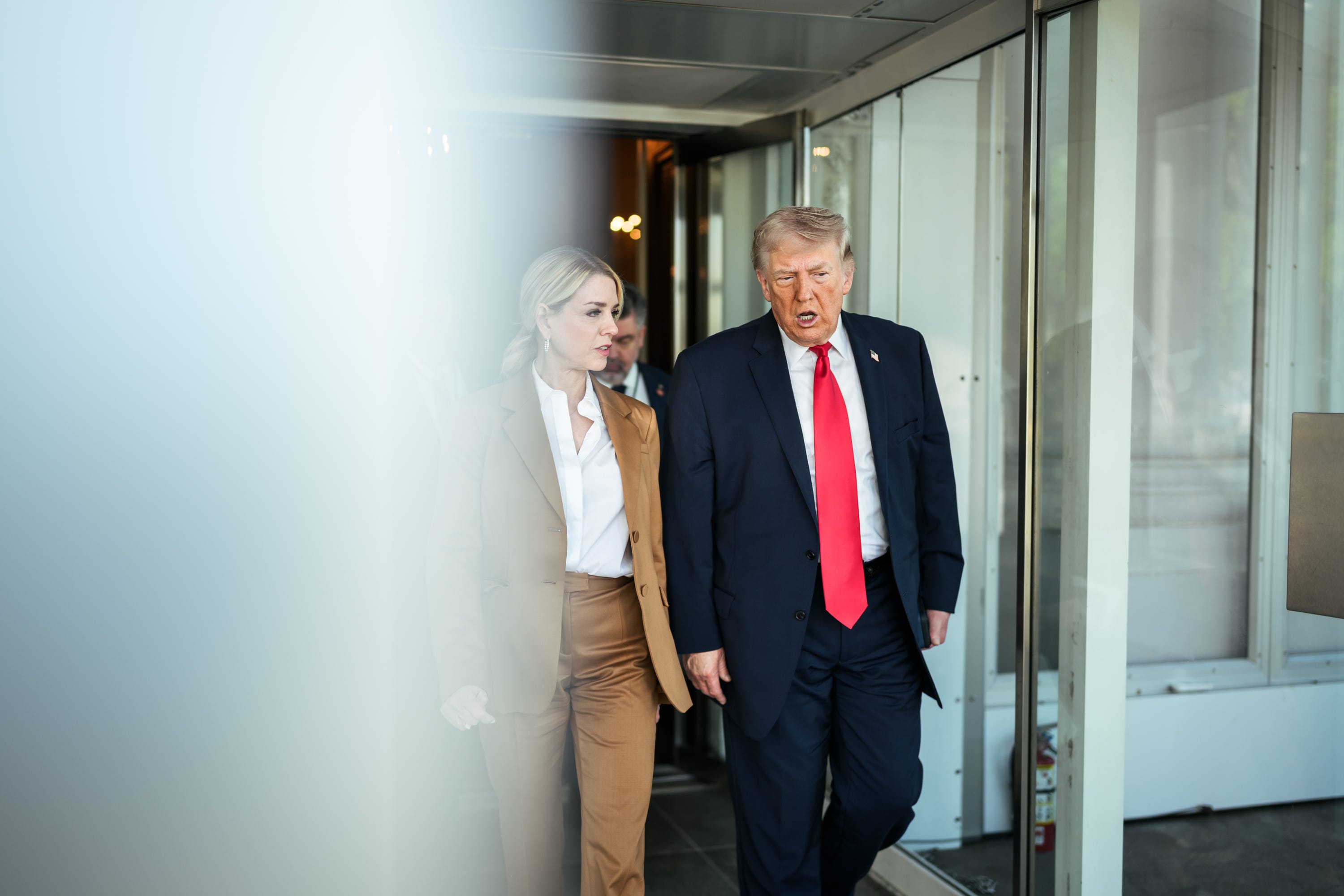
Before long came the lumbering bulk of Donald Trump, accompanied by the more diminutive White House Counsel David Warrington. He sandwiched himself between Bondi and Trump, with the president occupying the spot at the very end of the far right of the row. That’s where the drama kicked in. Trump began whispering to Warrington and to his Secret Service detail. Then Commerce Secretary Howard Lutnick hurried over from further down the row, sycophantically groveling in the aisle to Trump’s right for more presidential whispering.
The next thing I knew, Trump was getting up and moving to the far left opposite end of the bench, about five feet in front of me — and as far away from Bondi as possible. She was left alone at the end of the row, looking none too chipper.
At the time I thought maybe Trump just didn’t like the view, although it wasn’t that different. It was a little over 24 hours later that Bondi’s firing was announced. In retrospect, it makes me wonder if it wasn’t the seat that Trump disliked but the seatmate. Whatever the explanation, I momentarily felt sorry for Bondi, abandoned at the end of the row like a school kid without a lunch companion.
But my flicker of sympathy was short-lived. After her role in pursuing baseless criminal charges against innocent victims of Trump’s misplaced revenge, in exposing the names of the Epstein victims, and then in doing so much other damage to the Department of Justice and the rule of law, I can only say she deserves to be shunned–and disbarred. (Hmm, that gives me an idea….)
With all that as prologue, what then transpired once the arguments began must have done little to improve her mood. Based on what I saw in court on Wednesday, I am guessing we are looking at a 6-3 or 7-2 victory for our birthright case. It was a terrible day for Trump, Bondi and their ilk — but a great day for justice and for all you Contrarians, whose paid subscriptions help support my work on cases like this one.
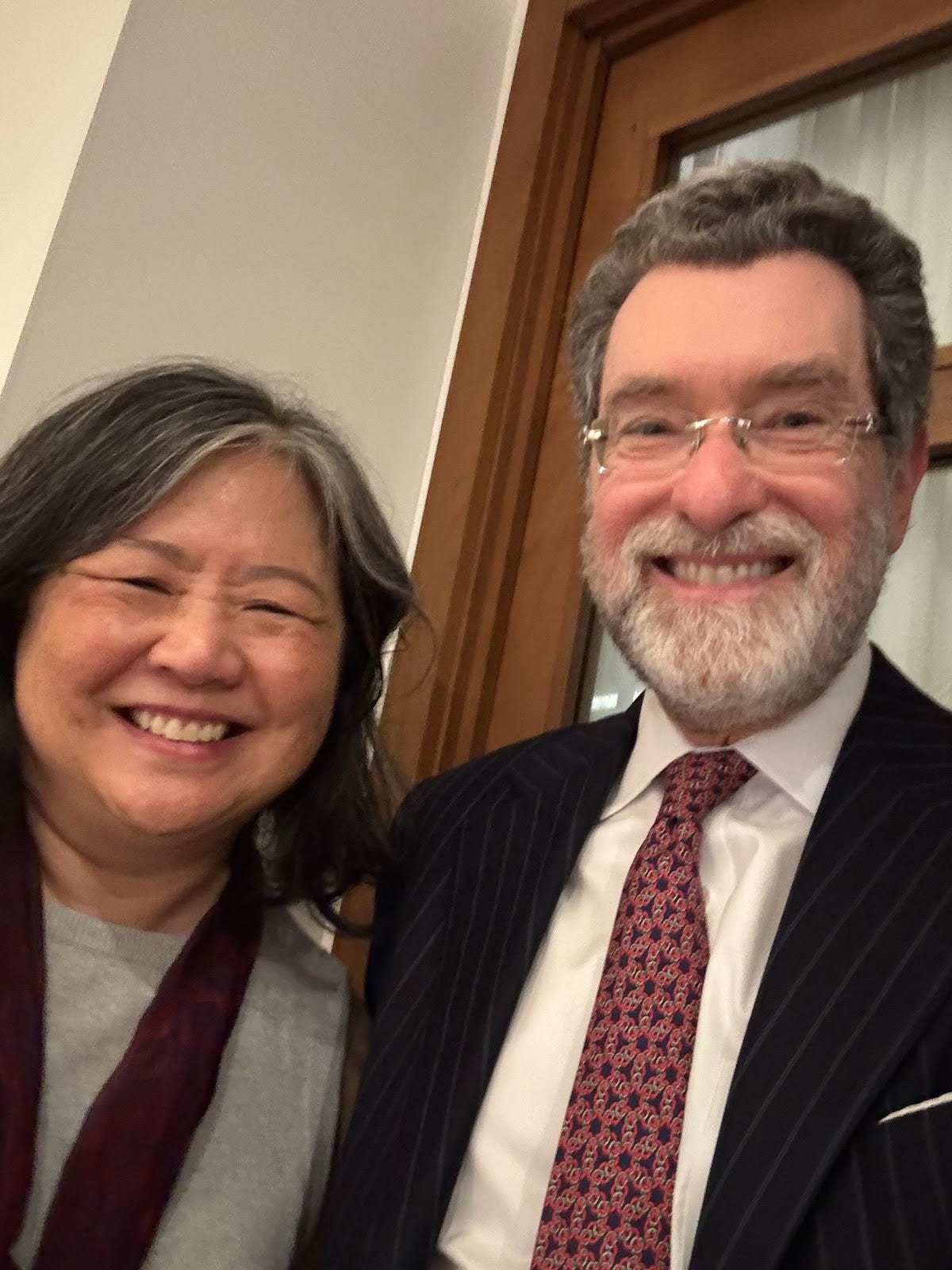
It appears that the Supreme Court is poised to affirm that the citizenship clause of the Fourteenth Amendment means what it has always been understood to mean: that every person born on American soil is an American citizen. ACLU Legal Director and my co-counsel Cecillia Wang did a brilliant job of explaining that the meaning of the citizenship clause has been fixed since the Fourteenth Amendment was ratified in 1868. Subsequent Supreme Court case law, notably the Wong Kim Ark decision in 1898, has only reinforced that babies born in the country are American citizens regardless of the citizenship status of their parents. Here I am with Cecillia right after the argument:
Even the conservative justices were skeptical of the government’s argument: that only babies with parents who are “domiciled” in the United States and have permanent legal status here are entitled to birthright citizenship. Solicitor General John Sauer was peppered with questions about the lack of textual and historical support for this argument. At one point, after Sauer mentioned Wong Kim Ark, Justice Neil M. Gorsuch said, “Well, I’m not sure how much you want to rely on Wong Kim Ark.” Gorsuch also called out the government on the striking absence of discussion of “domicile” in congressional debates at the time the Fourteenth Amendment was passed. Chief Justice John G. Roberts Jr. referred to the government’s examples as “quirky.”
We do not expect to win this case 9-0, and Justices Clarence Thomas and, to some extent, Samuel A. Alito were sympathetic to the government’s arguments. That said, based on the questioning from the justices, it appears that a clear majority will rule for our clients. This is not a difficult case, in large part because the court already decided this issue in Wong Kim Ark, which involved the son of Chinese immigrants. In fact, Kavanaugh asked Wang whether the opinion could be a very short one affirming that the court is following Wong Kim Ark, and she agreed that it could.
As I explained at a rally after the argument, Wednesday was the culmination of years of planning that began even months before Trump was reelected in 2024. This planning was the reason that Democracy Defenders Fund and our partners were able to act immediately when Trump’s executive order purporting to end birthright citizenship as we know it was issued on the first day of his second term. More of my rally remarks are here:
We do not relish that this work is necessary, but I and my litigation colleagues at Democracy Defenders Fund and Democracy Defenders Action stand ready to continue fighting. That is thanks in no small part to your paid subscriptions, which fuel our role in cases and matters like this one and over 280 others.
Of course, your paid subscriptions don’t support only my work in the courts of law; they also support the Contrarian’s stellar coverage that shapes the court of public opinion. Just take a look at this week’s highlights, put together by my wonderful Contrarian colleagues:
Birthright citizenship at SCOTUS
Trump Is Likely to Lose on Birthright
Erwin Chemerinsky laid out multiple legal paths by which SCOTUS could strike down Trump’s illegal executive order on birthright citizenship, as suggested by Wednesday’s oral arguments on Trump v. Barbara. “The Fourteenth Amendment is not the only avenue.”
On the Ground from SCOTUS’ Hearings on Birthright Citizenship [podcast]
This week on the podcast, we heard from Juan Proaño, head of LULAC, court reporter Adam Klasfield, post-oral argument impressions from yours truly, and more from the front lines of the SCOTUS birthright citizenship case.
Taryn Wilgus Null wrote about what else is at stake in the birthright case: whether the president can unilaterally change the Constitution. “The court’s decision will go to the very rule of law … and whether our country is truly by the people and for the people.”
War in Iran
Iran’s Negotiating Strategy Is Built on Distrust
Brian O’Neill analyzed Tehran’s playbook in response to Trump’s flailing negotiations: engage tactically, resist irreversible concessions, and assume diplomacy can be used to justify further military pressure. “Iranian officials have indicated a willingness to continue conflict rather than return to a pre-war status quo that leaves the regime exposed.”
Dennis Ross, former ambassador and Middle East negotiator, joined Jennifer Rubin to weigh in on Iran peace talks and answer some billion-dollar questions: Will anyone give up control of the Strait of Hormuz? Are maintaining sanctions against Iran a non-starter? Do the Houthis and other external parties need to be addressed simultaneously? And what, finally, will it take to secure a ceasefire?
American Consumers Will Pay for Trump’s War with Iran
Jeff Nesbit wrote on where the American public is already paying for the war in Iran — at the grocery store, the gas pump, in our electronics — and where it could go from here. “We’re no longer dealing with a localized conflict or a simple energy shock. We’re witnessing the systematic deconstruction of the global supply chain.”
Trump Is Serious About Accepting a Humiliating Defeat
Jen checked in with our reckless firestarter-in-chief, whose most recent spate of rambling, false statements on the war in Iran lay bare his modus operandi in what is already a snowballing geopolitical nightmare. “No other president could possibly have done this much damage in such a short time. The United States stands alone — more despised and less respected than we have ever been in the modern era.”
Inhumane policies, ongoing harms
The Echo in Trump’s Detention Camps
Shalise Manza Young situated ICE’s detention facilities in the searing context of a legacy of state violence. “There is nothing in American history that compares to the horrors of chattel slavery and the Trail of Tears. But damn if the echoes of both can’t be heard when it comes to these federal concentration camps.”
For Meta, the Mask Is Off: They Knowingly Harmed Children
Yaël Eistenstat reported on two landmark guilty verdicts in the long road to holding social media companies accountable for their predatory — and predator-enabling — design and business practices. “This is the type of evidence social media companies have fought tooth and nail to prevent from ever entering a courtroom.”
Women Who Serve Also Face the Trump Administration’s Misogyny
Jennifer Weiss-Wolf wrote on the increasingly hostile environment women in the military endure under the Trump administration’s misogynist, anti-DEI policies. “We’ve reached the point in the plot where they no longer worry about saying the quiet part out loud.”
Fighting back
Tim Dickinson reported on No Kings 3 from Portland, Oregon, where the day was a party with purpose. “Portland protesters turned the tables by laughing in the face of fascism, donning chicken suits and inflatable frog costumes, and refusing to cower before an authoritarian president.
The Contrarian Covers the Democracy Movement
All this week, we featured coverage from some of the 8 million of us who attended No Kings protests last weekend. We also highlighted protest planning for May Day, including plans for a nationwide general strike. Get help organizing from Indivisible, find protests in your area at mobilize.us, and send us your protest photos at submit@contrariannews.org.
Protesting is Necessary but Not Sufficient
Danny Miller and Steve Silverman wrote on what must come the day after we take to the streets, if we’re serious about stopping democratic backsliding: “strikes, boycotts, deliberate non-cooperation with illegitimate exercises of power, and the patient work of organizing across every sector of civil society.”
Cartoons, culture & fun stuff
This week our cartoonists covered making deals (The Next Big Iran War Announcement; Help!, Nick Anderson), breaking promises (‘If they rise, they rise’, Michael de Adder), losing big (Have You Seen the Dow?, RJ Matson), and the biggest loser (Tom the Dancing Bug, Ruben Bolling).
‘Mr. Nobody Against Putin’ Takes a Chilling Look at the Effects of Russian Propaganda
Meredith Blake wrote on the Oscar-winning Russian documentary that has a lot to teach Americans about how a society gets militarized — especially its schools.
Plus, Emily Beyda shared her perfectly imperfect Easter treats, and G. Elliott Morris shared Pancake.
Cecilia Wang was calm, assured, brilliant and occasionally even funny — when idiots gave her the opportunity to be so. Just what you would want to see in a winning oral presentation delivered with skill and aplomb.
As for Klaus Bondi and her demented boss, my hearts bleeds for them the way it did when those two velociraptors started ripping each other’s flesh apart in Jurassic Park.
1. why was Lutnick there?
2. did Bondi stay for the whole thing and get her own ride back, or did she ride back with Trump's entourage? did he just leave her there, like an ex?
Don't leave us hanging.